




White House claims victory in retreat — but crackdown continues and so does resistance
Published
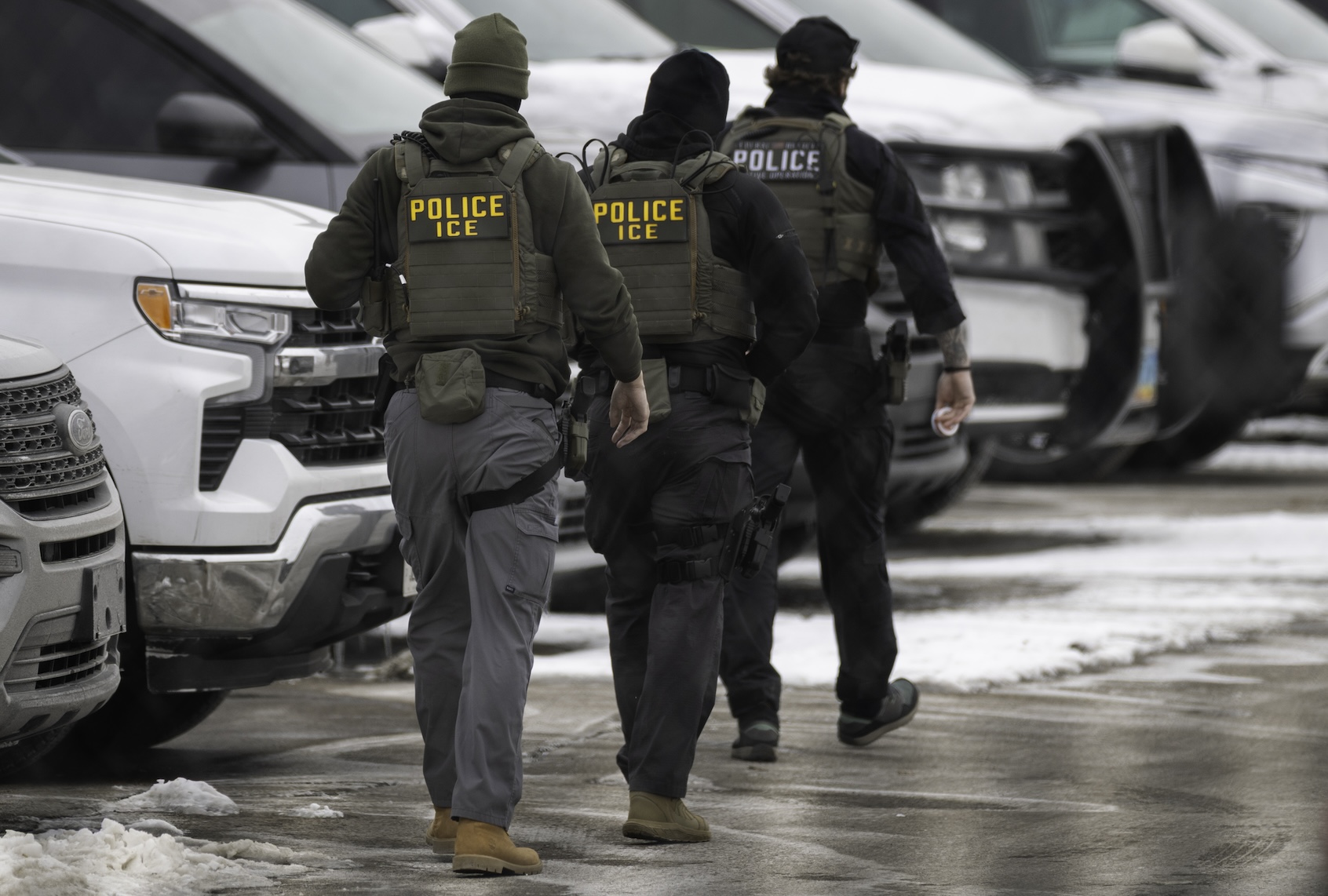

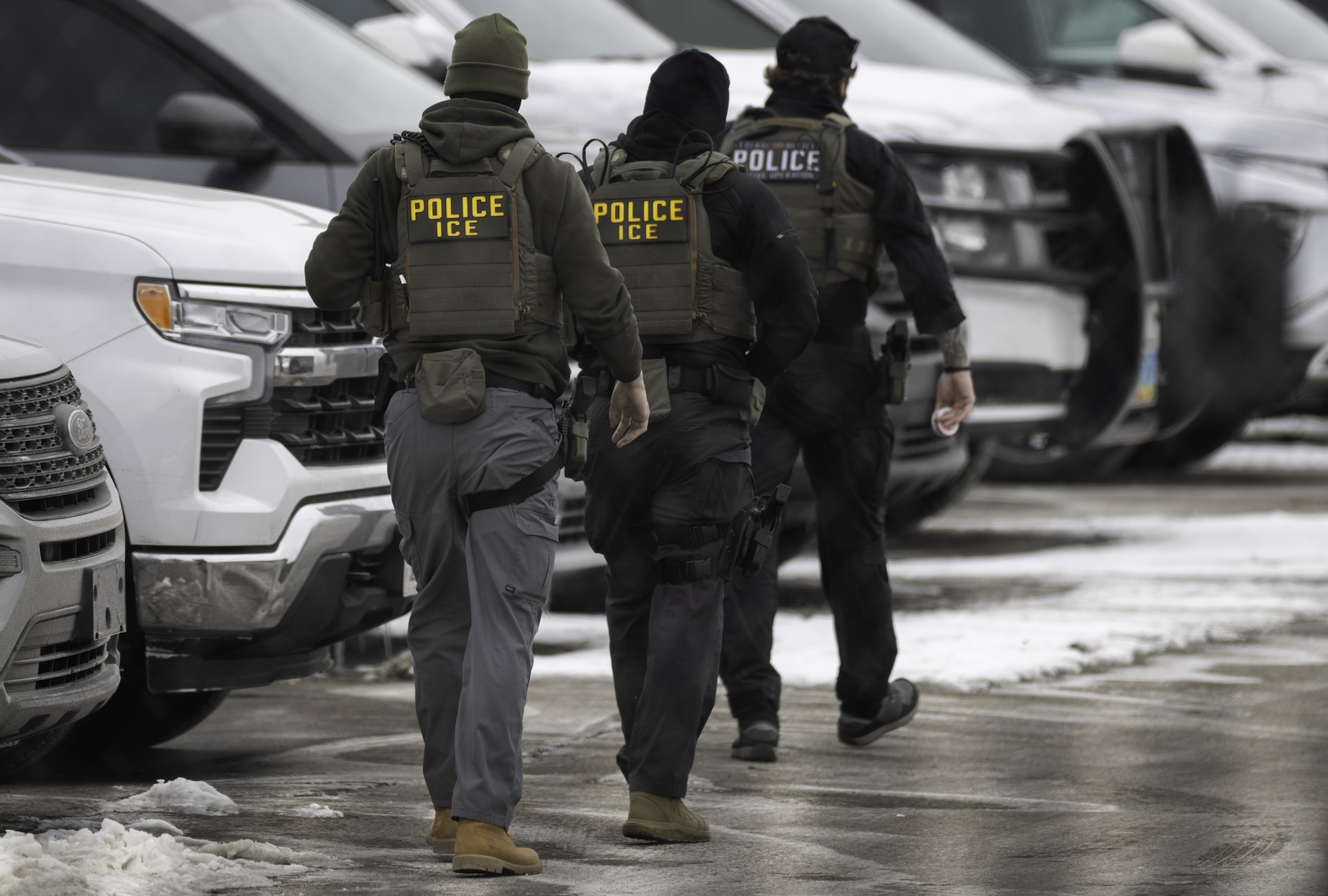
ICE officers depart the Bishop Henry Whipple Federal Building on February 4, 2026 in Minneapolis, Minnesota. (Photo by John Moore/Getty Images)
On Thursday morning, with Minneapolis and St. Paul still reeling from weeks of federal occupation and violent crackdowns that have resulted in the arrest of 4,000 people, the Trump administration declared victory. “The surge is leaving Minnesota safer,” border czar Tom Homan said at a press conference. “I’ll say it again: It’s less of a sanctuary state for criminals,” maintaining the government’s position despite many of those arrested having no criminal records, including 5-year-old Liam Conejo Ramos.
Critics of the federal occupation assert that collective pressure by up to 100,000 Minnesotans was the real cause behind the withdrawal, while also remaining wary that a reduction in federal presence does not mean an absence of threats or the mitigation of damage.
The withdrawal began in early February, when the Trump administration pulled 700 federal agents from Minneapolis, leaving thousands more still roaming the streets in armored vehicles and on foot. The announcement today left few real details about the logistics of ending the Department of Homeland Security’s so-called Operation Metro Surge and how many DHS personnel would remain in the long run, other than that “a significant drawdown has already been underway this week and will continue into next week,” as Homan put it.
Minnesota state representative and former voting rights lawyer Emma Greenman, representing parts of Minneapolis, told Salon that neither she and nor her colleagues or indeed anyone in the state government had been apprised of federal plans — all they had was what they were witnessing on the ground.
“After Tom Homan announced the withdrawal of 700 agents, we continued to see the same terror and harassment tactics, the same sort of violence and targeting of not what they call ‘the worst of the worst,’ but, but everybody who is Black and brown, constitutional observers who are not protesters, people who are followed to their house,” she said. “Ending the paramilitary occupation does not end the lawlessness if they return to how it was before, with hundreds of people on the ground. Even in his speech on Thursday, Tom Homan was calling all of our residents in Minnesota agitators but not saying anything about lawless violence against American citizens [by DHS agents]. It’s not the tone of someone who’s going to pull the core group of federal agents out.”
At the start of Operation Metro Surge, at least 100 DHS agents were operating in the Twin Cities area, according to lawsuits. In the weeks after ICE officer Jonathan Ross killed Minneapolis resident Renee Nicole Good in December, that number surged to between 3,000 and 4,000 as the federal government sought to demonstrate a show of force against protesters. Immigration and Customs Enforcement and Customs and Border Protection personnel, normally responsible for seizing and detaining immigrants, routinely took charge of anti-crowd violence during protests with pepper balls, flashbangs, tear gas and fatal gunshots, effectively under the guise of quelling “domestic terrorism.” Homan’s announcement is, apparently, a suggestion that such violence will be scaled back, if not completely ended.
To some activists, the talk of withdrawal framed by declarations of victory appears less like a concession or closing the book and more like a calculating psychological tactic.
“My read is that the administration is continuing its tactics of whipsawing everybody back and forth to keep them in a state of uncertainty and anxiety.”
“My read is that the administration is continuing its tactics of whipsawing everybody back and forth to keep them in a state of uncertainty and anxiety,” Julia Decker, policy director at the Immigration Law Center of Minnesota, told Salon. “I think the one of the lessons learned for the community from 2020, and also out of previous histories, is that things don’t change on a dime when it comes to state violence and the way that the state operates. And so this idea that somehow there could be a drawdown depending on certain contingencies has not been met with any sort complacency on the part of most of the community. I think there is a genuine understanding of continued caution and understanding that there is still a huge number of federal agents here.”
For all the defiance of protesters and citizens setting up networks to warn their neighbors of ICE presence, the effect of the federal crackdown, Decker added, has also been to frighten the most vulnerable members of the community, who are “not going to work, not going to school, not going to medical appointments … there are entire business corridors completely shut down across the city, and the human and economic impact of this will be staggering.” In response to the occupation, several schools in the Minneapolis area began offering virtual learning — a callback of sorts to the COVID-19 pandemic — to accommodate students who would not step out of their homes and risk abduction by ICE officers.
Start your day with essential news from Salon.
Sign up for our free morning newsletter, Crash Course.
Even if DHS presence was reverted back to pre-December levels, those are essentially the status quo conditions marked by mass arrests of people at schools, at workplaces, and on the street, as well as the killing of Good. And the three month federal escalation is not something that is just forgotten whenever it’s over. Minnesota lawmakers and officials have little idea of how many of the 4,000 people arrested by federal agents during the operation are still detained, and DHS appears to be trying to keep information hidden while transferring many of them to out-of-state facilities. Over the last several weeks, attorneys are fighting in court to get an exact roster of who is still held and where, while a federal judge ordered DHS to give detained immigrants access to attorneys, a right outlined in the U.S. Constitution.
Still more people have been surveilled and captured in DHS databases, with federal agents in some cases holding cellphones inches from their faces to scan their features, or else taking pictures of their license plates. Other times, they might cast a wider net, using AI-enabled tools to record the movements of large groups at protests and map out their personal networks and connections. One activist, who requested to remain anonymous, told Salon that an ICE officer followed them home and said that they would be put on a database of “domestic terrorists.”
DHS did not respond to Salon’s request for comment.
Homan, for his part, said that even as federal agents were being withdrawn, he was satisfied that local police would be cooperative, especially when it comes to keeping them informed on people of interest detained in jails. He added that state and local police have improved their response time to removing protest barricades and driving away protesters trying to disrupt DHS operations.
While Trump’s DHS used its three months of occupation to gain any leverage they possibly could, activists, politicians and volunteers opposed to the crackdown have also been preparing for long-term opposition. Democratic state lawmakers have been preparing a slew of legislation to fortify residents against continued state violence, including a bill to allow citizens to file lawsuits against the federal government for civil rights violations by federal agents.
The Minnesota House is currently divided evenly between Democrats and Republicans, which means that at least one GOP vote is needed to pass those bills — though Greenman noted that many of her colleagues across the aisle are feeling pressure from voters uneasy or outright furious about the crackdown.
Furthermore, Greenman added, if the shocks of a federal occupation can’t just be turned on and off like a switch, neither would the political tradition fueled by the protests that put Minneapolis at the center of national attention.
“People are looking and talking to their neighbors and to the members of their community, and to people in their city and to people in other cities that might be the administration’s next target. The energy of facing down a federal occupation is not something that just goes away,” she said. “That is power that you build and maintain and sustain. And people are changed because of it.”