






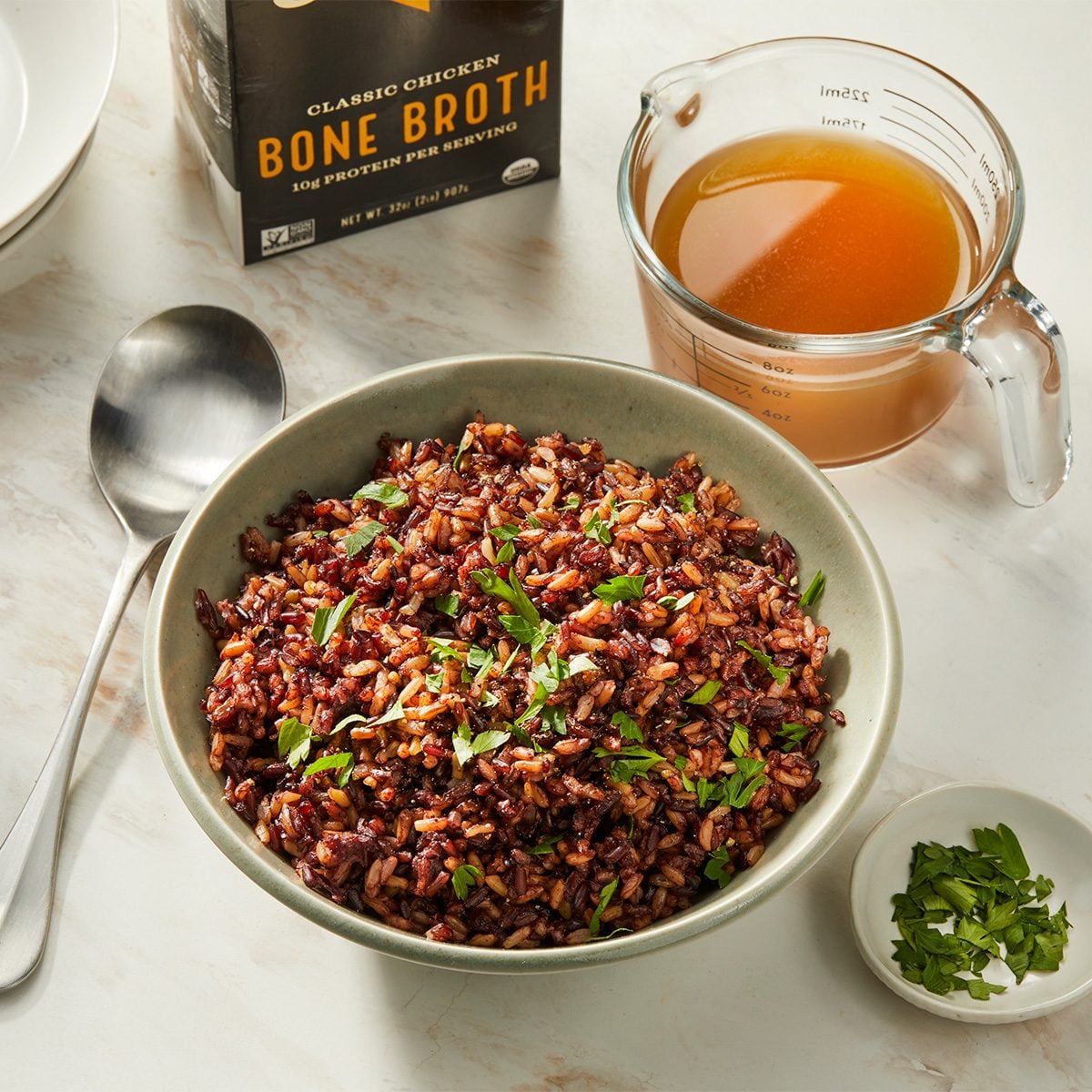


My favorite nutrition hacks are the ones that take no extra effort to put into place. Swapping in bone broth for water when cooking grains like rice or quinoa is the ultimate protein-boosting hack.
We’re well into the era of protein-everything, with chips, cereal, popcorn and even cookies being sold as a way to boost your protein intake. As a dietitian, I love seeing the enthusiasm for optimizing nutrition. But as someone who doesn’t love spending an arm and a leg on processed foods, I’ve learned to lean on other, more subtle ways to add more protein to my meals.
I’ve been on a mission to hit 100 grams of protein a day and have learned that all the little tweaks really do add up. One way I’ve effortlessly increased protein is by substituting bone broth for water or regular broth when making rice and grain-based dishes. This simple swap infuses the starchy foods on my plate with extra protein while also adding a big boost of flavor. I use it for any savory starch that cooks by absorbing liquid, including rice, farro or quinoa, but the trick also works for dried beans and lentils.
Why I Make Rice and Other Grains with Bone Broth
Using bone broth to cook grains has been one of the tiny tweaks I’ve made to help me hit my daily protein goals. I don’t love eating big slabs of meat, so I’ve had to get a bit creative. I’d rather treat meat as a condiment in my meals and increase plant proteins and fiber. Since I don’t avoid animal proteins, adding bone broth to the mix feels like an easy way to give my grains a little boost.
Here’s what bone broth adds to grains:
- Protein and collagen: Store-bought bone broth has between 6 and 10 grams of protein per cup, depending on the brand. The protein mostly comes from collagen, which supports healthy joints, skin, hair and nails. Each 1/2 cup serving of rice cooked with bone broth contributes about five extra grams of protein to your meal. It’s not enough to count as the sole protein source, but it does add up.
- A small mineral boost: Protein gets all the love these days, but micronutrients are another health benefit of bone broth. You can expect around 2 to 5% of the recommended daily value of minerals like iron, magnesium, calcium and zinc. The broth may have a bit more if the bones were also simmered with meat.
- Savory flavor: Bone broth is loaded with deep, savory flavor. Once you start cooking grains in bone broth, there’s no going back. I’ve tried (when I’m all out of broth), and I can never get the same depth of flavor with water-cooked grains, no matter how I season them.
Cooking Grains in Bone Broth Couldn’t Be Easier


You can use bone broth as an exact substitution for the water or regular broth called for in your recipe. It’s a 1-1 ratio, so it really doesn’t get any easier than that. This method works for cooking any grains, like rice, quinoa, farro, barley or polenta. If the recipe calls for water and a bouillon cube, skip the cube, as the bone broth likely carries enough flavor to compensate.
Store-bought bone broth can be high in sodium, so I’m careful when adding extra salt to keep the flavor balanced and cut down on sodium. Before serving, I’ll taste the grains and add a little extra at the end if needed.
Cooking with Bone Broth Goes Beyond Rice
I frequently use bone broth for rice recipes, like flavorful pilafs and risottos, but this swap works for any grains that cook by soaking up all the liquid. Quinoa, farro, barley, couscous, polenta and savory-style oats are all top contenders. It also works for savory dishes cooked in simmering liquid, like beans, soups and stews.
I don’t recommend using bone broth for dishes where the liquid is drained out, like blanching vegetables, simmering potatoes for potato salad or making pasta. If the cooked item doesn’t absorb all the liquid, you’ll end up tossing valuable bone broth straight down the sink. It’s also not a good choice for sweet dishes like rice pudding or traditional oatmeal, where the savory flavor will feel out of place. In these instances, I stick with water.
Recipes to Try with Bone Broth
Tips for Cooking with Bone Broth
What is the ideal ratio for cooking rice with bone broth?
You can substitute bone broth for water at a 1-1 ratio, so I usually make rice with 1 cup of bone broth for every cup of rice. The amount of broth may increase depending on the type of rice, so check the package for instructions before you start cooking.
Should you make bone broth or buy it at the store?
There are plenty of bone broth brands at the store, but I’m a big fan of making it at home. It allows me to control exactly what goes into the pot, including the amount of salt. It’s also one of the best ways to use up leftover bones. Over 10 years ago, I started making chicken bone broth with every whole chicken I buy. It lasts for months in the freezer and tastes better than anything I’ve purchased.
If you do buy your bone broth at the store, take a peek at the label to make sure it’s actually bone broth. Regular broth has a lower protein content, but bone broth should have anywhere from 6 to 10 grams of protein per cup.
How do I store leftover bone broth?
If you buy a quart of bone broth and end up with leftovers after making grains, store it in the refrigerator for up to four days. Alternatively, you can transfer it to a freezer-safe container and freeze it for up to six months.
More Simple Swaps
- The Healthy Pantry Staple I Add to Ground Meat to Make Tacos, Chili and Pasta Sauce Stretch Further
- I Use This Surprising Egg Swap to Sneak Fiber into My Bakes
- This Is My Favorite Way to Cut Sugar in Cocktails


