






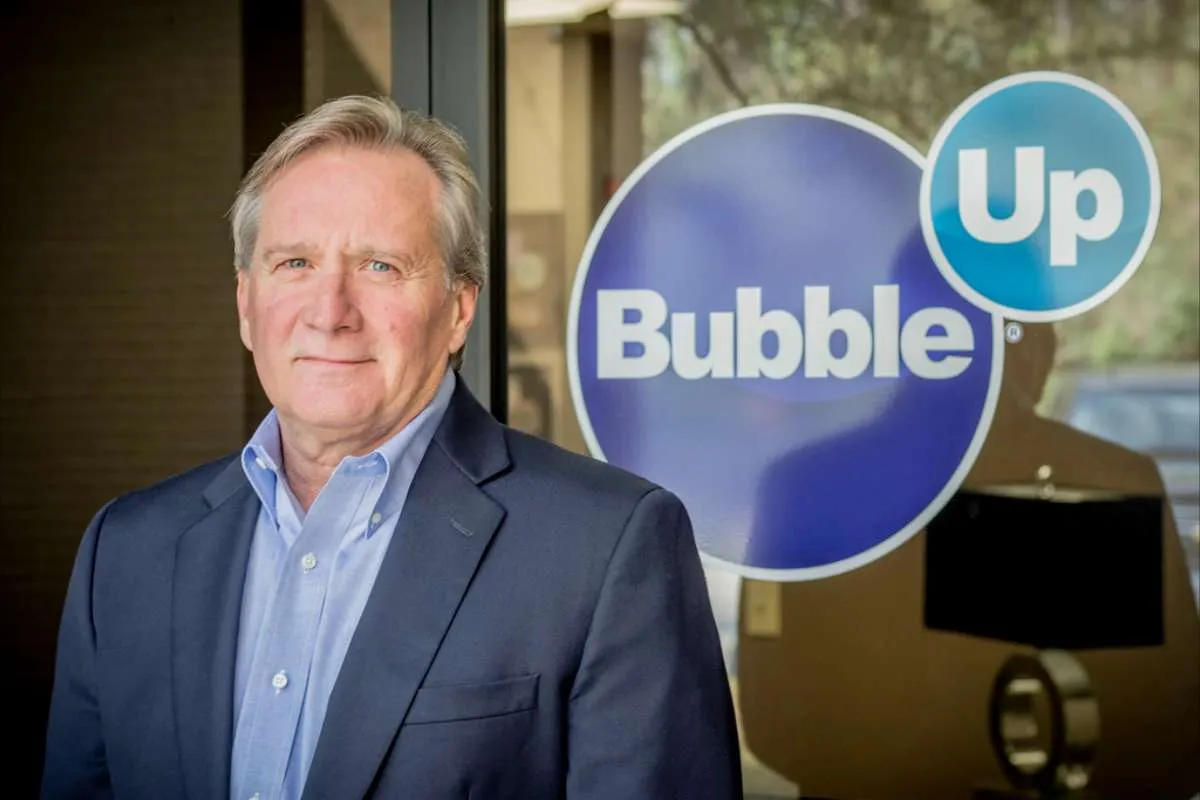


Coleman Sisson, CEO of BubbleUp
When it comes to AI panic, perhaps some perspective helps. Enter BubbleUp founder and tech veteran Coleman Sisson, whose company has been working for over 20 years with some of the largest acts in the world (Luke Bryan, Khruangbin, Avett Brothers, BTS, Eagles, Kelsea Ballerini, Kenny Chesney, Doechii) to boost their earnings, deepen superfan engagement, and broaden fanbases.
The following guest post comes from Coleman Sisson, CEO of BubbleUp, a company DMN is proud to be partnering with.
Fifty years ago, I wrote my first software program.
I was in college, majoring in computer programming, and stepping into what would become a lifetime of working alongside technology. From the very beginning, there were two competing narratives: one insisting that technology would replace entire professions, the other dismissing it as overhyped and impractical.
Both were partly right.
In 1981, while working as a mainframe programmer, I bought a Heathkit personal computer. My coworkers told me I wasted my money. “What are you going to do with it, manage recipes?” was the running joke. Around the same time, IBM introduced the PC, corporations adopted it en masse, and Lotus 1-2-3 transformed finance with the spreadsheet.
Then came the internet. The question wasn’t whether it would matter; it was how anyone would find anything on it. Google answered that in the late ’90s, and the rest is history.
The iPhone and social media followed, fundamentally changing how we communicate, consume, and create. Like many people, I have mixed feelings about the social consequences, but there’s no debate about their impact.
Now we’re at the next inflection point: AI.
Since tools like ChatGPT became widely available, the same questions have resurfaced. What can we use it for? Will it replace people? Can it be trusted? Will it take over the world?
After five decades of watching these cycles, one lesson stands out: we consistently overestimate the short-term impact of new technology and underestimate the long-term impact. The immediate disruption feels dramatic, but the real transformation happens gradually, and then all at once.
Because of that, my approach is simple: embrace new technology early, but apply it pragmatically. I’m less interested in sweeping predictions and more focused on immediate productivity gains.
AI has already proven useful as a working partner. I use it to refine presentations, analyze financial reports, review contracts, and pressure-test ideas. Sometimes, I ask AI odd questions, like why a Jack-in-the-Box plays “Pop Goes the Weasel.” It answers, it debates, and it never complains. That alone makes it valuable.
The music industry has navigated waves of technological disruption before, from microphones and amplifiers to drum machines, Pro Tools, CDs, downloads, and streaming. Each time, the fear was that technology would replace musicians or diminish creativity. Instead, it expanded access, lowered barriers, and increased the volume of music being created and consumed.
Today’s AI conversation sounds familiar. Websites, marketing, songwriting, legal work, accounting…everything seems “under attack.” But I don’t see AI as a replacement. I see it as leverage.
Used thoughtfully, it enables teams to move faster, experiment more, and focus on higher-value creative and strategic work. It doesn’t eliminate the need for expertise; it amplifies the value of people who know how to use it well.
That’s the opportunity in front of the music business right now. Not to resist AI, and not to blindly chase it, but to treat it as what it really is: another tool. One that, like every major technology before it, will reward the people who learn it early and apply it intelligently.
After fifty years of watching technology cycles come and go, I’m not worried about AI.
I’m adding it to my toolbox.
At BubbleUp, we’re taking this same practical approach. We’ve used AI to help increase revenue for our customers, create and debug software, and automate our internal processes.
Some experiments will fail. Others will quietly become part of how we operate every day. That’s always how meaningful technology shifts happen…not with a single breakthrough, but with steady integration into real work.
The goal isn’t to chase hype; it’s to use AI where it genuinely improves outcomes for the people we serve.
If you’d like to discuss, email me at coleman@bubbleup.com.
Coleman Sisson, BubbleUp CEO


