

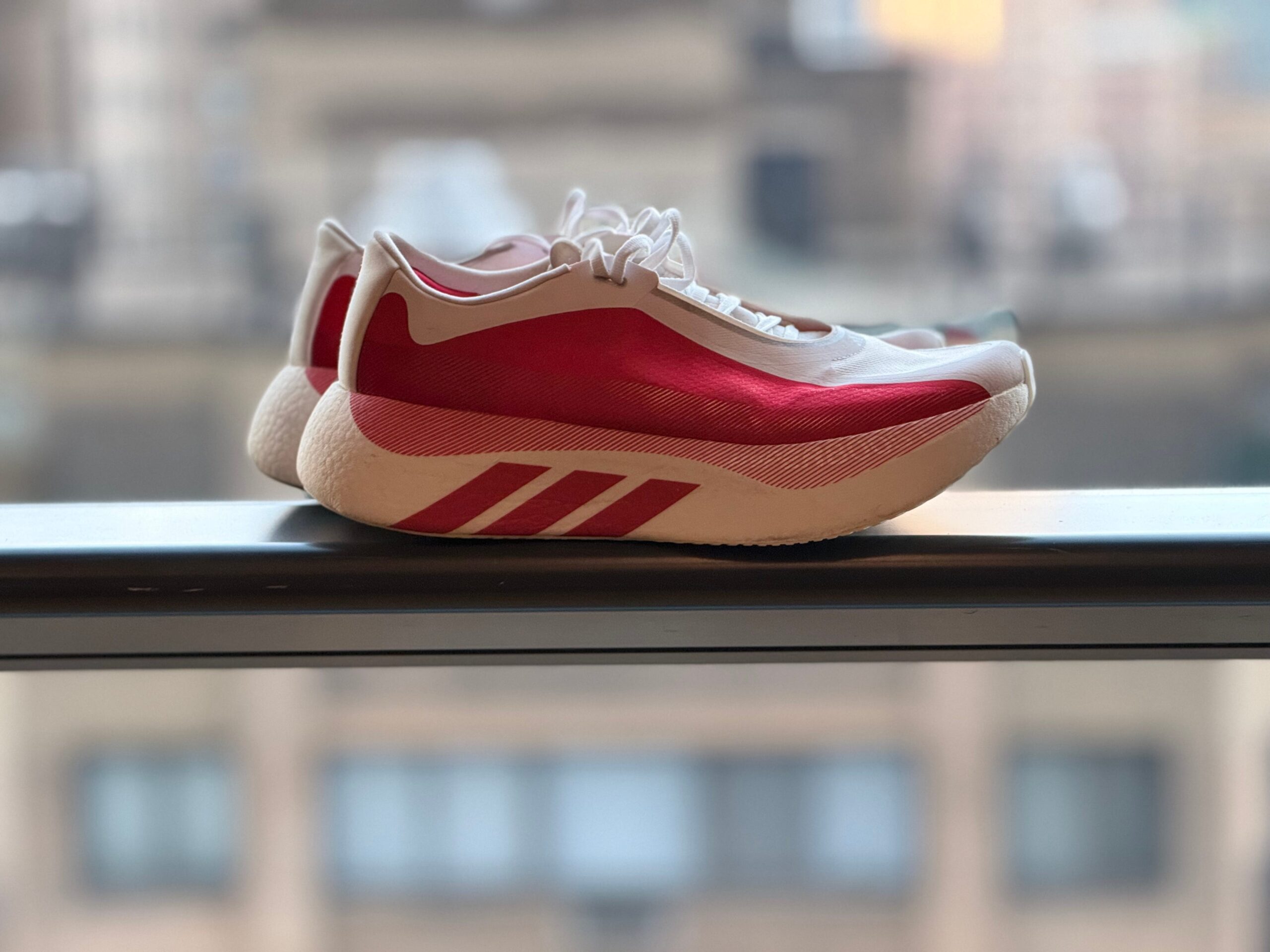

ADIDAS’s BOOST MIDSOLE material is one of the most consequential innovations of modern running. The bouncy eTPU compound arguably kicked off the current era of shoe technology, as energy return and plush comfort became just as important as lightweight speed for competitive racers and casual joggers alike. But the landscape it was launched into in 2013 feels like the stone age now, after the advent of carbon plated super shoes and high-stack trainers that took that energy return-over-everything ethos to extremes—so Boost has been largely relegated to lifestyle status of late (at least for serious runners).
That changes this year, as Adidas released a new midsole formulation using the familiar name, Hyperboost Pro, which debuts in the Hyperboost Edge. The shoe is designed to be a super trainer, meant for everything between easy shakeouts and long run workouts—but very pointedly, not racing. The Edge, with its bootie-like, color-blocked upper, looks different from everything else from the brand, more space-age than the mega-successful Evo SL line and its classic, clean aesthetic.
I got my hands on an early sample of the Hyperboost Edge, but rather than reviewing the model ahead of launch last month, I decided to put more mileage into the testing period than I typically would. That’s partly because I’ve been training for the Boston Marathon and I wanted to have a consistent shoe for the long run sessions in my build-up, but also to really put the shoe to the test. I wound up logging just over 70 miles (including long runs of 20, 16, and 14 miles). My takeaway from that extended trial: Boost has leveled up.

Pros
- Light and comfortable
- Fun new foam
- Durable
Cons
- Fit doesn’t work for everyone
- Limited colorways at launch
The Shoe Specs
THE HYPERBOOST EDGE upper features a new lightweight woven material called Primeweave, which is structured, but allows for a bit of give. The shoe’s padded tongue is connected to the midsole with a wide strap, which gives it a bootie-like fit. A pair of padded heel pods cushion the ankle; the shoe’s heel is firm, with no pull tab—so it can be a bit tough to put on before figuring out the fit.
The new midsole looks like a descendent of old Boost. You can still make out the tiny foam beads that typified the OG version, but they’re compressed together in a much more compact package. The Hyperboost Pro is firmer than midsoles from some other premium foams on the market (even Adidas’s own Lightstrike Pro foam), and there’s a very high stack of the stuff (45 millimeters) molded in a subtle rocker shape. Even with that much material, the shoe is still fairly light compared to similar models at 8.9 ounces.
The outsole is also new for the Hyperboost Edge, a rubbery material dubbed Lighttraxion, which uses raised ridges running horizontally across the sole. It’s certainly grippy—but this is one of the loudest, squeakiest shoes I’ve ever run on indoor surfaces.
Road Feel
INITIALLY, I WAS more than a bit skeptical about how the Hyperboost Edge would perform, given the firmness of that massive slab of foam. Getting the shoes on also takes a bit of a learning curve, given the rigid heel and how the tongue hugs the top of the foot; if you like super tight laces like I usually do, you might have a tough time finding your ideal fit. I settled on just tightening the tops of my laces—and boom, major comfort. I was locked in, and the wider toebox gave my foot plenty of space.
Then, I took to the road. I was surprised at how light and poppy the trainer felt once I got up to pace. The Hyperboost Pro foam strikes an ideal balance between firmness and energy return for me, as my strides rebounded the effort I expended right back to me without sinking into the pavement. The Hyperboost Edge makes the cut for shoes that I think of as “set it and forget it;” in other words, once I hit a pace I’m able to sustain at whatever my current level of fitness in, I can pretty much just put the part of my brain that handles stride cadence and pacing on autopilot.
That easy sensation stayed consistent for me through all kinds of runs, including a few shorter, faster efforts, and my long run days of 14, 16, and 20 miles. My feet didn’t feel heavy during these workouts, even toward the end of the longer days when I was fatigued. Overall, if I had any complaints after running 20 miles (my gamey hamstring, not fueling well enough, general crankiness), it wasn’t due to the shoes.
For a high-stack shoe, the Hyperboost Edge handled well, too. The wide base helped, and the outsole was up to crappy running conditions, both in wet rainy streets and the remnants of ice and snow that stayed on sidewalks after winter weather.
Final Score – 4.7/5
THERE’S STILL A lot of time to go, but I know that the Hyperboost Edge is going to be one of my favorite shoes of the year. Even though I probably should have taken on at least one of my long runs of my Boston training cycle in the model I planned to wear for the race (the Adizero Adios Pro 4, a tried-and-true marathon option for me), I ultimately opted to stick with the Edge for as many runs as I could. It’s comfortable and reliable, and that was more important than upping the speed potential for my training. Just as important, there’s no plate or stiffening feature in the Edge, which I appreciate for training shoes. I try to limit wearing plates for racing and peak efforts, and feeling like I could push without that extra component made it a great pick for me.

I also really dig the look. I love wearing running shoes in my day-to-day life, and the Hyperboost Edge looks like nothing else I have in my closet. The bright red and white launch colorway is bold, and I’m intrigued to see if this gets the same lifestyle treatment as the OG Ultraboost line or even the Evo SL, with tons of interesting colorways.
But even though I had a great experience testing out the Edge, there are some issues. I personally was able to wear them without issues, but I know people who have worn them (and have seen responses across the running internet) about the high ankle collars and heel pods being major pain points for blisters. I was able to avoid this by wearing thick socks, but keep that in mind when you check out the fit yourself.
The $200 price tag isn’t out of pocket for a top-level super trainer (which can range from around $180 to $220), but for entry-level runners, that might be a bit steep. For more experienced runners, this isn’t truly a do-everything shoe, either; I loved it for easy efforts and long runs especially, but for tempo and threshold workouts or racing, I would want something even more responsive (and a plate, even though I do think not having one is in the Edge’s favor).
Overall, the Hyperboost Edge is a surprisingly sturdy, light, reliable workhorse. I went into Boston as well-trained as I could’ve been; having a no-worries piece of gear for those sessions was a big boost to an otherwise rocky prep period. And even after those 70 miles, my pair feels just like it did out of the box (and it barely looks like it’s been worn, either). If this is what the new era of Boost will be, I’m ready for it.
SHOP THE ADIDAS HYPERBOOST EDGE
More Great Adidas Running Shoes

Adidas Adizero EVO SL
Now 10% Off

Adidas Adizero Adios Pro 4

Adidas Ultraboost 5X
Brett Williams, NASM-CPT, PES, a senior editor at Men’s Health, is a certified trainer and former pro football player and tech reporter. You can find his work elsewhere at Mashable, Thrillist, and other outlets.
