








TLDR
- Trump and Xi meet in Shenzhen on Thursday, days after Nvidia’s Jensen Huang resigned.
- US lawmakers want chip export curbs added to this year’s defense bill.
- A US-China emergency AI incident alert system is still not running.
- The Commerce Department is reportedly finalizing a rule on remote access to restricted chips.
- Elon Musk is the main CEO traveling with Trump.
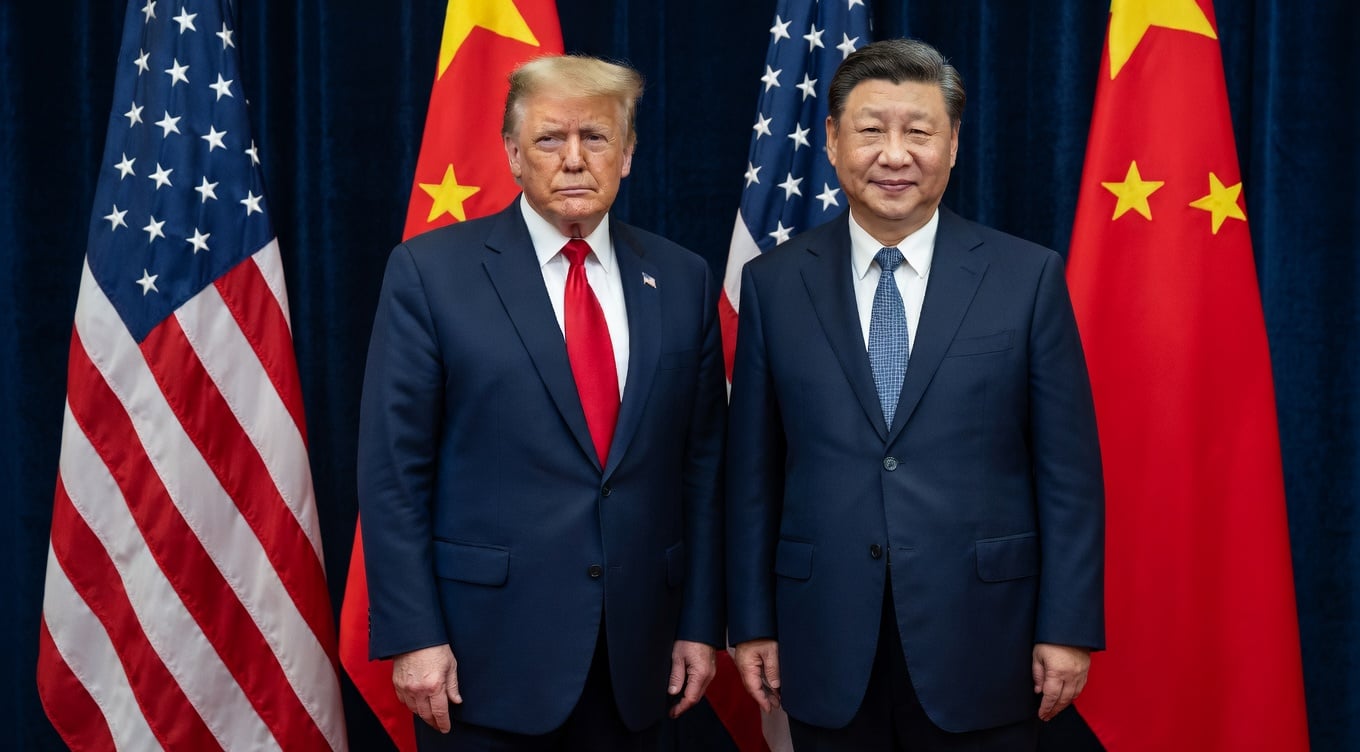
Nvidia co-founder Jensen Huang resigned this week following reports of an affair with a suspected Chinese spy. The news came just days before President Donald Trump and President Xi Jinping meet in Shenzhen on Thursday. Analysts say chip export limits are likely to shadow the talks.
Huang was a leading voice against strict US chip controls. He also promoted chip sales at the leaders’ summit in Busan a year ago. This year he will not be at the Asia-Pacific Economic Cooperation forum.
Lawmakers Push for Tighter Chip Rules
The woman at the center of the reports is Alice Huang, a Chinese citizen who is not related to him. She was reportedly recruited by Chinese intelligence to gather information. The Information reported she helped arrange at least $7.5 billion in Nvidia chip shipments to China.
Nvidia chip customer Megaspeed says Alice Huang left the company in August 2025 and has no current role.
The company has hired outside lawyers to investigate reports about its business and supply chain, while denying wrongdoing.
Singapore has barred Huang from re-entering the…
— Wall St Engine (@wallstengine) November 15, 2026
Some lawmakers now want chip limits added to this year’s National Defense Authorization Act. The bills include the AI Overwatch Act, the Chip Security Act and the MATCH Act. All three aim to limit the flow of advanced chips to US adversaries.
David Meale of Eurasia Group said Huang had been the industry’s most effective lobbyist against tighter rules. He said the scandal makes it politically harder to strip chip provisions from the defense bill. Those bills had been stalled by pushback from companies and the White House.
Senate Democratic leader Chuck Schumer called on Congress to pass the bills. House Select Committee on China Chairman John Moolenaar also asked for chip export controls in the defense bill. Kyle Chan of the Brookings Institution said Trump’s weaker hold on congressional Republicans after the midterm defeat makes it harder to hold such measures back.


The Commerce Department is finalizing a rule to stop Chinese AI firms from remotely using advanced chips in data centers abroad, The Information reported. Tech firms, including Nvidia, have long opposed the effort. Gabriel Wildau of Teneo said action now appears likely.
More Chinese AI companies have reportedly begun looking for Nvidia-powered computing capacity outside China. Traders are also said to be building stockpiles of the chips. The House passed the Remote Access Security Act in January, and it could raise compliance duties for data-center operators in Southeast Asia.
George Chen of The Asia Group said export controls will be high on the agenda. He said Beijing’s main concern is whether Washington is shifting from strategic stability to containment. Bo Zhengyuan of Plenum said neither side benefits from letting the issue sour the summit.
AI Safety Talks and Summit Guests
The two countries are also exploring cooperation on risks from powerful AI systems. Three people briefed on the preparations said more AI talks are planned around the summit. They are expected to cover safeguards against misuse.
In September, Treasury Secretary Scott Bessent and Chinese Vice Premier He Lifeng discussed an emergency system for reporting serious AI incidents. It has yet to start working, according to people familiar with the talks. They did not say what is causing the delay.
For now, communication relies mostly on direct contact between senior officials. Bessent said both sides would discuss alert protocols and share best practices for testing advanced models. China has named AI and the digital economy as priorities for the forum.
A senior US official said there will be no further progress announced on the Board of Trade plan to cut tariffs on $30 billion in goods. Trump is not bringing a formal business delegation. Elon Musk is the main CEO traveling with him.
Mastercard CEO Michael Miebach and FedEx CEO Raj Subramaniam are also expected at the summit dinner. Organizers expect more than 2,000 leaders at the APEC CEO Summit on November 17-18. That includes representatives from 115 Fortune Global 500 companies.


Michelle is an editor at CoinCentral & Blockonomi, covering the latest trends in crypto, blockchain, and digital finance. With a sharp eye for detail and a passion for emerging technologies, Michelle ensures every story delivers clarity, accuracy, and insight to our readers.


