







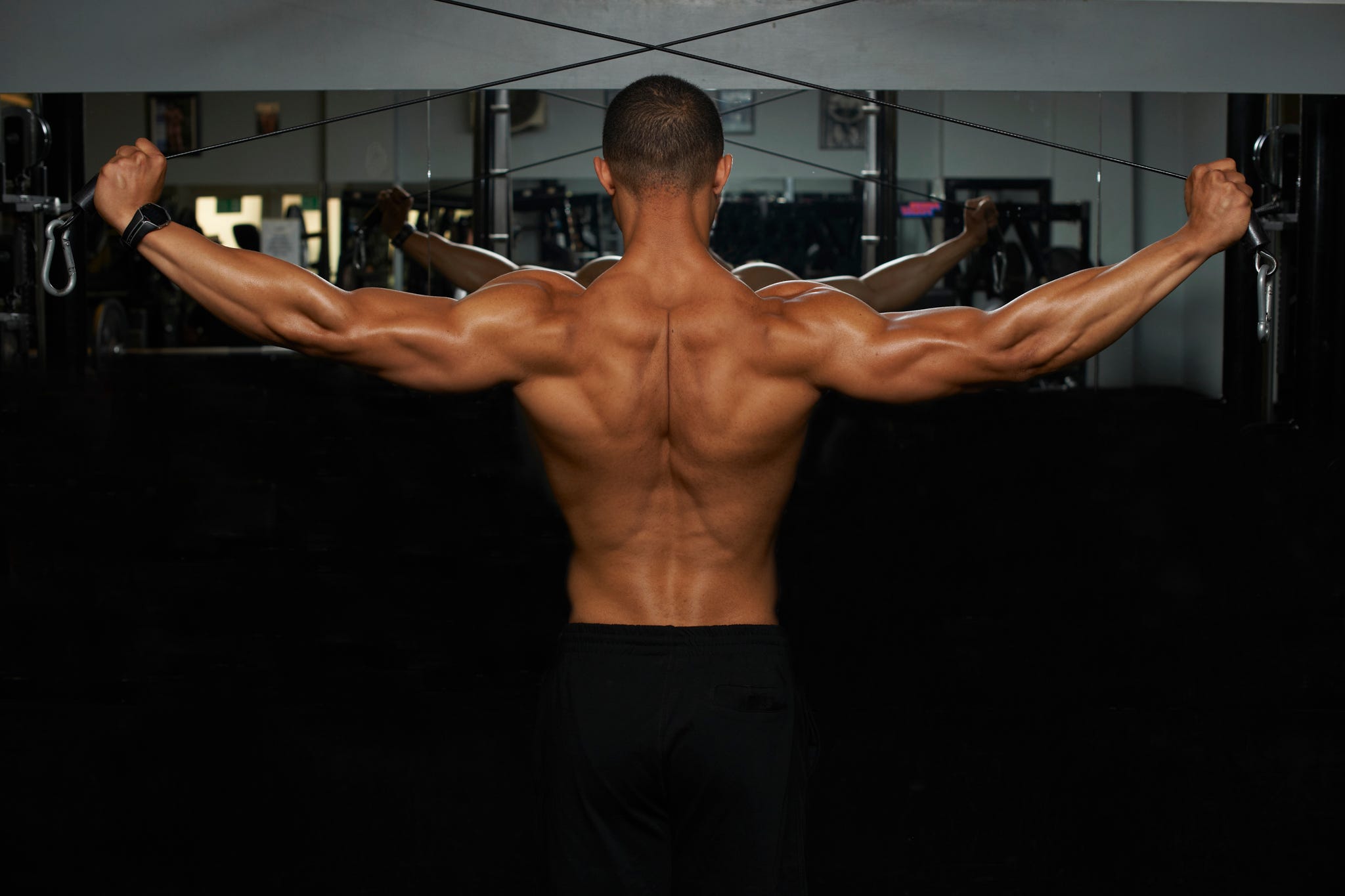


FOR TOO MANY guys, back muscles like the lats and traps get short shrift in training. Not on purpose, of course—after all, who doesn’t want a back that turns heads from behind or fills out a t-shirt like it’s stretched over a Greek statue—but since you can’t see those muscles in the mirror, they often get overlooked.
And that’s too bad, because all the chest exercises in the world won’t give you a V-shaped torso if you neglect the muscles populating your body’s flipside.
Simply adding more back exercises to your weekly routine is a good place to start turning things around, but to maximize your back development, you need to be more strategic. You can’t just think in terms of numbers. You need to add the right amount of exercises in the right combination to optimize your results and begin sculpting a perfect taper from your shoulders to your waist.
In short, you need a battle plan, and at Men’s Health, we’ve found one that works almost every time.
How Many Back Exercises Should You Do?
THE GENERAL ADVICE on how many back exercises to do each week is the same as it is for your arms: at least three. That’s the minimum amount that’ll let you hit all your back’s key muscles. Those exercises can be performed during a single workout if you follow a muscle group-focused training split or spread across two or three workouts if you hit your entire body each time.
What’s the maximum number of back exercises you should do? There’s no hard-and-fast rule for that, but research shows that the upper limit is around six moves or 20 total sets, whichever comes first. So that’s your sweet spot: three to four sets of three to six back exercises per week.
There should also be enough variety in those exercises to target the entire collection of muscles between your glutes and delts from multiple angles. In other words, simply performing an array of row variations won’t do—you need an arsenal of exercises that encompass a range of movement patterns.
How to Choose Your Exercises for Maximum Results
WITH SO MANY back exercises to choose from, selecting the best ones for back day can be… daunting.
But it doesn’t have to be. Remember, the key is variety—both in terms of movement
pattern and body position—and if you choose one exercise from each of the following four categories, you can’t go wrong.
Horizontal Pull
This fundamental movement pattern includes any action in which you pull a weight to your torso. In so doing, you’ll hit nearly every muscle in your back, including your lats, traps, lats, and rhomboids, as well as your posterior delts. Because horizontal pulling exercises mobilize so much muscle, they also allow you to use heavier loads than many other back exercises. Plus, they work your biceps, which is always a bonus.
Example: Dumbbell Row


How to Do It:
- Stand with your feet at shoulder width apart in front of the bench. Push your butt back and lower your torso down, extending your off arm to rest your palm on the bench. Make sure your shoulders stay above your hips.
- Grab the dumbbell with your working hand. Squeeze your glutes and abs to create full-body tension. Your back should be flat, with your head in a neutral position.
- Squeeze your mid-back muscles to drive your elbow up, rowing the weight. Keep your shoulders level and avoid rotating your lower back.
- Pause for a beat, then lower the weight back down.
Vertical Pull
Pullups, chinups, pulldowns—these vertical pulling exercises are workout staples for a reason: They’re hard as hell, and they hammer your lats. That’s important because your latissimus dorsi is the largest muscle in your back and one of the most important for sculpting a V-shaped torso.
Example: Close-Grip Lat Pulldown

How to Do It:
- Set the seat at a comfortable height. Grab the handle, using a neutral grip if it’s a V-handle or underhand grip for the more standard wide bar.
- Focus on keeping your feet planted into the ground, core tight, and maintain a tight grip on the bar.
- Lean back slightly—do not arch your back for this—then, squeezing your shoulder blades, drive them down as you pull. Remember to drive your elbows down as well as you pull the bar to the top of your chest.
- Hold momentarily at the bottom, then return to start position under control.
Horizontal Abduction
In addition to hitting your upper back muscles (traps, rhomboids), any exercise that involves spreading your arms away from your body’s midline (i.e., horizontal abduction) will hammer one of the most neglected muscles in any workout program: posterior deltoids. Although officially a shoulder muscle, their location makes them essential for building a strong backside.
Example: Rear Delt Fly

How to Do It:
- Set an incline bench to a relatively low angle, lower than you would for exercises like incline dumbbell presses. Sit on the bench holding a pair of dumbbells and lean down so that your chest rests on the back pad, facing toward the ground.
- Plant your feet on the ground and squeeze your glutes and ab muscles; your face shouldn’t be resting on the bench pad. “Think of breathing your abs aggressively into the bench, never letting your torso lose contact with it,” says Samuel.
- Squeeze your shoulder blades to lift the weights out in a wide arch, keeping a slight bend in your elbows rather than fully straightening your arms. Keep the movement wide to maintain the focus on your rear delts, instead of slipping down into your lats.
- Pause for a beat at the top, emphasizing the squeeze to your shoulder blades. Then, lower back down to the starting position with control.
Hip Hinge
We know what you’re thinking: Any movement involving a hip hinge (e.g., deadlift) is a leg exercise. While technically true, such big, compound movements also pay total-body dividends that run all the way up the posterior chain to the top of the back.
“Every deadlift includes a measure of shoulder extension, which is a function of the lats, while also hitting the erector spinae,” says MH Fitness Director Ebenezer Samuel, C.S.C.S., explaining that you don’t need to add a hinge movement to your leg day as long as you include it somewhere in your weekly program. “You’re not training them at length with a deadlift, but you are training them thanks to the heavy load.”
Example: Trap Bar Deadlift

How to Do It:
- Position yourself inside the trap bar, with your shins aligned with (or just in front of) the center of the bar.
- Push your butt back as far as possible, bend your knees, and reach down to grip the handles. Grip as tightly as possible.
- Keep your head in a neutral position, keeping your gazed fixed at something in front of you. Squeeze your shoulder blades to create tension, and turn the pits of your elbows forward, facing out.
- Make sure your hips are lower than your shoulders, then prepare to initiate the lift.
- Push your feet through the floor to stand straight up, squeezing your glutes at the top.
- To finish the rep, push your butt back as far as you can, then bend your knees to set the weight down.


Trevor Thieme is a Los Angeles-based writer and strength coach, and a former fitness editor at Men’s Health. When not helping others get in shape, he splits his time between surfing, skiing, hiking, mountain biking, and trying to keep up with his 10-year-old daughter.


