







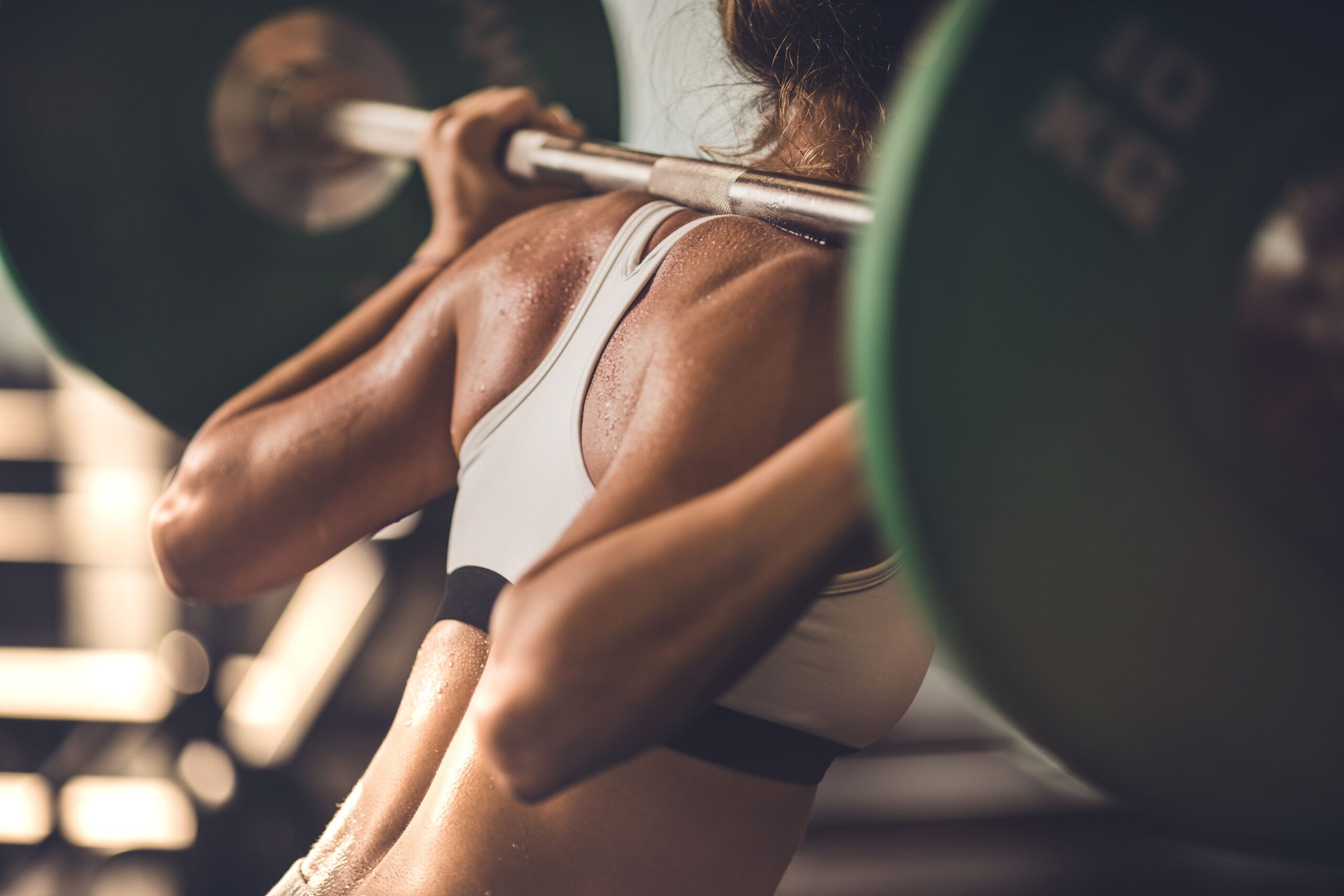
If you happen to sit next to Mima Mendoza on a train or stand behind her in a checkout line, you might get an earful about the benefits of lifting weights. “I’ve become like the person at the train station saying, ‘Have you heard the word of God recently?’ Except I’m like, ‘Have you thought of strength training recently?’” she tells SELF.
The 34-year-old from Severna Park, Maryland, got serious about lifting in 2024, around the time her doctor prescribed the GLP-1 medication Zepbound to support her weight-loss efforts. “I wanted to sustain this weight loss long term, and I wanted to manage metabolic illnesses like type 2 diabetes, high cholesterol, and high blood pressure that I was genetically predisposed to, and the answer to that was really building muscle,” she says.
Mendoza is one of many people to have taken to the weight room shortly after starting a GLP-1 medication. And this trend seems to be impacting gyms across the country. Between 2024 and 2025 use of free-weight equipment saw a marked increase in U.S. gyms, with members 6.7% more likely to use dumbbells, 3.8% more likely to use barbells, and 3.6% more likely to use kettlebells, according to a forthcoming report from the Health & Fitness Association, a fitness-industry trade organization. Compared with 2021 (the year Wegovy got FDA approval) dumbbell use is up 28%.
“Available data suggest that the growing interest in strength training is part of a structural, long-term trend, which in part is accelerated by GLP-1s’ increasing popularity,” Anton Severin, vice president of research at the Health & Fitness Association, tells SELF.
It’s important to note that weight-loss medications are not the only thing at play here. Trends around longevity and functional strength were already pushing more people toward resistance training, Severin says, but GLP-1s added a clinical urgency because they’re associated with a loss of lean muscle mass that strength training can help mitigate.
Here’s a look at how these medications are impacting gym culture—plus some tips that can help you get started on (and stick with) a weight-training routine.
Why strength training is nonnegotiable on a GLP-1
To get a little more specific, any form of weight loss—whether it’s via diet, surgery, or medication—will lead to some muscle loss, Jyotsna Ghosh, MD, an obesity medicine physician at Johns Hopkins Medicine, tells SELF. “The most protective things we can do to prevent a higher percentage of muscle-mass reduction are eating enough protein and resistance training consistently,” she says.
This is important because muscle mass is associated with overall health and longevity and becomes especially critical as people age.
That’s why Dr. Ghosh advises her patients to resistance train twice a week, which aligns with the CDC’s recommendations. (The agency also suggests 150 minutes of moderate or 75 minutes of vigorous cardio weekly.) While it’s possible to do strength training with dumbbells and resistance bands at home, some of Dr. Ghosh’s patients, like Mendoza, opt to join a gym.
To ensure she continues seeing results, Mendoza lifts heavy weights and designs her workouts to become more challenging over time, an exercise philosophy called progressive overload. These workouts require certain equipment and weights, so she joined Planet Fitness and later the YMCA.
How medicine and science shape exercise recommendations
This is far from the first time the world of medicine has impacted fitness culture in a massive way. “The fields of health and medicine are always shaping how we are recommended to exercise and how we actually do exercise,” Natalia Mehlman Petrzela, a history professor at The New School and author of Fit Nation: The Gains and Pains of America’s Exercise Obsession, tells SELF.
“Big innovations in science, such as the discovery in the late 1960s that cardio is good for [your cardiovascular health] and won’t make your heart explode, really shifted the way people exercised at that moment,” Petrzela says. This led to a cardio boom in the decades thereafter, with dance aerobics becoming particularly popular, especially among women, in the ’70s and ’80s , she says.
Then the pendulum swung and strength training came into vogue in the ’90s and 2000s as more research emerged suggesting that lifting could help improve bone health and prevent osteoporosis, Petrzela says. Now, 20-plus years later, the growing popularity of using GLP-1s for weight loss seems to be furthering the workout’s popularity.
How gyms are adapting
Gyms are clearing out some of their cardio equipment to make way for more weight racks, according to Petrzela. Severin says this might be because data shows traditional cardio machines aren’t getting as much use. That has “led many gym operators to rethink how space is allocated, with more emphasis being put on strength equipment,” Severin says. Personal training and small-group training numbers are climbing, too, he says, with the former up 22% from 2024 to 2025.
Some gyms are also educating trainers and staffers on the somewhat unique needs of clients who take GLP-1s and creating specialized programs that cater to them, Severin says. That’s the approach Kelvin Gary, CPT, has taken at Body Space Fitness, the New York City semi-private personal training gym where he’s the CEO and head coach. To better serve the growing client base of GLP-1 users, he says his coaches receive education on these medications, which he believes have a place in a holistic weight-loss strategy that also includes strength training.
“The key for us is helping [these clients] maintain lean muscle mass,” Gary tells SELF. “Our point is making sure that everyone has a sound understanding of the importance of maintaining their lean muscle mass, and when you’re not eating as much, that might mean we need to modify your workout a little bit,” he says, explaining that reducing intensity is one possible approach. GLP-1s also have side effects such as nausea that might impact someone’s workout, Gary notes.
Some larger brands are taking a similar approach to tailoring their clients’ workouts, just on a bigger scale. For example, two years ago Equinox launched what it calls a “one-of-a-kind, research-backed GLP-1 protocol” for its coaches to follow when working with clients who use the drugs.
Other gyms, like Life Time, are taking things a step further. In 2023 the brand launched a spin-off longevity and performance clinic called Miora, which provides access to medical guidance, personal trainers, and services including recovery therapies and GLP-1s. Lower-cost gyms like Planet Fitness are dipping their toes into the GLP-1 business as well. The company announced a partnership with Ro earlier this year, a telehealth provider that sells GLP-1 injections and oral medications.
GLP-1s allow exercise to have new meaning
Historically, exercise has been viewed as a weight-loss tool. But with so many people now turning to GLP-1s for help, there’s a growing shift toward setting different types of exercise-related goals. “If people are using GLP-1s as their primary strategy to lose weight, fitness is going to be for accomplishing all sorts of other things, whether that’s building muscle, finding community, or cultivating discipline and newer healthy habits,” Petrzela says.
Dr. Ghosh says she’s seeing this firsthand in her patient population. “One cultural shift that I see is that women are more excited to be strong,” she says. The stereotype of women worrying about getting “bulky” from strength training is effectively outdated, Dr. Ghosh adds, saying she’s less likely to hear that from patients these days.
For Mendoza allowing a GLP-1 to be her primary weight-loss tool gave her the freedom to think about exercise differently. “Zepbound helped me clear away space in my brain to actually focus on the evidence-based journey for strength training,” she says.
As other patients may ultimately do, Mendoza transitioned off the medication, but she has no plans to abandon her strength workouts.
Gary hopes this will be the rule, not the exception, for many people who start strength training on GLP-1s. “There is the longevity part of strength training that I think people are going to realize, Yes, we do feel better. We’re at a lower risk for injury,” he says.
Mendoza, for one, agrees. “If we want to live independently in our old age, especially women, building muscle is so important,” she says. “It has really become a huge part of my life.”
Starting your muscle-building journey
If you’re feeling inspired to give strength-training a try, these beginner tips from Dr. Ghosh are a great starting place for anyone—GLP-1 user or not.
Employ the buddy system.
Whether you’re using the squat rack for the first time or just trying to find the right kettlebell, navigating the weight-room floor can be intimidating, Dr. Ghosh says. But asking a friend or family member to go with you can help combat this, she notes. Some of her older patients report great success from going to the gym with a niece or daughter.
Try a class or trainer.
Dr. Ghosh often suggests that her patients try a strength-training class to nail down the basics before venturing into the weight room solo. Similarly, she recommends checking if your gym offers a free personal-training session. For patients with chronic pain or physical limitations, she often encourages them to see a physical therapist, who can help create personalized plans.
Take things slow.
Trying to do too much too soon is a recipe for injury. “I try to start people gradually,” Dr. Ghosh explains, saying the first step is just going to the gym consistently, rather than adding a ton of weight, complexity, or duration early on. “I try to get people to focus on the safety aspect because if you have an injury at the beginning, it really is demotivating and sets you back and can be hard to navigate,” she says.
Schedule it like a meeting.
“There’s a lot of research that when you pick a day and time the way that you’d schedule an appointment, your brain treats it differently than if you just say, ‘I’m going to go strength train twice a week,’ and then something comes up,” Dr. Ghosh says. “So I have people make appointments” for the gym.
Time it right.
“I do have patients who feel uncomfortable in a gym environment with so many other people who maybe have a different fitness level,” says Dr. Ghosh. That’s why she suggests going during “off” hours if you can.
Related:
- I’m an RD—Here Are 4 Things I Told My Family Member Before They Started a GLP-1
- What to Know About Trying to Conceive If You’re Taking a GLP-1
- The Science on Weight and Health Is More Complicated Than You Think
Get more of SELF’s great service journalism delivered right to your inbox.


