


Game of Thrones and House of the Dragon fans are no strangers to shocking deaths that have altered the story. Every fan remembers where they were when Ned Stark was suddenly decapitated despite being the lead character of the show to that point, and some of us can’t even talk about the Red Wedding. To that end, the original series often had book readers anticipating major events, which is where House of the Dragon differs. Based on Fire & Blood, there are obviously major benchmarks that the series has hit, but there have also been some pretty distinct changes to the text, including when (and the circumstances why) certain characters die. As expected, spoilers follow.
Videos by ComicBook.com
This week’s episode of House of the Dragon, the Season 3 finale and the last one for probably two years, had no shortage of major deaths. Though most of these came on the battlefield and, yes, involved dragon fire, the most devastating one happened at the end as Rhaenyra is alerted to a death at the Red Keep. Having been held prisoner all season, Helaena Targaryen finally ended her captivity by jumping from the window of her room and falling to her death. Her end, though, may have had a lot more going on than fans might have noticed, including a not-so-subtle jab at George R.R. Martin.
George R.R. Martin’s History of Criticizing House of the Dragon Changes


For starters, the death of Helaena Targaryen is one that fans have been expecting for some time. In the pages of Martin’s book, it’s tragic for a few reasons, the first being that she has largely been held in captivity for a year, if not more, and the second being that it is a response to learning of the death of her son Maelor, who was previously marked for death by his mother during the “Blood and Cheese” incident. The book even includes rumors like Maelor’s head was brought to her. In any event, the death of Helaena was a major event in the public turning on Rhaenyra, as many not only loved her as a figurehead, but believed she was murdered rather than taking her own life.
In House of the Dragon, there’s a key detail worth noting, which is that Helaena’s son Maelor was cut out of the story entirely, despite plans to include him at one time. As a result, George R.R. Martin took to his blog and, in a now-deleted post titled “Beware the Butterflies,” decried the change by comparing it to the butterfly effect from Ray Bradbury’s short story, “A Sound of Thunder.” Small changes beget larger ones down the road, being the gist of Martin’s argument about the character being cut.
To Martin’s point, removing Maelor from the series already changed a key moment in Season 2 when the “Blood and Cheese” moment took place, which meant that Helaena’s suicide would lose some of the meaning that it had in the book. That said, House of the Dragon made sure to find a new angle on Helaena’s death that seems like very pointed commentary on Martin’s critiques.
Helaena Targaryen’s Death May Have Been a Playful Jab at George R.R. Martin

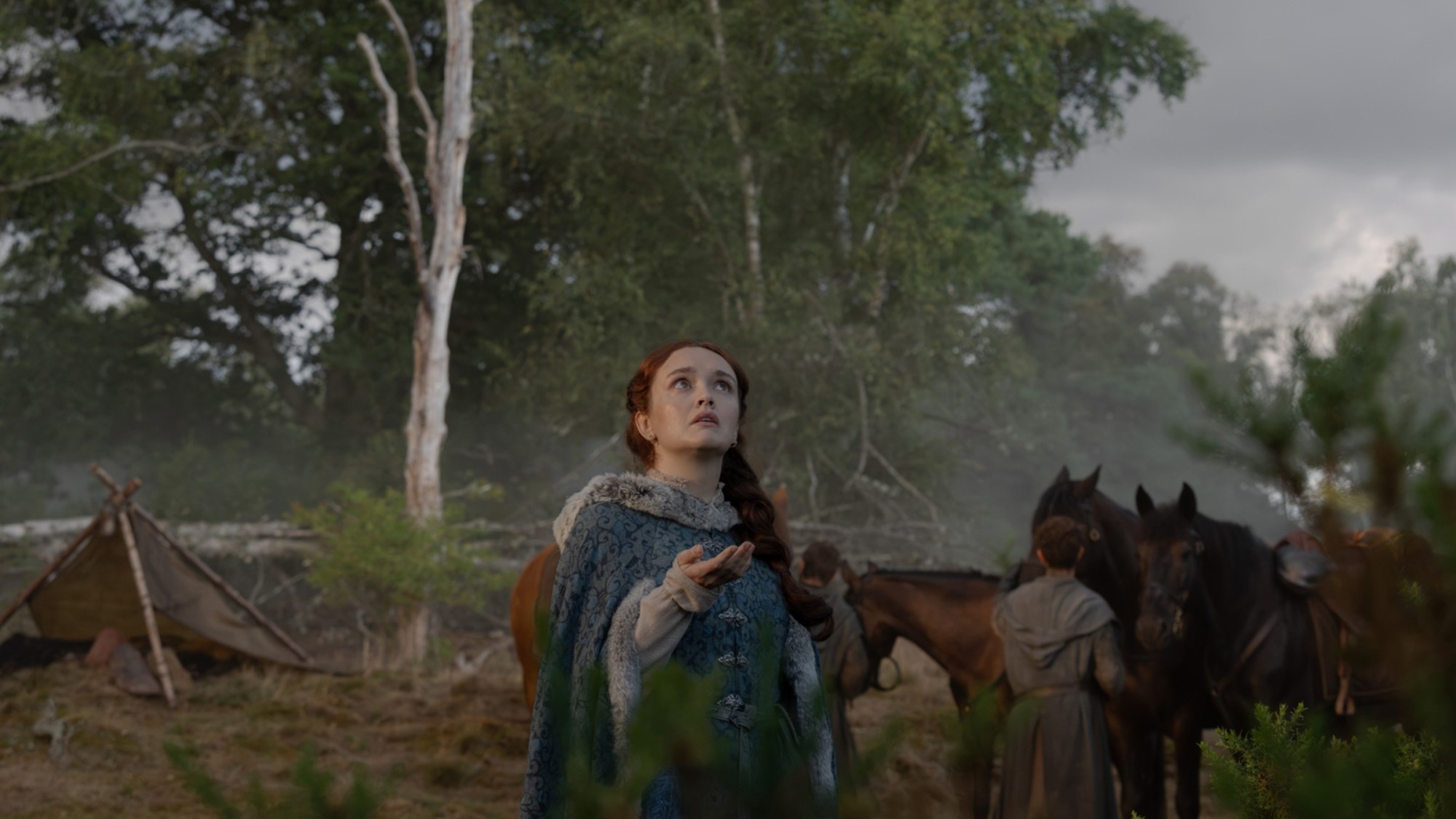
Earlier in the season, Helaena makes a note of caterpillars that are developing into butterflies out of season, something that seems like a clear prophecy of her own demise. As fans who saw the episode know, not only is Helaena’s death confirmed to Rhaenyra, but something happens elsewhere in Westeros to her mother, Alicent, that serves as an indicator to her that something terrible has happened. While making her way back from Harrenhal to King’s Landing, Alicent is overcome by a sudden flock of butterflies flying around her, a sign that her only daughter has died without a word even being said.
What makes this poignant moment in the season finale take on a new meaning is the setup from earlier in the season. The caterpillars that Helaena takes notice of are poisonous because they eat Nightshade leaves, all of which is a story beat not found in Fire & Blood. Where is it found? In Martin’s deleted blog post talking about the changes in House of the Dragon and why he didn’t like them, where he wrote: “There are larger and more toxic butterflies to come, if HOUSE OF THE DRAGON goes ahead with some of the changes being contemplated for seasons 3 and 4…”
We’re maybe two years away from seeing House of the Dragon Season 4 come to life, so it’s unclear what changes may be made in that stretch of episodes that alter the story of the book, but the Season 3 finale of the show may have just made its position very clear about what it thinks of Martin’s feelings on the matter.