







By Tsvetana Paraskova – May 02, 2026, 6:00 PM CDT
- The Strait remains heavily restricted, with the U.S. tightening its blockade and Iran maintaining control over vessel movements, leaving no near-term resolution in sight.
- President Trump faces a War Powers deadline, adding legal and political uncertainty to the ongoing conflict despite claims the ceasefire pauses the clock.
- Hundreds of millions of barrels have already been lost, tightening global supply, pushing prices higher, and increasing the risk of economic slowdown if disruptions persist.

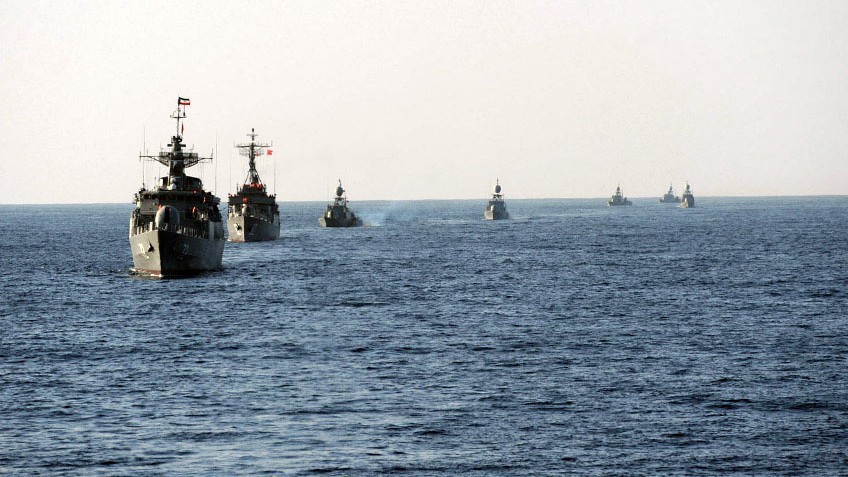
Two months after the Iran war began, the Strait of Hormuz remains severely restricted for tanker traffic while U.S. President Donald Trump faces a key legal deadline at home under the 1973 War Powers Resolution.
As of early Friday, May 1, the deadlock at the world’s most vital oil chokepoint, the Strait of Hormuz, doesn’t appear close to being resolved. The U.S. is doubling down on the naval blockade outside the Strait aimed at stopping Iranian oil exports. But Iran controls most vessel movements through the lane and is increasingly defiant that it wouldn’t give up control over the passage that used to handle a fifth of daily global oil and LNG flows before the war.
In a message on Thursday, Iran’s new Supreme Leader Ayatollah Mojtaba Khamenei – who hasn’t been filmed or recorded since he was elected in early March after his predecessor, and father, was killed – suggested that the only place of the U.S. in the Persian Gulf is “at the bottom of its waters.”
Meanwhile, under the 1973 War Powers Resolution, President Trump is required to terminate any use of U.S. Armed Forces within 60 days after submitting a report of a war to Congress if Congress hasn’t authorized the military action—and it hasn’t.
The 60-day deadline expires on Friday, and could be extended by the President by no more than 30 days.
U.S. Defense Secretary Pete Hegseth argued on Thursday the U.S.-Iran ceasefire “has stopped the clock” on that deadline count, while House Speaker, Republican Mike Johnson, said, “We are not at war.”
Regardless of how the Trump Administration and Congress handle this legal provision, there appears to be no resolution in sight to the deadlock at the Strait of Hormuz, which has led to the loss of hundreds of millions of barrels of crude since the war began.
Related: Repsol Holds Off on U.S. Listing for Upstream Unit Despite 2026 Plans
Losses are growing by the hour, and oil market participants may have finally caught up on the huge loss of supply that won’t be returning for months, even if the Strait of Hormuz reopened unconditionally today.
“In round numbers, the 1 billion [barrels] is baked in now because we have probably lost 600 million to 700 million at this stage, but by the time things get moving again, if they get moving again, it takes time to bring all back,” Russell Hardy, CEO at the world’s biggest independent oil trader, Vitol Group, said at the FT Commodities Global Summit in Lausanne last week.
The disrupted energy flows triggered a global race for alternative supply, and sent energy prices soaring with the prospect of slowing global economic growth and even leading to a global recession if the world’s most critical oil chokepoint stays mostly inaccessible for another three months. In the U.S., gasoline prices hit their highest level since July 2022, the previous instance in which oil prices spiked to above $100 per barrel after Russia invaded Ukraine.
The U.S. blockade outside Hormuz has been partially effective, according to vessel-tracking and satellite imagery data.
“Iranian export activity remains constrained but adaptive. Kharg Island continues to load, but with queue pressure and dark tanker drift,” marine intelligence firm Windward said in a report on Thursday.
Over the past week, traffic at the Strait of Hormuz has become more active, but the wider system is more opaque, Windward noted.
“Visible transit is increasing, while concealed activity, enforcement reach, and regional operating risk continue to grow.”
With no resolution to the Hormuz deadlock in sight, oil prices would continue to rise as the global system is exhausting the buffers that have cushioned the blow so far.
“Given the magnitude of the production loss and the unavailability of spare capacity, the buffers in the system are insufficient to replace the volumes of lost barrels, and if the disruption persists for longer, the existing buffers will become less effective,” Bassam Fattouh, director at the Oxford Institute for Energy Studies (OIES) and OIES Head of Oil Research, Andreas Economou, wrote in a paper this week.
“Consequently, prices will have to play a central role in the adjustment through their impact on production and consumption.”
By Tsvetana Paraskova for Oilprice.com
More Top Reads From Oilprice.com
- Tankers Move from Fuel to Crude Trade as War Upends Flows
- JP Morgan: UAE Could Attract More U.S. Investment After OPEC Exit
- ENEOS Takes 10% Stake in Malaysia LNG Tiga in New Deal With Petronas
Download The Free Oilprice App Today




Tsvetana Paraskova
Tsvetana is a writer for Oilprice.com with over a decade of experience writing for news outlets such as iNVEZZ and SeeNews.


