

Advertisement

Higher Revenue Will Reduce Interest Rates, Stabilise Naira, Says Finance Minister
By Kabir ABDULSALAM,
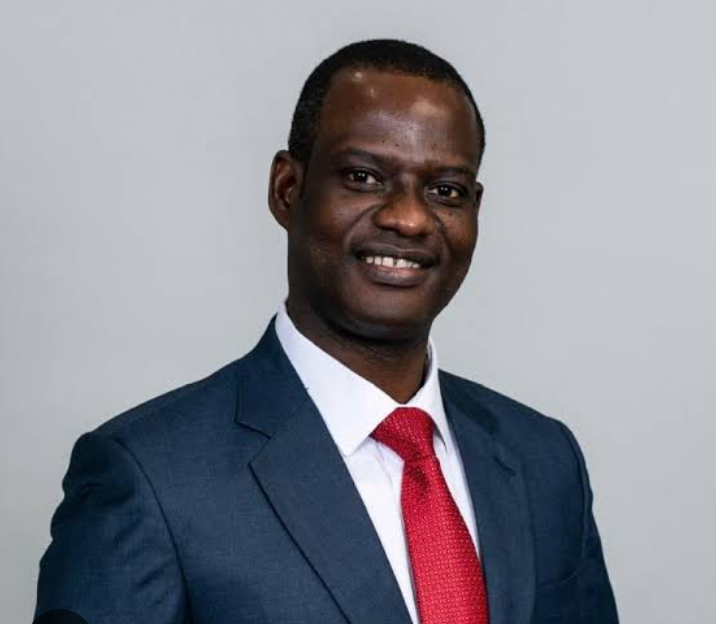
The Minister of Finance and Coordinating Minister of the Economy, Mr. Taiwo Oyedele, has said Nigeria can achieve lower interest rates, a stronger naira and greater macroeconomic stability by significantly improving government revenue generation.
He argued that optimising revenue would reduce the country’s dependence on borrowing, strengthen public finances and create conditions for sustainable economic growth.
Oyedele made the remarks on the second day of the 7th African Emerging Markets Forum in Abuja, themed “Building Resilience Amidst Geoeconomic Uncertainties.”
According to him, revenue mobilisation remains the Federal Government’s foremost economic priority because inadequate public revenue forces excessive borrowing, with far-reaching consequences for businesses and households.
“We said we have to mobilise revenue. Revenue optimisation is a priority. We actually think that if Nigeria were generating the right amount of revenue, people’s interest rates would be lower and the naira would be stronger and more stable,” he said.
The tax reform expert stressed that paying taxes through an organised fiscal system is preferable to what he described as the “informal taxation” imposed by inflation.
Quoting American statesman Benjamin Franklin’s famous saying that “nothing is certain except death and taxes,” Oyedele said the statement has become even more relevant in today’s economic environment.
He explained that when governments resort to financing expenditure through excessive borrowing or money creation rather than adequate revenue generation, citizens ultimately bear the cost through rising prices.
“When government prints money to spend, that’s inflation tax. They don’t ask for your permission, they don’t enact laws, but the money you have is no longer worth what it used to be,” he said.
According to him, inflation acts as a hidden tax that hurts low-income households more severely because they lack the financial assets needed to protect themselves from the erosion of purchasing power.
He warned that persistent inflation and widening inequality could create serious social and economic consequences if left unchecked.
“When inequality persists, it becomes dangerous. It’s like sitting on a gunpowder keg—it will eventually explode,” he cautioned.
Oyedele said the Ministry of Finance is pursuing a three-pronged strategy to strengthen Nigeria’s economy, centred on revenue optimisation, economic growth and fiscal discipline.
“Revenue optimisation is number one. Number two is growth because the economy must expand. Number three is fiscal discipline—always,” he stated.
He also unveiled a new institutional framework, code-named DMA, which he said will guide the ministry’s operations and implementation of economic policies.
According to him, the “D” stands for Diligent Execution, reflecting the ministry’s commitment to implementing policies and spending programmes efficiently.
The “M”, he explained, represents National Interest, emphasising that economic decisions must prioritise Nigeria’s collective welfare above personal, regional or sectoral considerations.
“It should be Nigeria first, Nigeria always,” he declared.
The “A” stands for Accountability, which Oyedele described as a critical pillar for rebuilding public confidence in government institutions.
As part of efforts to strengthen transparency, he disclosed that the Ministry of Finance is developing a new national data portal that will provide credible, timely and easily accessible economic information.
According to him, the initiative is intended to ensure Nigeria becomes the primary source of its own economic data instead of relying on international institutions.
“When people are looking for data about Nigeria, we no longer want them to reference the World Bank for Nigeria’s data. We will own our data. It will be credible, accessible and timely,” he said.
Oyedele said the reforms are designed to improve policy implementation, strengthen fiscal governance and build a more resilient economy capable of withstanding global economic uncertainties.
