

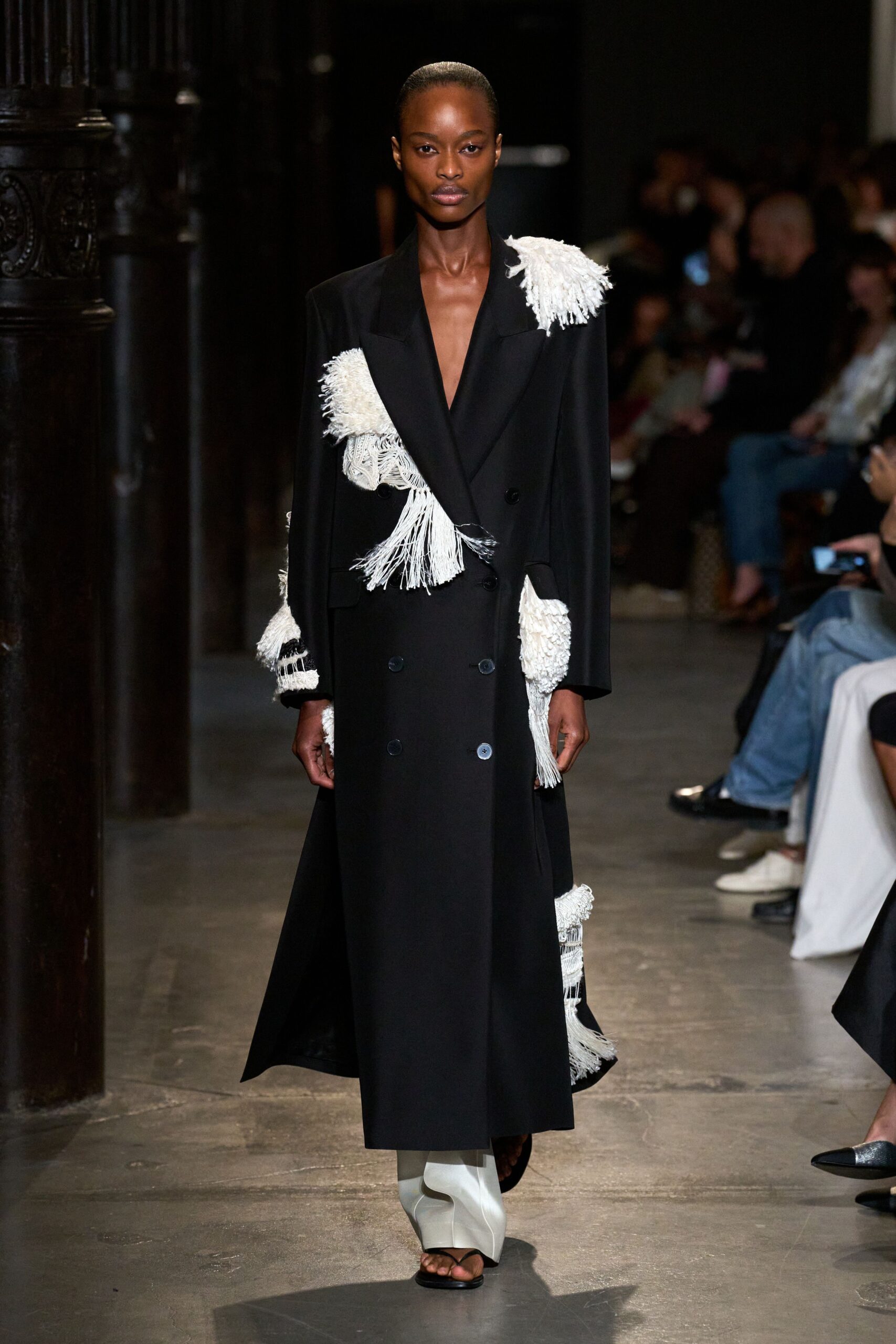
Each season, Monterrey-born, New York City-based Stephanie Suberville picks a Mexican artisan to collaborate with. The designer is precise in her approach, sifting through the official list of Grandes Maestros del Arte Popular Mexicano, traveling and forging relationships. She produces each piece in a limited run that she promises not to recut, both so artisans don’t feel she owns their work, and to create a sense of get-it-while-you-can specialness. For Spring 2027 she returned to the work of Angélico Jiménez, a Oaxacan alebrijes craftsman–who she collaborated with on a series of prints based on the carved and painted bodies of the creatures for fall 2024–at his daughter Maricarmen Jiménez’s insistence.
Shortly after Jiménez’s work was delivered to stores, he passed away. Maricarmen is now taking up his mantle and trying to secure master artisan status herself. Rather than carving in cedar like her father, she’s chosen copal, a tree that has deep meaning for her Zapotec community.
“[She said] ‘My dad was a feminist, and there’s not a lot of artisans that are female in the area. He wanted me to succeed,’” said Suberville, who agreed to reuse the print with her blessing if she also created her own. It was Suberville’s first runway show, so it felt right to revisit an earlier collection, as well as share the moment, given the role partnership plays in her own brand building.
Mariacarmen created a more diminutive, dimensional version. For one look, a shirt in her print was layered beneath her father’s, poking out at the collar and cuffs. Suberville often animates her clothes with tassels and texture—this time, the way they bounced down the runway mirrored the hypnotizing nature of the Jimenezes’ fantastical carved creatures. She added a twist to the base of the tassel to allude to the snakes around the neck of a goddess who popped out of a copal tree cut down by Spanish conquistadors, according to a Oaxacan legend. A few boxy skirts looks took cue from the huipil. Suberville knows how to create a shape that conveys a sense of fluidity and ease, as a black silk trouser and top evidenced. She included a number of knitwear and crochet pieces as part of her ongoing collaboration with the Bolivian women’s artisan collective Madres & Artesanas Tex.
This time, she fleshed out Heirlome’s offer with denim because she noticed people were naturally pairing her tops with it. Suberville’s approach to clothing is detailed and intentional—which made the collection feel tightly tethered together. But she’s also guided by feeling, “a lot of it is intuitive,” she said.
