







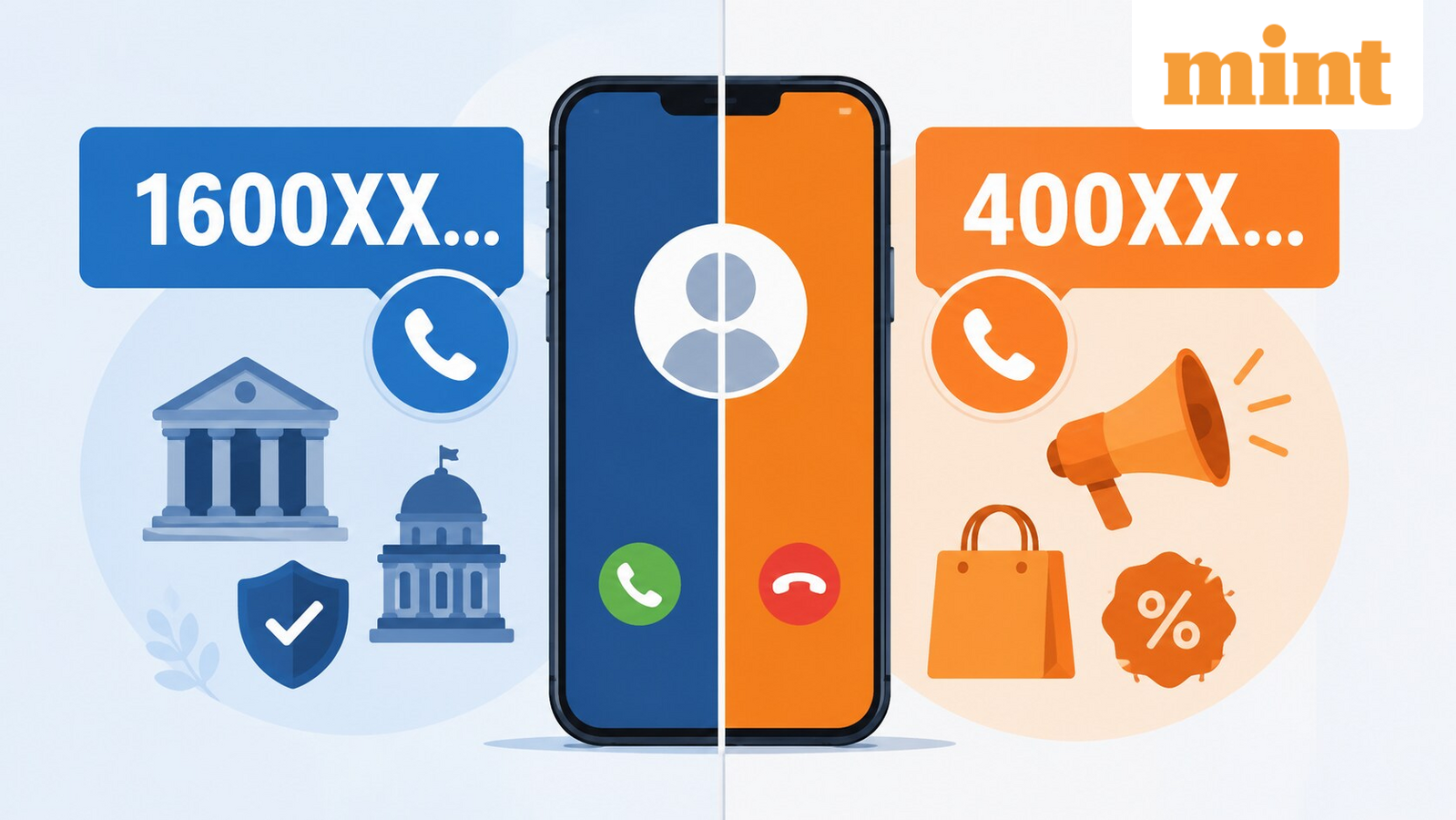
The 1600-series numbers are used for service and transaction calls by financial entities, while 140-series numbers are meant for promotional calls. Calls from the 1600 series cannot be tagged, filtered, or blocked, whereas 140 calls can be blocked based on a user’s DND preferences.


The Telecom Regulatory Authority of India (TRAI) has issued a clarification on the purpose and functioning of the designated 1600 and 140 number series.
The regulator said these two series serve completely different purposes. While 1600-series numbers are reserved for service and transaction-related communications, 140-series numbers are exclusively meant for promotional or marketing calls.
What are 1600-series calls?
The 1600-series is meant for service and transaction calls made by banks and financial institutions to their existing customers, along with government-to-citizen communications.
These numbers can only be used by entities in the BFSI sector that are regulated by the Reserve Bank of India (RBI), Securities and Exchange Board of India (SEBI), Insurance Regulatory and Development Authority of India (IRDAI), or Pension Fund Regulatory and Development Authority (PFRDA).
Government departments can also use this number for citizen-related communication.
Telecom operators or any third-party apps are not allowed to tag, filter, or block calls that begin with the 1600 series. Tagging means displaying labels such as “spam” or “suspected spam” on incoming calls, while filtering means screening or treating calls differently before they reach the customer.
What are 140-series calls?
The 140-series is meant exclusively for promotional or marketing calls made by businesses across sectors. Any company that wishes to make promotional calls using this series must first register with its telecom service provider under TRAI’s Telecom Commercial Communications Customer Preference Regulations (TCCCPR).
Unlike the 1600 series, these calls are subject to customer preferences under the Do Not Disturb (DND) framework.
Customers who have opted out of promotional calls from specific sectors or from all sectors through the DND registry will not receive 140-series marketing calls from those categories. They can register or update their DND preferences using various channels, including the TRAI DND App.
TRAI has also clarified that telecom operators should not tag or filter 140-series calls, except where blocking is required based on a customer’s registered DND preference.
Key differences between 1600 and 140 series calls
In a post on X, TRAI highlighted the key differences between the 1600 and 140 calls.
| Feature | 1600 Series | 140 Series |
| Example | Calls begin with 1600XXX | Calls begin with 140XXX |
| Purpose | Service calls, transaction-related communication and government-to-citizen communication | Promotional and marketing calls |
| Usage | Financial institutions regulated by RBI, SEBI, IRDAI and PFRDA, along with government departments | Any registered business or organisation making promotional calls |
| Call tagging | Not permitted | Not permitted |
| Call filtering | Not permitted | Not permitted |
| Call blocking | Not allowed | Allowed only if the customer has opted to block such calls through the Do Not Disturb (DND) preference |
Disclaimer: This is for informational purposes only. Please visit the official website for the latest updates and guidelines.
About the Author
Sheetal Goel
Sheetal Goel is a Content Producer at Livemint, where she covers corporate developments, personal finance, business trends, markets, and SEBI-related updates. She focuses on simplifying complex financial concepts and presenting them in a clear, reader-friendly manner, thereby helping audiences better understand investment trends, personal finance, and market developments. Her writing focuses on making finance more accessible to everyday readers while maintaining clarity, accuracy, and relevance.
She holds a degree in Economics (Hons.) along with an MBA in Finance, which has helped her develop a strong foundation in financial analysis, market understanding, and business reporting. Before joining journalism, she worked with finance and broking firms, where she closely followed market developments, investment strategies, and evolving industry trends. This practical exposure strengthened her understanding of financial markets. She has also written content across multiple formats and platforms, including YouTube, LinkedIn, and Instagram.
Over time, she has developed expertise in covering market-linked stories, investor-focused topics, and regulatory updates in a simplified yet informative style. She also enjoys reading and listening to Hindi poetry, reflecting her appreciation for literature and creative expression beyond the world of markets and numbers.


