



Active Citizens, Africa, Civil Society, Climate Action, Climate Change, Development & Aid, Editors’ Choice, Featured, Gender, Gender Violence, Headlines, Human Rights, Sustainable Development Goals, TerraViva United Nations, Women’s Health, Youth
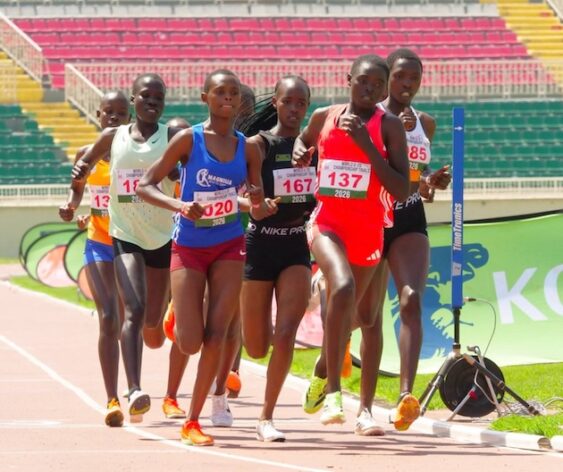

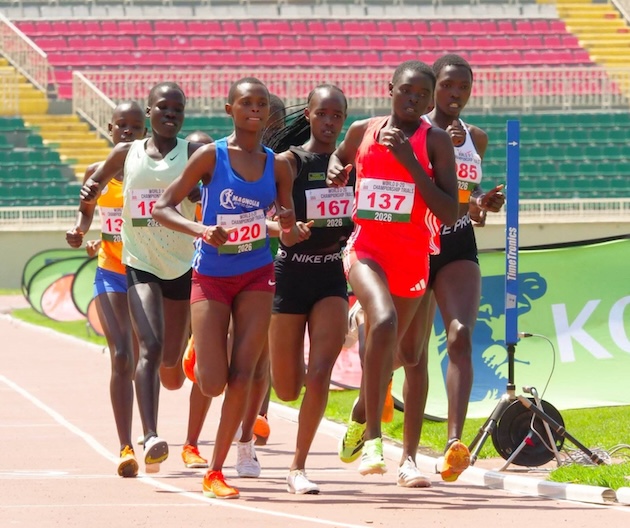
Josephine Sembeyo (in blue) competes during Kenya’s World Athletics Under-20 trials in May, where she qualified for the World Athletics Under-20 Championships in Oregon. Credit: Robert Kibet/IPS
OLOITOKTOK, Kenya, Jul 30 2026 (IPS) – Before sunrise each morning, 19-year-old Josephine Sembeyo joins dozens of teenage runners leaving Magnolia Athletics Camp for training beneath the shadow of Mount Kilimanjaro.
The quiet morning air is broken only by the rhythm of footsteps along the dusty roads that have shaped generations of Kenyan distance runners.
But for Sembeyo, every kilometre represents far more than preparation for the 2026 World Athletics Under-20 Championships, where she will represent Kenya in the 1,500 metres.
Running has given her a chance she once feared might never come: to complete her education, support her family and make choices about her own future.
“Life hasn’t been easy for us. My father married a second wife and left my mother to raise us on her own. Seeing everything my mother has gone through motivates me every day. I want to succeed in athletics and education so that one day I can support her and my siblings and give them a better life,” Sembeyo says.
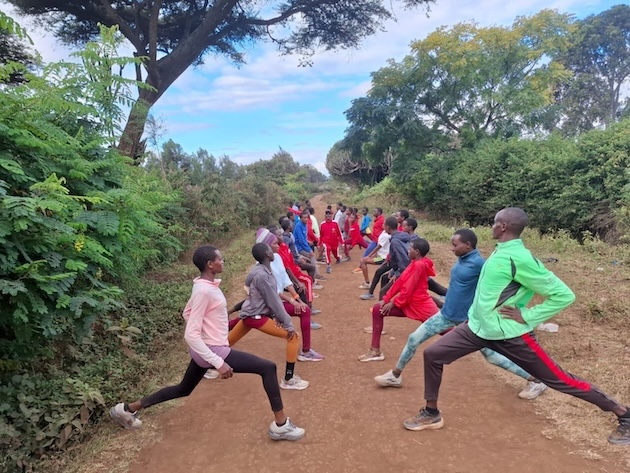

Girls from Magnolia Athletics Camp during a daily road training session in Oloitokitok, Kenya. Credit: Robert Kibet/IPS
A Camp Creating New Possibilities
Sembeyo is among 45 girls from pastoralist communities living and training at Magnolia Athletics Camp in Oloitokitok, near Kenya’s border with Tanzania.
The camp provides full scholarships covering education, accommodation, meals, athletics training and safeguarding support.
For many of the girls, athletics is not only about competition. It has become a pathway to education, confidence and opportunities that might otherwise remain out of reach.
The girls’ journey comes as they mark the International Day for Women and Girls of African Descent on July 25, a day that recognises the contributions, resilience and experiences of women and girls of African descent while highlighting the need to address discrimination and inequality.
For girls growing up in marginalised communities, access to education, safe spaces and opportunities can be a powerful tool for breaking cycles of poverty and exclusion.
Coach Andrew Lesuuda says Magnolia was created not only to identify talented runners but also to give girls a safe environment where they can develop academically and personally.
“When we started Magnolia Athletics Camp, our vision was not only to identify talented runners. We wanted to create an environment where girls could discover their potential, stay in school and believe that they can achieve more in life,” Lesuuda says.
“Athletics gives them an opportunity to dream, but education gives them the foundation to build a future beyond sport.”
Sports Against Early Marriage and FGM
Many of the girls joining Magnolia come from communities where opportunities for girls remain limited and where some continue to face risks linked to female genital mutilation (FGM) and child marriage.
According to UNICEF, more than 230 million girls and women alive today have undergone FGM. The United Nations says progress towards ending the practice remains too slow to meet the Sustainable Development Goal target of eliminating FGM and child marriage by 2030.
Kenya outlawed FGM in 2011 and has made progress through legislation and awareness campaigns, but the practice continues in some communities, particularly among sections of pastoralist populations.
The struggles facing girls in vulnerable communities are part of a wider global challenge.
Sarah Hendriks, a UN Women spokesperson, in a recent press conference said no country in the world has achieved full legal equality between women and men, leaving millions of girls exposed to harmful practices and unequal opportunities.
“No country in the world has achieved full legal equality between women and men. More than half of the world’s countries do not actually define rape by law on the basis of consent. Nearly three-quarters — 74% of the world’s countries — still allow child marriage by law, allowing girls to be married as children,” Hendriks said.
At Magnolia, athletics has become a tool for changing that reality by keeping girls in school and giving them opportunities beyond traditional expectations.
A Second Chance Through Running
Before joining Magnolia, Sembeyo feared her education could end early and that she might face an early marriage.
Today, she believes the camp has transformed her future.
“Had it not been for Magnolia Athletics Camp, I believe my life would have been very different. I was at risk of an early and forced marriage, but coming here gave me the chance to stay in school, train and dream about a better future. Today, I’m happy because I know my life has a direction,” she says.
Her daily routine starts before sunrise with training, followed by school and another athletics session in the afternoon before homework in the evening.
“Every morning when I train, I remind myself why I’m doing it. I know every session brings me closer to my dream and gives me another opportunity to change my family’s life,” she says.
When Climate Change Threatens Dreams
Sembeyo is joined at Magnolia by Jeska Lenawatop, a 1,500-metre runner from Lkuroto village in Samburu County, a pastoralist region in northern Kenya.
Before joining the camp, Jeska’s life revolved around helping her family care for goats and sheep, the main source of livelihood for many pastoral households.
But recurring droughts have devastated livestock and deepened economic hardship for communities that depend on animals for survival.
“Before Magnolia, my life was mainly about grazing goats and sheep. With droughts destroying livestock, our family’s main source of income, I had little hope for the future. This camp gave me a chance to stay in school and pursue my dreams,” Jeska says.
Through athletics and education, Jeska now sees a future beyond the challenges facing her community.
Building Confidence Through Education
Another athlete benefiting from Magnolia is Felister Naimutie, a 400 m and 800 m runner from Lolgorian village in Kilgoris.
She says drought and limited opportunities affected many girls growing up in her community.
“Growing up, I saw how drought affected our families and made life difficult. Many girls had few choices beyond pastoral duties and early marriage. Magnolia gave me hope through education and athletics,” Felister says.
For her, the camp represents more than a training facility. It is a place where she can continue learning while pursuing her sporting ambitions.
Beyond the Finish Line
Barnaba Korir, Athletics Kenya’s Youth Development Director, says community-based programmes, such as Magnolia, complement national efforts to identify young talent while ensuring athletes remain in school.
He says sport can build confidence, leadership and opportunities for young people.
At Magnolia, parents, teachers, community leaders and anti-FGM advocates also engage with families to promote girls’ education and challenge harmful practices.
As another training session ends beneath Mount Kilimanjaro, the girls jog back to camp laughing and encouraging one another.
For Sembeyo, the finish line is no longer defined only by medals.
Her selection to represent Kenya at the World Athletics Under-20 Championships has strengthened her belief that athletics can transform not only her life but also those of her family.
“Being selected to represent Kenya at the World Under-20 Championships means everything to me. It’s proof that hard work pays off, and I believe it is opening opportunities that can change my life. I want to make my family proud and show other girls that they should never give up on their dreams,” she says.
One day, she hopes to stand on an international podium wearing Kenya’s colours.
But her greatest ambition goes beyond medals.
“I want girls from communities like mine to know that education and sport can change their lives. If someone believes in you and gives you an opportunity, you can achieve your dreams. My dream is not only to win medals for Kenya but also to make sure my mother and my siblings have a better life,” Sembeyo says.
Perhaps Magnolia’s greatest achievement will not be measured by medals but by the number of girls who leave the camp with education, confidence and the freedom to choose the futures they want.
IPS UN Bureau Report