





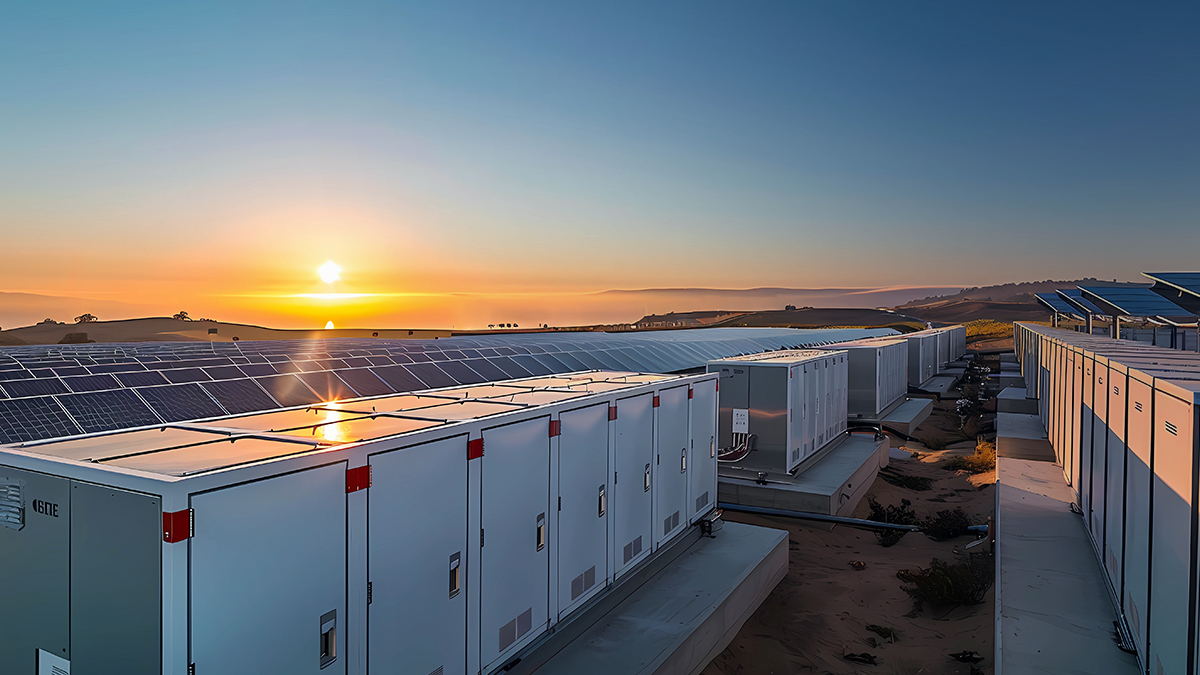
France plans to ease grid connection rules for solar-plus-storage projects with installed capacity of up to 25 MW, provided grid injection does not exceed 17 MW. The measure is part of a broader government initiative to accelerate electrification and improve electricity demand flexibility.
Following an initial package of measures announced in April, French government spokesperson Maud Bregeon has unveiled additional initiatives aimed at accelerating the electrification of the economy and improving electricity demand flexibility.
The government identified significant untapped potential in the residential sector, particularly through smart management of heating, domestic hot water and electric vehicle (EV) charging. It estimates that these measures could reduce associated energy costs by up to 35%.
To unlock this potential, the government plans to make subsidies for heat pumps conditional on smart-control capabilities from 2027. Households installing such systems could save between €150 ($168.8) and €200 annually.
For EV charging infrastructure, the government intends to work with industry stakeholders to ensure that smart-control functions are enabled by default in new installations. Options under consideration include connecting charging stations to Linky, France’s nationwide smart electricity metering system, or introducing connectivity solutions that automatically schedule charging during off-peak hours. These measures could save households between €70 and €100 per year.
The government also plans to introduce flexibility requirements for industrial energy metering systems.
Smart meters and battery storage
The plan calls for greater use of Linky smart meters to manage household electricity consumption. Although the meters already support applications such as automated domestic hot water heating, many of their capabilities remain underused. The government intends to encourage their integration with residential energy management systems to improve demand flexibility.
Another measure targets grid connections for solar photovoltaic installations combined with battery energy storage systems. By the end of 2026, the government plans to allow projects with installed capacity of up to 25 MW to benefit from an exemption from the current 17 MW connection limit, provided their maximum power injection into the grid does not exceed 17 MW.
The measure is intended to facilitate grid connections for hybrid renewable energy projects, particularly solar-plus-storage installations, without increasing their maximum permitted grid injection.
France’s energy regulator, the Commission de Régulation de l’Énergie (CRE), has also outlined plans to encourage electricity consumption during periods of high solar generation.
New electricity supply products are being tested for potential commercialization through EDF Obligation d’Achat (EDF OA), the division of state-owned utility EDF responsible for purchasing electricity under France’s renewable energy support schemes.
The products would reflect the typical daily solar generation profile, with output peaking around midday before declining in the late afternoon. The aim is to encourage electricity suppliers to offer tariffs that incentivize consumers to shift demand to periods of abundant, lower-cost solar generation.
Industry targets for 2030
Several French energy companies and industry associations have also announced commitments to expand electricity demand flexibility by 2030.
Gimelec, a French trade association representing electrical equipment, automation and digital energy technology companies, aims to mobilize 6 GW of flexibility in commercial and service-sector buildings. It plans to support the installation of energy control and management systems in 50% of existing facilities.
EDF aims to introduce remote-control systems for energy-intensive equipment in five million customer households by 2030, targeting heating, domestic hot water, heat pumps and EV charging. The utility plans to use its EDF & Moi customer app to connect and manage these devices, positioning the platform as a household energy management tool.
French independent power producer Neoen has committed to deploying 1 GW of flexibility capacity by 2030.
Meanwhile, French energy storage and flexibility provider NW Group plans to invest €1 billion by 2030 to add 1.5 GW of capacity to its electricity flexibility platform in France. The company also intends to open the platform to industrial and residential consumers seeking to generate revenue from flexible electricity consumption.
Octopus Energy France has pledged to manage 1.5 million connected devices by 2030, representing an estimated 5 GW to 6 GW of flexible capacity.
The company expects the initiative to deliver €100 million in financial benefits to households and support the deployment of 15,000 remotely controllable heat pumps. It could also underpin a €150 million investment in a heat pump manufacturing facility, subject to the targeted deployment volumes being achieved.
This content is protected by copyright and may not be reused. If you want to cooperate with us and would like to reuse some of our content, please contact: [email protected].


