There are no luxuries and only the most essential comforts on offer at the remote Alpine refuge where “Forest High” is set: Hot water runs just a couple of hours a day, the soup served for dinner is thin and blandly nourishing, and don’t ask where to charge your phone, because you’ll be met with a polite but firm refusal. It’s a place for passing hikers to rest, not to vacation — though for the women who run the place, across different seasons and weathers, it’s somewhere to stay and hit pause on life, and perhaps to finally hear yourself in the silence. Manon Coubia‘s gorgeous, whispering first feature is therefore not a film of major dramatic incidents and revelations, though its payoff is clear and cleansing as a mountain spring.
“Forest High” is inspired by Coubia’s own ten years of experience as a warden at a mountain refuge: The Alpine landscape so ravishingly explored here has previously been integral to her short film work, notably the 2016 Locarno winner “The Fullness of Time.” Though a lightly scripted narrative is woven through proceedings here — particularly in its third and final section, an intimate two-hander — the film is chiefly attuned with documentary-like specificity to environmental details and textures.
Popular on Variety
Shot over four seasons of real-life activity at a working refuge, with Coubia’s actors interacting with actual hikers passing through the place, it’s a bracing and singular work: While its triptych structure and shifting focus on different shapes and stages of female identity most easily invite comparisons with Kelly Reichardt’s “Certain Women,” there’s nothing quite like it in the arthouse market.
Specialist distributors may be emboldened by the film’s special jury mention following its premiere in Berlin’s Perspectives competition for first features. (Rai Cinema International Distribution is handling sales.) Despite its modesty of scale, the deliberate, spell-casting rhythm and sensory density of “Forest High” demand theatrical exhibition, as do its ruggedly spectacular mountainscapes, shot on tactile 16mm film by DP Robin Fresson — it’s hard to imagine the film having quite the same strangely enveloping quality on streaming platforms.
Set in the crisp first flush of spring, the film’s opening third is centered on Anna (Salomé Richard, star of Coubia’s 2023 short “Full Night”), a thirtysomething local who has done several stints at the refuge, and to whom this breathtaking region is merely home. With that familiarity has come a certain restlessness: She intends for this to be her last season doing the job, though a light dalliance with handsome traveling birdwatcher Antoine (Arthur Marbaix) keeps things interesting. He’s on the lookout for the capercaillie, a rare kind of grouse rapidly disappearing from the region, and a quasi-mythical motif running through the film — a symbol of a natural but increasingly threatened way of life.
With summer comes the older, more careworn Hélène (Aurélia Petit) to take over the job in brisk, practised fashion learned from decades of temporary menial work. But there’s pleasure in it too. This is the shelter’s busiest season, making for the film’s most vibrant, chattering section, and Hélène adapts well to the rhythm and volume of whatever company rolls in, while occasionally retreating to the woods for some respite. Coubia’s dramatic emphases are generally unexpected — the mystery of what happened to one booked-in family of hikers that never shows up amid a heavy rainstorm is left hanging — while lower-stakes scenes are followed through to rewarding, observational conclusions. One lovely sequence sees an outdoor lunch at the lodge turn into an impromptu dance party with a live musician singing some cheerfully inauthentic bossa nova.
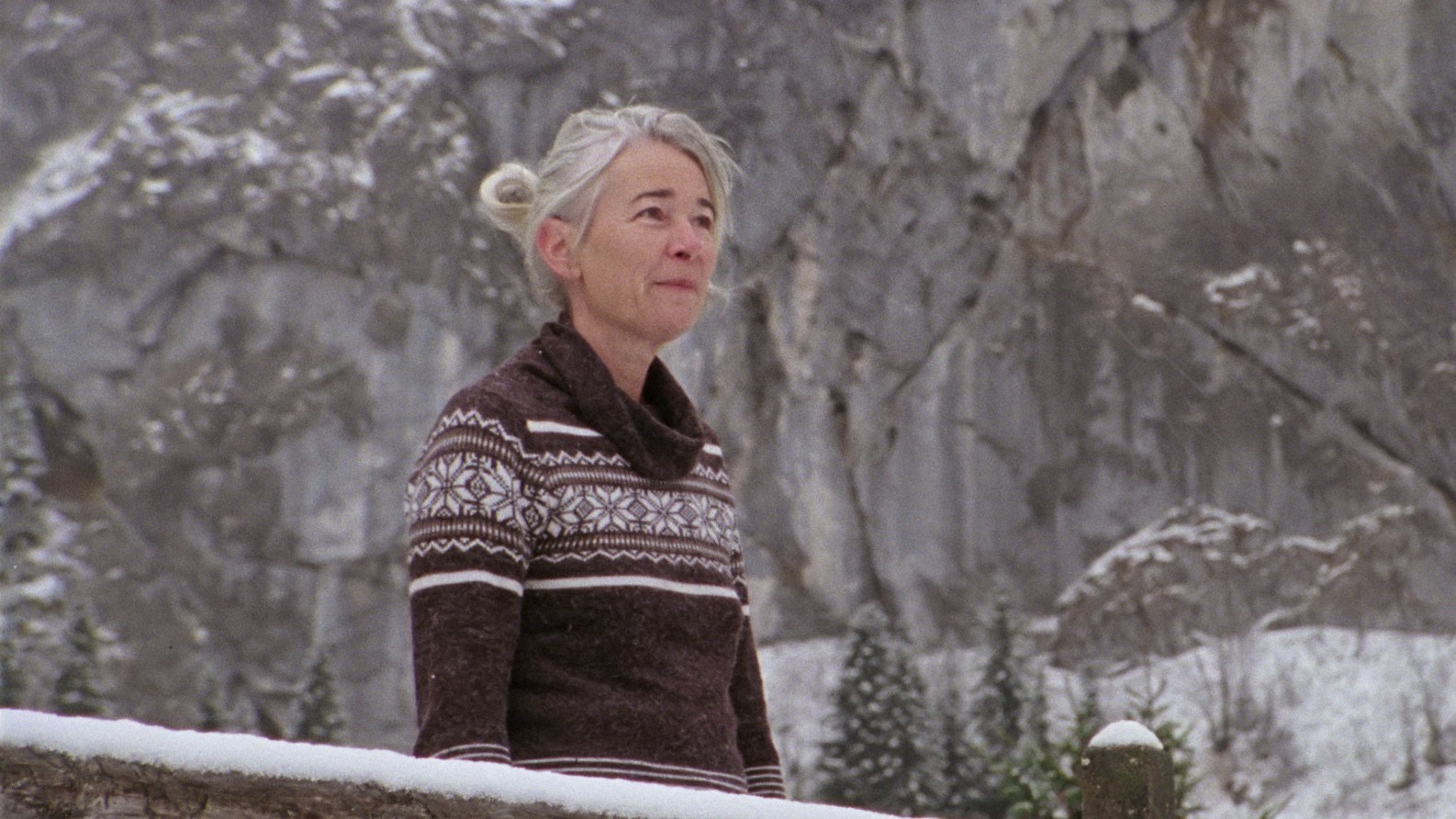
Finally, as the shelter empties out for winter, outsider Suzanne (Anne Cousens) arrives to mind it in the off-season. Like Hélène, she’s in her fifties, though her background is very different: Once a well-to-do wife and mother, now single and empty-nested, she’s living life on her own terms for the first time. The alone-but-not-loneliness afforded by the small, snow-licked hut is thus exactly what she’s after: As she contentedly tends the fireplace, reads her book and snuggles into bed with her puffer coat on, “Forest High” emerges as a kind of anti-“Shining,” a testament to the healing benefits of female solitude. It can’t last, of course, as a single male guest turns up at the shelter — a young army deserter, in his own way calmly adrift in life — but a gentle, reserved connection sparks between them.
All the while, “Forest High” feels happily haunted by the souls of those who have passed through its humble timber location, which remains unchanging and indifferent to modern developments and pressures in the lives escaped down below. Assisted by the serene control of Fresson’s camera, the patience and invisible economy of Théophile Gay-Mazas’s editing and the glassy, wind-brushed echoes of François Chamaraux’s score, the assured light touch of Coubia’s filmmaking maintains an atmosphere of tranquil but unromanticized remove from the world — as if there’s just an extra hour or two in the day, and no great need to fill the time.