

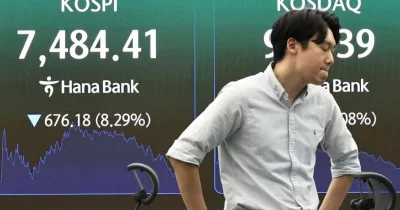
Foreign investors have dumped approximately $62 billion worth of South Korean stocks by late May 2026, even as the KOSPI benchmark index posted a year-to-date gain exceeding 70%. That’s the kind of contradiction that makes you do a double-take.
The selling pressure culminated in a dramatic intraday drop of more than 8%, with June 5 earning the grim nickname “Black Friday” after the index shed over 5% in a single session. On that day alone, foreign outflows hit roughly 1.24 trillion won, or about $801 million.
A record-breaking rally meets record-breaking selling
The KOSPI surged past multiple record highs, approaching or exceeding the 8,000 level. A 70%-plus gain in under six months puts South Korea’s benchmark among the best-performing major equity indices in the world this year.
The selling has been concentrated in South Korea’s crown jewels. Samsung Electronics and SK Hynix, the semiconductor giants that anchor the KOSPI’s weighting, bore the brunt of foreign liquidation.
The Korean won weakened to its lowest level against the US dollar in over 17 years during the outflow period, adding another layer of pressure for foreign holders who face currency translation losses on top of any portfolio adjustments.
Mechanical selling, not a bearish bet
The outflows appear to be driven largely by mechanical factors rather than a fundamental bearish outlook on Korean equities.
One major driver is rising index weightings. As the KOSPI has surged, South Korea’s share in global equity benchmarks like the MSCI Emerging Markets Index has grown. That forces index-tracking funds to rebalance, and in some cases, that rebalancing means selling Korean stocks to stay within allocation limits.
Another catalyst has been profit-taking tied to major upcoming US IPOs, with SpaceX reportedly among the most anticipated listings drawing capital back toward American markets.
Retail investors fill the gap
Domestic retail investors have poured an estimated $70 billion into Korean equities, more than offsetting the $62 billion in foreign outflows. This is the force that has kept the KOSPI’s upward trajectory intact despite the relentless foreign selling.
During the 2020-2021 pandemic rally, Korean individual investors earned the nickname “ants” for their collective buying power. That energy appears to have returned in 2026, with local investors showing conviction in the long-term story around Korean semiconductors and the broader AI-driven technology cycle.
The net effect is a market increasingly owned by domestic participants. Strong domestic buying provided a floor during selloffs, exactly what happened after the June 5 crash when the market quickly stabilized.
Disclosure: This article was edited by Editorial Team. For more information on how we create and review content, see our Editorial Policy.
