





analysis
Karen Attiah’s firing by the Washington Post sparked a backlash the newspaper has paid for ever since
Published
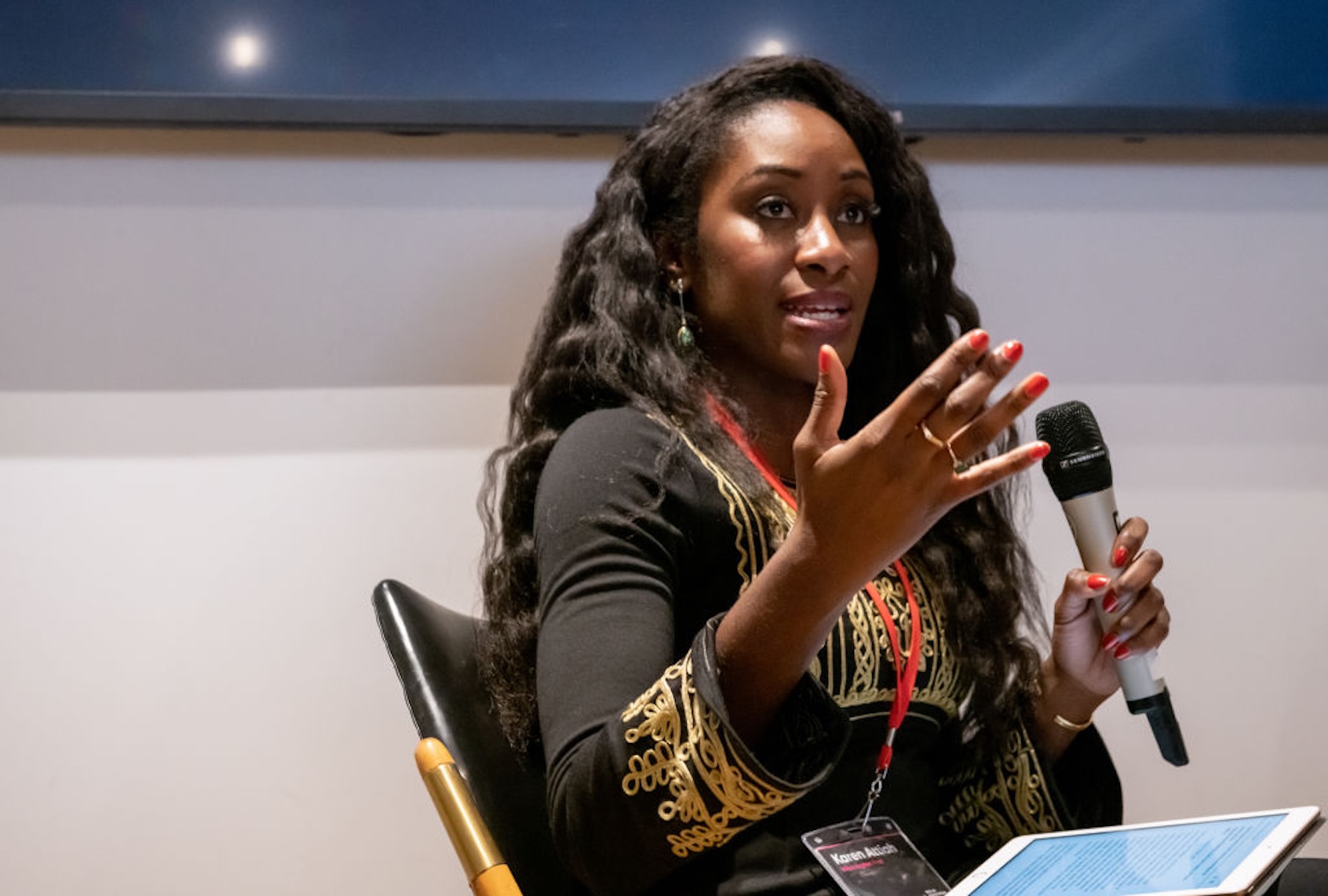

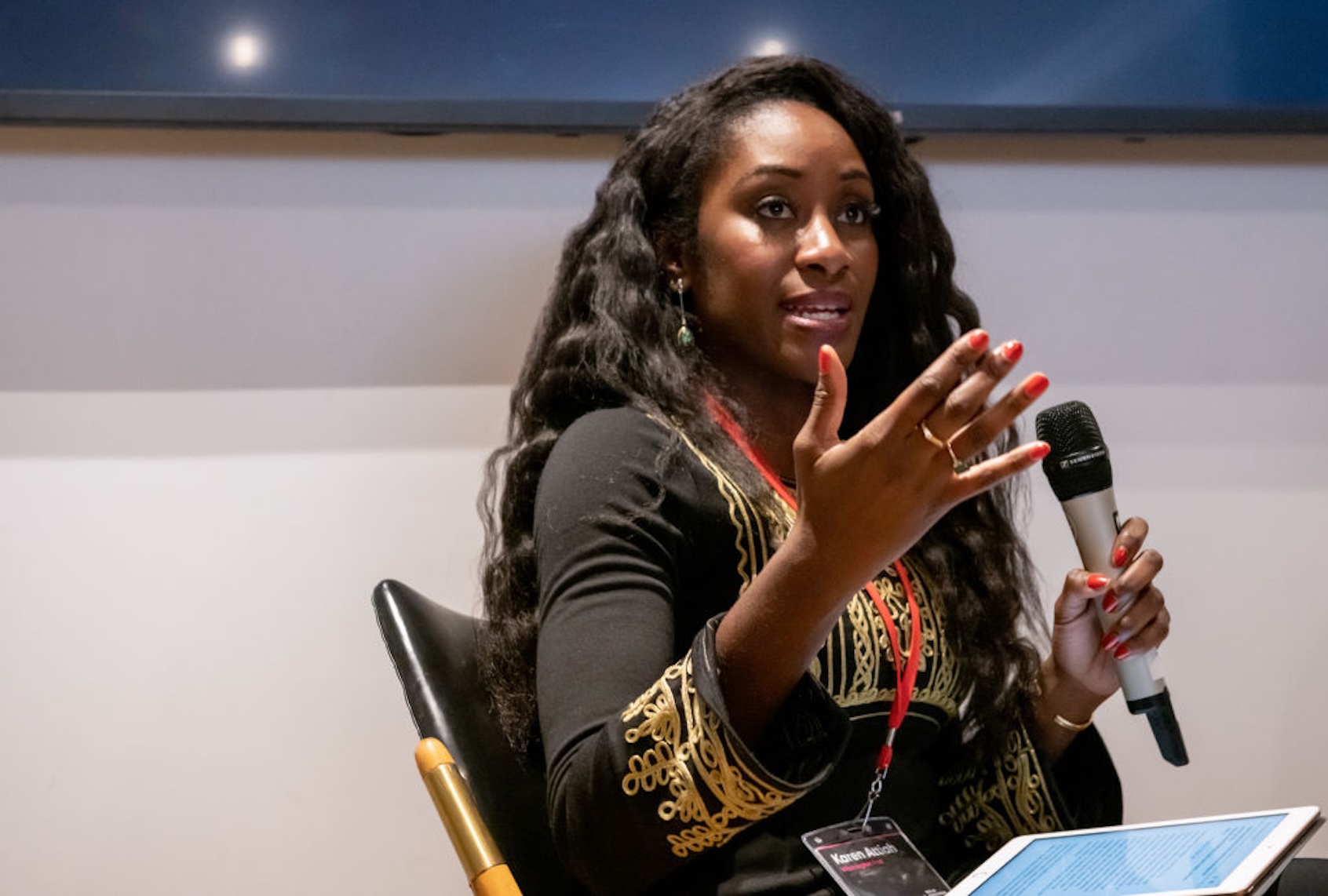
Karen Attiah leads a discussion on Saudi hacking techniques at the Oslo Freedom Forum on May 28, 2019 in Oslo, Norway. (Photo by Julia Reinhart/Getty Images) (Julia Reinhart/Getty Images)
In the wake of Charlie Kirk’s killing in September 2025, MAGA influencers like Laura Loomer famously worked to ruin the professional aspirations of anyone who exhibited anything less than somber reverence. Now, nearly one year later, reality has delivered a series of rebukes to the right’s cancel culture campaign. From quiet multi-million-dollar settlements to high-profile reinstatements of fired employees, the conservative crusade to police speech has run hard into the unyielding wall of labor solidarity and constitutional protections.
Former Washington Post opinion columnist Karen Attiah is the latest example of this shift. On Thursday, an independent arbitrator ordered the newspaper to reinstate Attiah and restore her wages and benefits after she was fired in September for a social media post following the Turning Point USA co-founder’s death. Arbitrator Sarah Miller Espinosa did not mince words. The Post, she wrote, “did not have good and sufficient cause” to fire Attiah and had “failed to establish [that she had] engaged in gross misconduct.”
Attiah, who had worked at the newspaper for 11 years, posted on her personal Bluesky account that she would not perform grief for a man who spent his career telling audiences that Black people were less intelligent, empathy was a Western invention and some degree of gun deaths was an acceptable price for an unrestricted Second Amendment. “Refusing to tear my clothes and smear ashes on my face in performative mourning for a white man that espoused violence is… not the same as violence,” she wrote the day Kirk was killed at a Utah university.
The Post called Attiah’s comments “gross misconduct” and said they violated its social media policy. Managers at the newspaper also argued that her mention of “a white man” could endanger the physical safety of Post employees. The irony is that, according to the newspaper’s own security team, Attiah herself had been a recurring target of threats and security monitoring since 2018, with dozens of threat assessments being sent to her. On at least one occasion, she was provided an in-person security detail.
The conservative campaign against Attiah weaponized a single misquote to claim “journalistic malpractice.” She wrote that Kirk had said “Black women do not have the brain processing power to be taken seriously. You have to go steal a white person’s slot.” What Kirk actually said, in a July 2023 broadcast, was aimed at four specific women he named — former first lady Michelle Obama, political commentator Joy Reid, the late Texas Rep. Sheila Jackson Lee and Supreme Court Justice Ketanji Brown Jackson — all of whom he accused of admitting they benefited from affirmative action. “You do not have the brain processing power to otherwise be taken really seriously,” Kirk said. “You had to go steal a white person’s slot to go be taken somewhat seriously.”
Beyond the fact that Attiah’s underlying point — that Kirk’s rhetoric about Black Americans is demeaning and undeserving of national honor — holds up in context, a journalist’s inaccurate paraphrase can be criticized without pretending that it automatically constitutes a fireable offense. In any case, the Post did not fire Attiah for misquoting Kirk, although according to a CNN report that cited two staffers from the newspaper, “management also took issue” with the mistake.
Attiah has argued that she was silenced for exposing racial double standards, and was the victim of a broader purge of Black voices from American institutions with Donald Trump’s return to the White House.
Attiah has argued that she was silenced for exposing racial double standards, and was the victim of a broader purge of Black voices from American institutions with Donald Trump’s return to the White House. At the time of her firing, Attiah was the last remaining Black full-time opinion columnist at the Post, a publication that serves one of the nation’s most diverse regions.
While outrageous, Attiah’s dismissal was also just the latest in a series of moves that sent a blunt signal from Jeff Bezos, the newspaper’s billionaire owner, about the kind of views that would be elevated and others that would become expendable at the Post. In 2024, he blocked the paper’s editorial board from publishing its planned endorsement of Kamala Harris shortly before the election, a stunning move that showed a willingness to interfere with the Post’s longstanding and respected editorial identity. The unprecedented move prompted at least 250,000 subscribers — roughly 10% of the Post’s digital subscriber base — to cancel. Then, just a few months later, he announced that the Opinion section would concentrate on “personal liberties and free markets.” This shift in focus was jarring for the Post, which had previously published a diversity of viewpoints in its opinion pages while maintaining a largely liberal editorial orientation. It prompted further resignations and another reported wave of roughly 75,000 digital cancellations in two days.
Attiah, meanwhile, gained more than 10,000 new subscribers on Substack the day after announcing she had been fired and protested her dismissal by posing for a photoshoot outside the paper’s headquarters. (Two of the three executives who signed off on firing her, opinion editor Adam O’Neal and publisher Will Lewis, no longer work at the paper.) In a statement issued on Monday, Attiah described herself as “relieved to finally have that record set straight” and declared her willingness to return to work at the Post. According to the arbitration decision, the Post “planned to reassign” Attiah “from Opinion Columnist to Letters Editor.”
Start your day with essential news from Salon.
Sign up for our free morning newsletter, Crash Course.
The punishment campaign that erupted after Kirk’s assassination was supposed to demonstrate the power of the new right. Major media companies rushed to discipline commentators, like political analyst Matthew Dowd, who was fired from MSNBC for calling Kirk a “divisive” figure who trafficked in “hate speech.” The Post was merely one of the higher-profile entries in a ledger of institutions that panicked in the days after Kirk’s assassination and fired people to appease a mob that had no legal standing to demand anything.
ABC suspended Jimmy Kimmel after he criticized the political exploitation of Kirk’s death, a crouch of appeasement that seems to have finally ended. A Reuters investigation in November counted more than 600 people fired, suspended or investigated over what they said or didn’t say about Kirk’s death. The machinery worked frighteningly quickly because the campaign was organized by high-profile conservative politicians, activists and influencers. Vice President JD Vance told Americans to report their neighbors to their employers. Tennessee Sen. Marsha Blackburn tweeted out the face and biography of a Tennessee professor and tagged his university, demanding to know what it planned to do about him. The Republican governor and House speaker of South Dakota demanded the immediate termination of a faculty member.
It turned out to be an extraordinarily effective — but expensive — demonstration of why due process exists.
A retired Tennessee law enforcement officer who was jailed for 37 days over a Kirk meme walked away with a $835,000 settlement once the charge collapsed. Tennessee’s flagship university paid $1.9 million to a professor it fired after Fox News pounced on her comments. From public defenders to college professors to public school teachers, people who were fired for social media comments about Kirk have received more than $5 million so far, paid for by taxpayers. Brittney Brown, a former Florida Fish and Wildlife Conservation Commission biologist who was fired after reposting a Kirk-related meme flagged by the account Libs of TikTok, run by Chaya Raichik, received a $485,000 settlement from the state. “I want them to know that they lost,” Brown told NPR. “I won. I can speak out now.”
What all of these cases share, Attiah’s included, is that the institutional stampede to appease MAGA is expensive. The right’s campaign was supposed to scare Americans into silence. Instead, it’s provided a pricey lesson in the value of fighting for the protection of political speech.
Ultimately, however, Attiah’s triumph over The Washington Post was not a First Amendment ruling. It was a labor arbitration conducted under the collective bargaining agreement between the Post and the Washington-Baltimore News Guild, a detail that undoubtedly wrangles right-wing activists. That is what labor power looks like when it actually works.


