

Advertisement

FG Pays 1,000 Contractors, More Payments Pending
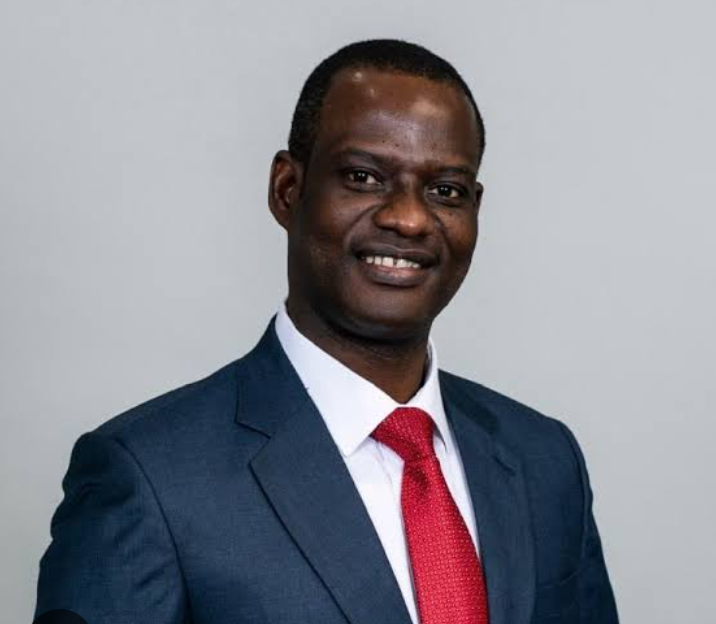
The Federal Government paid more than 1,000 contractors in recent weeks as it moved to ease mounting pressure over unpaid project debts, the Minister of Finance and Coordinating Minister of the Economy, Taiwo Oyedele, has said.
However, a senior official at the Office of the Accountant-General of the Federation on Thursday said that some of the approved payments had yet to receive cash backing, indicating that the government’s efforts to settle outstanding obligations may still face implementation delays.
The payment came after weeks of protests and complaints by contractors and Ministries, Departments and Agencies over poor budget implementation, delayed capital releases and unpaid certificates.
Contractors had repeatedly blocked the entrance to the Ministry of Finance in Abuja, claiming that they were owed for projects executed since 2024 and accusing the government of issuing some payment approvals without corresponding cash backing.
The protests intensified in January and again in June 2026, with the contractors rejecting government claims of substantial debt settlements and insisting that a large proportion of their members remained unpaid.
But speaking during the question-and-answer session of the media conference to explain the proceeds of the subsidy removal, Oyedele said the government has deliberately prioritised thousands of smaller local contractors owed between N20m and N40m, rather than focusing first on bigger companies with multibillion-naira claims.
According to him, the approach had helped to reduce public protests by contractors, although negotiations were continuing with larger firms.
Speaking on the government’s response to the contractors’ complaints, Oyedele said, “Just in the past couple of weeks, we also paid over 1,000 contractors.
Yes, contractors were protesting, and it is their right to protest. But you notice that the protest has gone down.
“So what we have done is to prioritise contractors with small amounts. We looked at the reports, and there were thousands of local contractors who were owed money. Some of them N20m, N25m, N30m. We know money is not enough, so we said, let us pay these N20m, N30m and N40m amounts.
“In one payment, we paid 1,240 contractors. Just in the past couple of weeks, we also paid over 1,000 contractors. So that is why you are not seeing the protest anymore.”
Oyedele added that larger contractors, particularly those with claims running into billions of naira, could be handled differently.
He stated, “It remains only the big guys who are in billions. You can sit down with them and say, ‘You know what, let us do promissory notes or coupons. Let us do this.’ They will not even come and protest. They are big men. When they are protesting, they write letters, and you won’t see their letters.
“So it is a work in progress. And as we enhance revenue mobilisation for the government, these things will get even better.”
But findings indicate that approval of contractor payments may not necessarily mean that the money has already reached the beneficiaries.
A source at the Office of the Accountant-General of the Federation, which processes government payments, said some of the approved obligations were still awaiting cash backing.
The source, who requested not to be named due to the lack of authorisation to speak on the matter, said, “Yes, the minister has approved the payment, but they are not cash-backed yet. We are still processing the cash backing. I know the government is looking at it. They are still planning on it. But no cash backing yet.”
The comment highlights a critical distinction between the approval or release of funds and the actual cash backing required for payment to contractors.
In public finance, a payment can be approved and a warrant or release issued, but the transaction may remain incomplete until the required cash is made available and processed through the appropriate government payment system.
The development may therefore explain why some contractors and MDAs continue to complain about delayed funding despite government assurances that releases have been made.
Oyedele acknowledged the complaints, but argued that the budget should be viewed within the wider pressures confronting public finances.
Commenting on releases to Ministries, Departments and Agencies, he said, “If there are no budget releases, and contractors are protesting. That is half the story. We look at the numbers, and we can tell you there are releases to MDAs. But nothing is 100 per cent. Many people don’t remember that the budget has about three major components. It has recurrent, it has capital, and it has debt service.”
He explained that government spending priorities often leave capital expenditure vulnerable whenever revenues fall short of expectations. “You pay salaries every time. You pay overhead every time. You pay debt service every time. When you have a shortfall, you don’t pay capital and ignore salaries.
“The priority of public financial management is to deal with debt service first because it can bring down your country. You pay personnel costs and overhead so you can keep the government running, and then the balance goes to capital. So whenever the money is not enough, naturally, it is capital that will suffer,” Oyedele said.
The minister’s explanation comes as the Federal Government attempts to sustain massive infrastructure investments while dealing with rising personnel costs, debt obligations, electricity subsidies and other recurrent commitments.
Government figures on subsidy savings showed that N30.64tn in incremental expenditure was absorbed across major spending items, with N9.39tn going to wage adjustments and N9.37tn attributed to the foreign exchange impact on external debt servicing.
Strategic infrastructure development accounted for N6.47tn, while electricity subsidy absorbed N3.14tn.
