



Federal inaction on food additives pushes states to act
Dozens of bills in more than 15 states are targeting harmful additives, many of which have been ignored by the FDA
Published


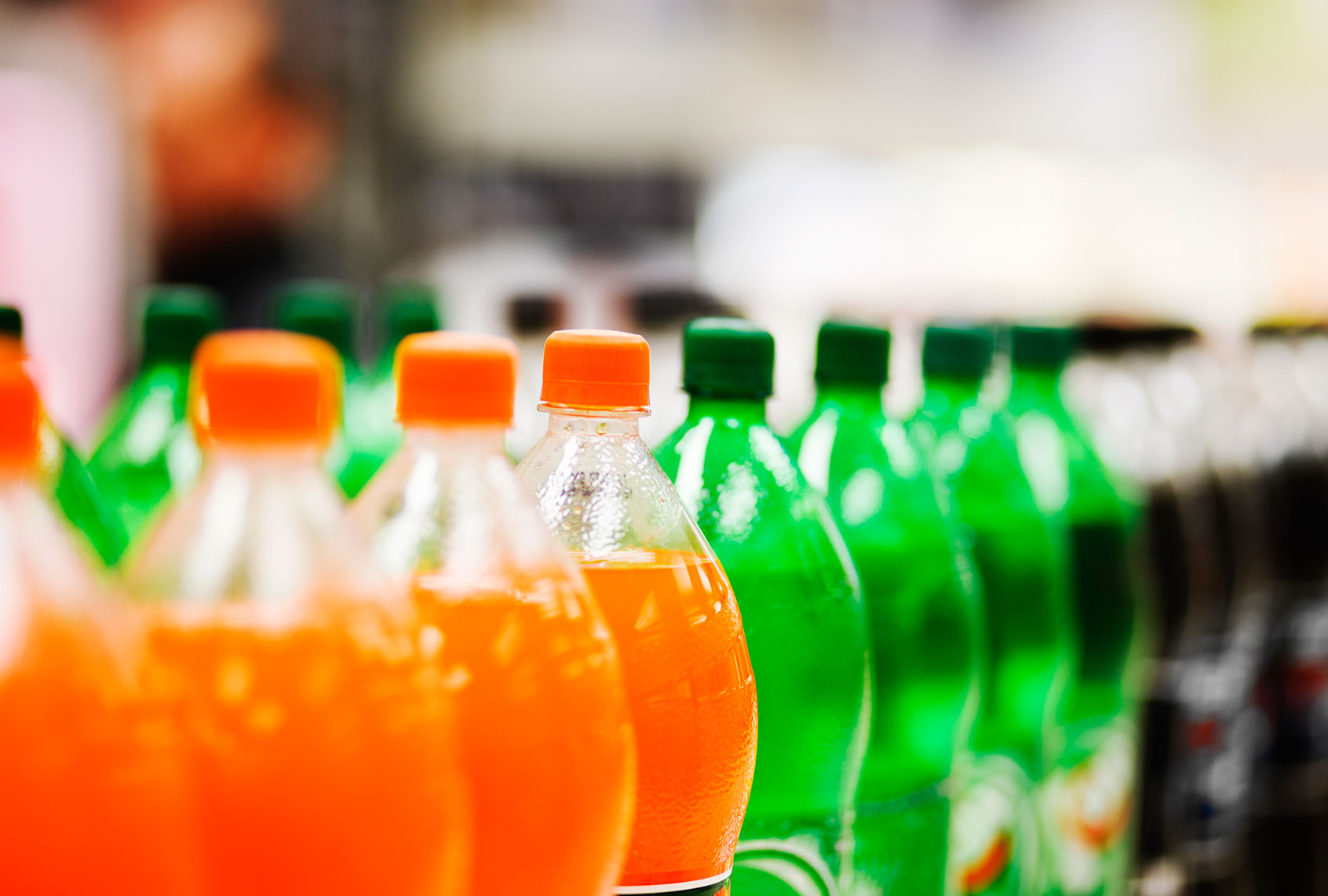
A long line of soda bottles in various flavors and colors (Getty Images/RapidEye)
When California passed its landmark food safety law in 2023, it did more than ban a handful of controversial additives — it stepped into a role the federal government had long failed to fill.
At the time of the bill’s passage, brominated vegetable oil (BVO) was still federally allowed for use in food. The chemical additive, found in sodas and citrus-flavored energy drinks — the kind you might grab from a gas station fridge without a second thought, had already been banned in the U.K., India, the European Union and Japan. Yet it remained permissible nationwide, making California’s landmark legislation all the more contentious.
Colloquially referred to as the “Skittles ban,” California’s law, which goes into effect on Jan. 1, 2027, bans the “manufacturing, selling, delivering, distributing, holding, or offering for sale” of food products that contain four harmful additives: BVO, potassium bromate, propylparaben and Red Dye No. 3. California became the first state to follow in the footsteps of the European Union, which outlawed the additives between 1990 and 2008. But its initiative was met with widespread backlash, namely from food groups and trade organizations that criticized the state for creating “confusion around food safety” — and challenging standards set by the Food and Drug Administration.
Just one month later, however, the FDA proposed revoking the authorization of BVO for use in food, citing a 2022 rodent study which found that dietary exposure to BVO at levels similar to average human consumption is toxic to the heart, lungs, fat tissue and thyroid. Then came the official ban, finalized on July 3, 2024, and effective August 2 that same year.
The overdue federal ban on BVO underscores a larger shift: in the absence of swift federal action, states are increasingly driving food safety policy in the U.S. That’s according to the Environmental Working Group (EWG), a public health nonprofit based in Washington, D.C., which put together an interactive map tracking states with active legislation regulating harmful food chemicals. Twenty-eight states are currently on the list.
“It may vary a little bit, state by state, but we are largely seeing a lot of the same chemicals being targeted,” says Melanie Benesh, EWG’s Vice President for Government Affairs.
Specific chemicals include dyes like Red Dye No. 3, preservatives such as propylparaben and butylated hydroxyanisole (BHA), additives like potassium bromate and BVO and PFAS, also referred to as “forever chemicals.” Many of them have been linked to endocrine disruption, neurological disorders, immune system suppression and even cancer.
A similar saga played out with Red Dye No. 3, which Benesh describes as “the poster child of federal government inaction.” Also known as erythrosine, the synthetic, petroleum-based dye gives certain foods, like candies and frozen desserts, a bright, cherry-red hue. The FDA formally recognized the dye as a carcinogen in 1990, banning its use in cosmetics and externally applied drugs. But its usage — both in food and beverage products, along with ingested drugs — prevailed for over three decades. A 2022 color additive petition filed by two dozen food safety and health advocates found that Red Dye No. 3 caused cancer in laboratory male rats exposed to high levels of the dye. Additional research linked consumption to increased hyperactivity in children.
In the wake of the California Food Safety Act and growing pressure from food manufacturers, the FDA officially announced a ban on Red Dye No. 3 in food and drugs on January 15, 2025.
“Over the past few years, there have been an increasing number of state bills to ban certain additives and set limits for certain contaminants,” a spokesperson for the FDA told NPR via email following the ban. “However, a strong national food safety system is not built state by state.”
The spokesperson continued, underscoring that food safety “is the number one priority for U.S. confectionery companies,” and that the “FDA is the rightful national regulatory decision maker and leader in food safety.”
But Benesh points to yet another long-overdue ban, saying it’s “emblematic of the low pace of progress at the federal government level.”
“I think it’s emblematic of the way in which the ‘F’ at the FDA has often been silent — and food issues have often been deprioritized at the expense of drug issues,” she adds. “Even within the food program, food chemical issues have largely taken a backseat to more traditional food safety issues, like food pathogens, E. coli and foodborne illness outbreaks.”
Concerns about food chemicals have received significant attention within the Trump administration. Health and Human Services Secretary Robert F. Kennedy Jr. underscored the harm of food dyes, launching a campaign in his “Make America Healthy Again” movement to phase out all petroleum-based synthetic dyes by the end of 2026.
Last March, RFK Jr. urged CEOs of food industry giants to stop using artificial food dyes in their products. The secretary “expressed the strong desire and urgent priority of the administration to remove [Federal Food, Drug, and Cosmetics Act, or FD&C] colors from the food supply,” said Melissa Hockstad, president and CEO of the Consumer Brands Association, in a readout first reported by Food Fix. RFK Jr. reportedly “wants this done before he leaves office” and expects “real and transformative” change by “getting the worst ingredients out” of food.
By July, a handful of major companies complied. PepsiCo said its popular snack brands, like Lays and Tostitos, would stop using artificial colors by the end of 2025. Same with Sam’s Club, which vowed to get rid of more than 40 ingredients from its private label brand, Member’s Mark. Mars, Inc., General Mills, Kraft Heinz, Nestle, J.M. Smucker and Conagra Brands also made similar promises, albeit with different deadlines between 2026 and 2027.
What may seem like administration wins, however, aren’t, says Benesh.
“If you look closely at the FDA action, you will see that there’s no regulation attached to it,” she explains. “Even if the FDA has said that a lot of these companies will phase out their food dyes by the end of next year or earlier, that is not because the FDA has said that they have to.”
Indeed, the FDA and the food industry don’t have “a formal agreement” to remove artificial dyes, CNBC previously reported. Rather, there’s only “an understanding,” per RFK Jr.
Benesh says the date that most Big Food companies are planning to phase out certain dyes isn’t a coincidence. “They’re doing so just in time to comply with the West Virginia law that bans those synthetic dyes statewide,” she states.
In March 2025, West Virginia passed what has been described as “the most comprehensive food chemical law yet,” banning Red Dye No. 3, Red Dye No. 40, Yellow Dye No. 5, Yellow Dye No. 6, Blue Dye No. 1, Blue Dye No. 2 and Green Dye No. 3, as well as the preservatives propylparaben and BHA.
Starting on Aug. 1, 2025, the dyes were banned from meals served through school nutrition programs. On Jan. 1, 2028, the dyes and two preservatives will not be allowed in drugs and foods sold in the state.
“It shows how state law is moving the market in a much more enforceable, sustainable way than anything that the federal government is doing right now,” Benesh says.
Want more great food writing and recipes? Sign up for Salon’s free food newsletter, The Bite.
She adds that targeting dyes is a “good first step,” but they’re certainly not the only problematic additive the FDA should strictly regulate. Ingredients like BHA and propylparaben may be linked to endocrine disruption that may have reproductive effects and cause cancer. As of Feb. 10, the FDA launched a comprehensive reassessment of BHA to determine whether it’s “safe under its current conditions of use in food and as a food contact substance, based on the latest scientific information,” the agency announced in a news release.
In addition to California and West Virginia, several states are taking extra measures to limit harmful food additives. Florida’s H.B. 641, for example, would prohibit public schools from serving food containing Blue Dye No. 1, Blue Dye No. 2, Green Dye No. 3, Red Dye No. 3, Red Dye No. 40, Yellow Dye No. 5, Yellow Dye No. 6, ADA, BHA, BHT, potassium bromate, propyl paraben, or titanium dioxide. Products that contain these additives would also require warning labels. New York’s S. 1239 and A.B. 1556 would ban the sale, distribution and production of food products containing Red Dye No. 3, potassium bromate and propylparaben. It would also ban public schools from serving or selling foods containing Red Dye No. 40, Yellow Dye No. 5, Yellow Dye No. 6, Blue Dye No. 1, Blue Dye No. 2 and Green Dye No. 3.
Earlier this year, the EWG found that over 100 substances commonly used in foods, supplements and beverages were not reviewed for proper safety by the FDA.
“The analysis reveals how food and chemical companies have exploited a loophole in federal law in order to certify that their own new additives are ‘generally recognized as safe,’ or GRAS,” Benesh writes. “These chemicals are sometimes referred to as ‘secret GRAS,’ because companies determined their safety without notifying the FDA. This is completely legal.”
Consumers can minimize their risk of exposure to harmful food chemicals by choosing organic produce over non-organic produce and researching the nutritional and processing information for their favorite products. But that responsibility of figuring out what’s truly safe and unsafe shouldn’t fall on the average consumer, Benesh emphasizes.
“Really, the onus should be on the government to make sure that our food is safe.”
Until that happens, what’s considered “safe” may continue to depend on where you live.


