




In 2016, the conservative writer Michael Anton made a galvanizing case for Donald Trump in his famous essay “The Flight 93 Election,” arguing that the stakes in the presidential contest between Trump and Hillary Clinton were existential.
His contention that a Clinton win would cement Democratic electoral dominance forever — such that Republicans needed to charge the cockpit or die — was implausible at the time, and seems more so in retrospect.
If Hillary had won in 2016, in all likelihood she would have been gone in 2020, washed away by the pandemic just like Trump was.
This time, though, really might be different.
Democrats are now seriously contemplating measures that wouldn’t have occurred to Hillary Clinton circa 2016.
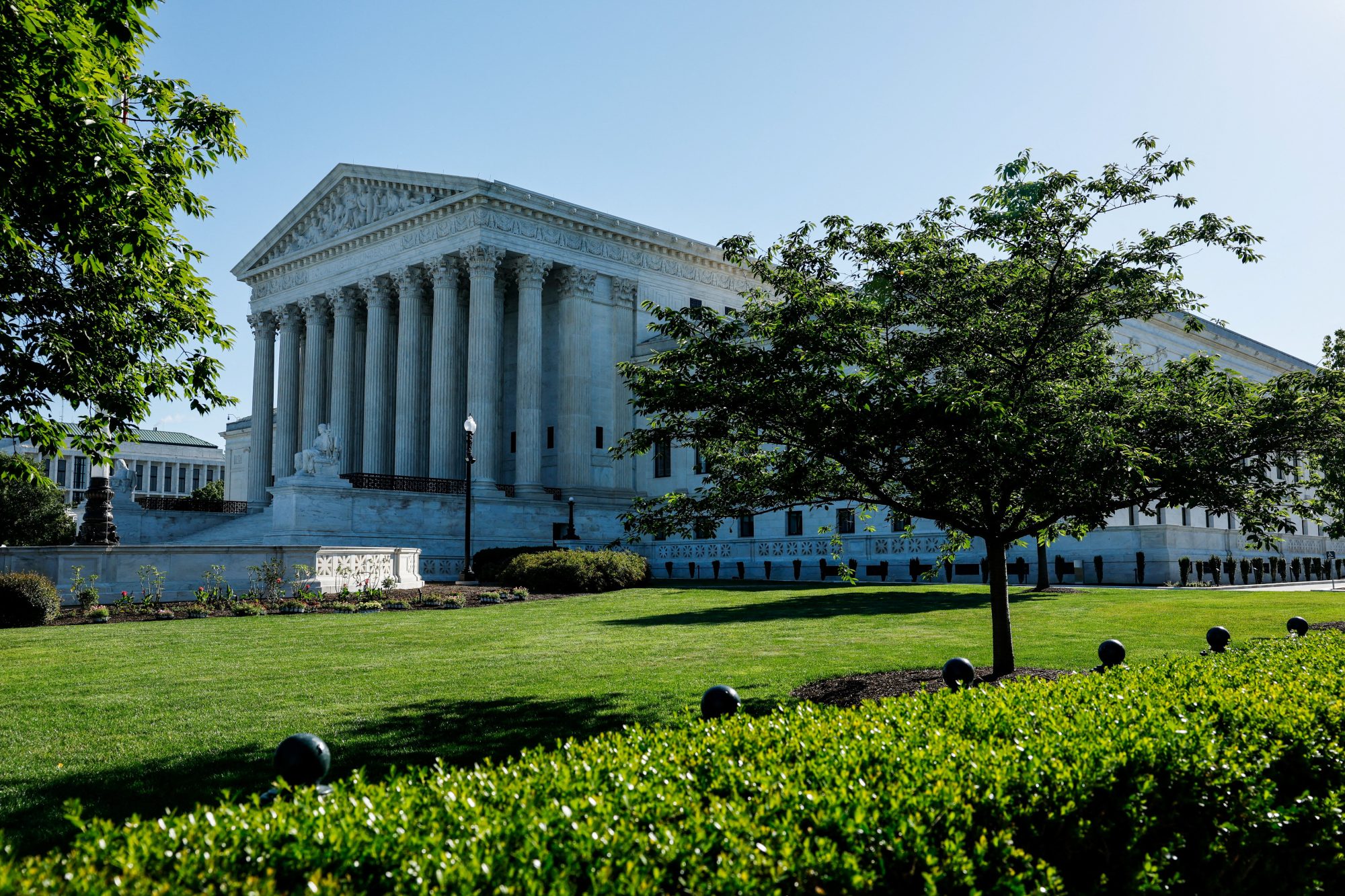
Endorsing some version of Supreme Court packing, or “court reform” as Democrats insist on calling it, is becoming orthodoxy among mainstream Democrats.
Several weeks ago, James Carville said that Democrats should pack the court and add the District of Columbia and Puerto Rico as states in 2028 if they get unified control of Washington.
Immediate past Democratic presidential nominee Kamala Harris, who has some chance of winning the 2028 Democratic nomination, associated herself with the same ideas.
She added abolishing the Electoral College to the list.
House Minority Leader Hakeem Jeffries, who easily could be the Speaker of the House next year, has said: “In the new Congress, we’re going to have to do something about this Supreme Court, and let me be very clear: Everything is on the table.”
Jamie Raskin, the top Democrat on the House Judiciary Committee, has fashioned a reason why the Supreme Court needs to be expanded by four justices (supposedly, the number of justices should match the number of federal circuit courts of appeal at 13).
If all these ideas were to become consensus Democratic agenda items in 2028, they would constitute one of the most radical political platforms of a major political party in American history.
Court-packing alone would be a seismic, system-changing event.
Likewise abolishing the Electoral College, which has been foundational to our presidential elections from the beginning.
Get opinions and commentary from our columnists
Subscribe to our daily Post Opinion newsletter!
Thanks for signing up!
The common theme of all of this would be guaranteeing outcomes — four new progressive justices, four new Democratic senators — in blatant power grabs undermining the legitimacy of the institutions in question.
What would a world look like where a substantial portion of the country thinks the Supreme Court is a sham — and not because the court is issuing unwelcome opinions, but because the court has been arbitrarily changed to produce a pre-determined ideological result through a grotesque end-run around the rules?
Democrats will say Republicans have already done this, even though the GOP operated within standard procedures to forge the current conservative majority.
Did Republicans play hardball? Sure.
But their influence on the composition of the court depended on winning presidential and Senate elections, and taking advantage of fortuitous timing, to confirm justices the way they’ve always been confirmed.
Manufacturing new seats out of nothing, or forcing the retirements of conservative justices by fiat, would be a blatant rigging of the court.
If a portion of the country thinks that it no longer needs to abide by the Supreme Court’s decisions, that obviously creates the predicate for serious civil strife.
The same is true if the Congress is no longer seen as legitimate after it is packed with newly minted Democratic senators.
Democrats feel justified in embracing any means to match and exceed Trump’s comprehensive aggressiveness.
Yet Trump’s provocations — the lawfare, the executive overreach, the wars without congressional authorization, the gerrymandering — all have ample precedent among prior Democratic presidents.
Democrats, of course, don’t see it that way, and they fear and loathe Donald Trump more than they have any other Republican president.
In reaction, should they sweep in 2028, they may try to push the American constitutional order past an event horizon from which it will never return.
In other words, a dozen years after the GOP was told to charge the cockpit or die, the stakes for our system really could be existential.
X: @RichLowry