

You are here: Home / Cryptocurrency News / Crypto Regulation South Carolina Bans CBDC and Expands Bitcoin Rights Law
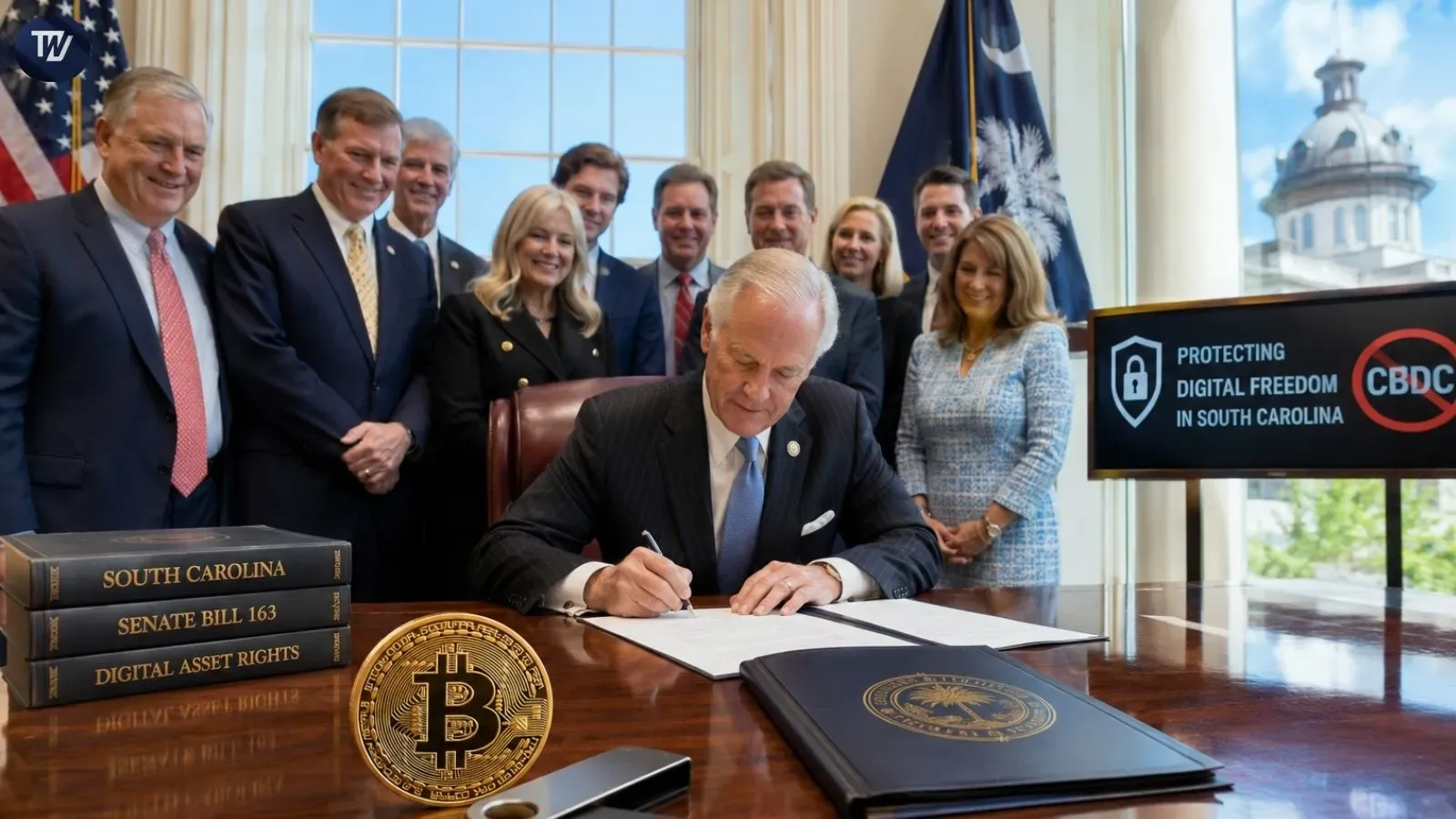
South Carolina is taking steps towards crypto regulation by signing a bill into effect, by Governor Henry McMaster. This law will ban any use by the State of CBDC (Central Bank Digital Currency), while ensuring that Bitcoin users, developers, and miners have certain protections and custody rights.
Senate Bill 163, which was passed with bipartisan support on May 19, will provide clearer regulatory guidance in terms of the use of digital assets and will also enhance user ownership of crypto assets.

Source: Crypto Town Hall’s X Post
Also Read | Zcash Price Eyes 8% Surge After Strong 74% Rally
One of the essential parts of this crypto regulation legislation is the tough stance on CBDCs. The state departments of South Carolina are now prohibited from conducting tests or taking part in digital currency projects implemented by the Fed or the federal government.
Meanwhile, the legislation clearly describes CBDCs as digital money issued by governments. As such, privately-issued stablecoins continue to be valid under the regulatory guidelines. This is because this approach to crypto regulation seeks to clearly draw a line between digital currencies controlled by governments and privately held digital assets on blockchains.
The act also ensures that individuals and companies shall not be restricted from accepting digital assets in any legal transactions. Self-custody rights are guaranteed under this piece of legislation, which means that the user will have total control over their digital wallet without being subjected to unwarranted meddling. This is a form of crypto regulation.
South Carolina Supports Staking Rules
Mining and staking are two areas where the new law provides much-needed clarification for business owners within the industry. For example, local municipalities are prohibited from implementing discriminatory zoning regulations against mining operations, unreasonable noise regulations, and other such restrictive practices.
Additionally, mining, staking, running nodes, and even blockchain development are not considered money transmission activities. The law also provides avenues for the government to counter fraud through the attorney general’s authority to handle any cases that relate to fraud, including those relating to fictitious cryptocurrency investments such as mining or staking.
South Carolina becomes one of the many states in the U.S. where a similar bill concerning Bitcoin has been passed by the government. There is an increasing trend for countries to develop crypto regulation.
Also Read | MAS Tightens Singapore Crypto Rules Following BSQ Licensing Revocation

About Zagham Abbas
Zagham Abbas is a Blockchain Infrastructure Reporter at Tron Weekly with over five years of experience covering cryptocurrency markets, blockchain infrastructure, and digital asset regulation. His reporting focuses on core blockchain networks, protocol-level developments, decentralized finance ecosystems, and major assets such as Bitcoin, Ethereum, and altcoins.
Zagham covers network upgrades, protocol changes, scalability developments, security incidents, and ecosystem adoption across leading blockchain platforms. He also provides market analysis, explaining how infrastructure updates and regulatory actions impact digital asset markets. His work delivers clear, fact-based reporting for both beginners and experienced readers. He holds a Bachelor of Arts degree and follows strict editorial and fact-checking standards at Tron Weekly.
