

CoreWeave just posted Q2 2026 revenue of $2.6 billion, a 112% jump from the same period last year. For a company that was mining cryptocurrency less than a decade ago, that’s quite the career change.
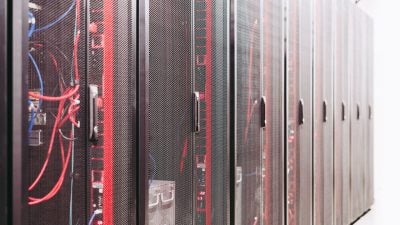
Yet shares continue to trade in the $106 to $115 range, a valuation that some analysts argue dramatically undersells what CoreWeave has built. The company now operates roughly 51 active data centers, commands over 1.5 GW of active power, and has contracted power capacity stretching to 3.7 to 4.2 GW.
The numbers behind the neocloud giant
CoreWeave’s contracted revenue backlog now exceeds $104 billion, with an additional $25 billion in commitments already lined up for Q3 2026. Management has raised full-year 2026 revenue guidance to a range of $12.4 billion to $13.2 billion.
Those figures are backed by long-term agreements with Microsoft, Meta, and OpenAI, some extending through 2032.
CoreWeave raised over $30 billion in debt and equity capital during 2026 alone, including a $2.6 billion delayed-draw term loan that closed in August. S&P responded with a positive ratings outlook.
Active power capacity is expected to push beyond 1.7 GW by year-end 2026, a roughly 13% increase from current levels.
From crypto mining to cloud kingpin
Founded in 2017 as a cryptocurrency mining operation, CoreWeave recognized early that the same GPU hardware powering mining rigs could serve a much larger market: high-performance computing and AI workloads. The company went public via IPO in March 2025, listing on the Nasdaq under the ticker CRWV.
CoreWeave now occupies a distinctive niche that analysts call the “neocloud” segment, essentially purpose-built cloud providers focused specifically on GPU compute rather than the broader, general-purpose offerings of AWS, Azure, or Google Cloud.
Why the market remains skeptical
Raising $30 billion in a single year is impressive from a capital-markets perspective. It also means CoreWeave is carrying an enormous debt load relative to its revenue base. Even at the high end of 2026 guidance, $13.2 billion in annual revenue has to service a capital structure built on aggressive leverage.
Analysts have also flagged margin pressures. Building and operating data centers at this pace requires massive upfront capital expenditure, and the returns only materialize over time as those facilities fill with paying customers.
A $104 billion backlog provides revenue visibility backed by blue-chip AI customers including Microsoft, Meta, and OpenAI. CoreWeave’s physical infrastructure scaling, from startup to 51 data centers and 1.5 GW of active power, represents an operational track record the market may be underweighting.
Disclosure: This article was edited by Editorial Team. For more information on how we create and review content, see our Editorial Policy.
