




Advertisement


Communication as a Lifelong Classroom: Learning, Unlearning and Relearning
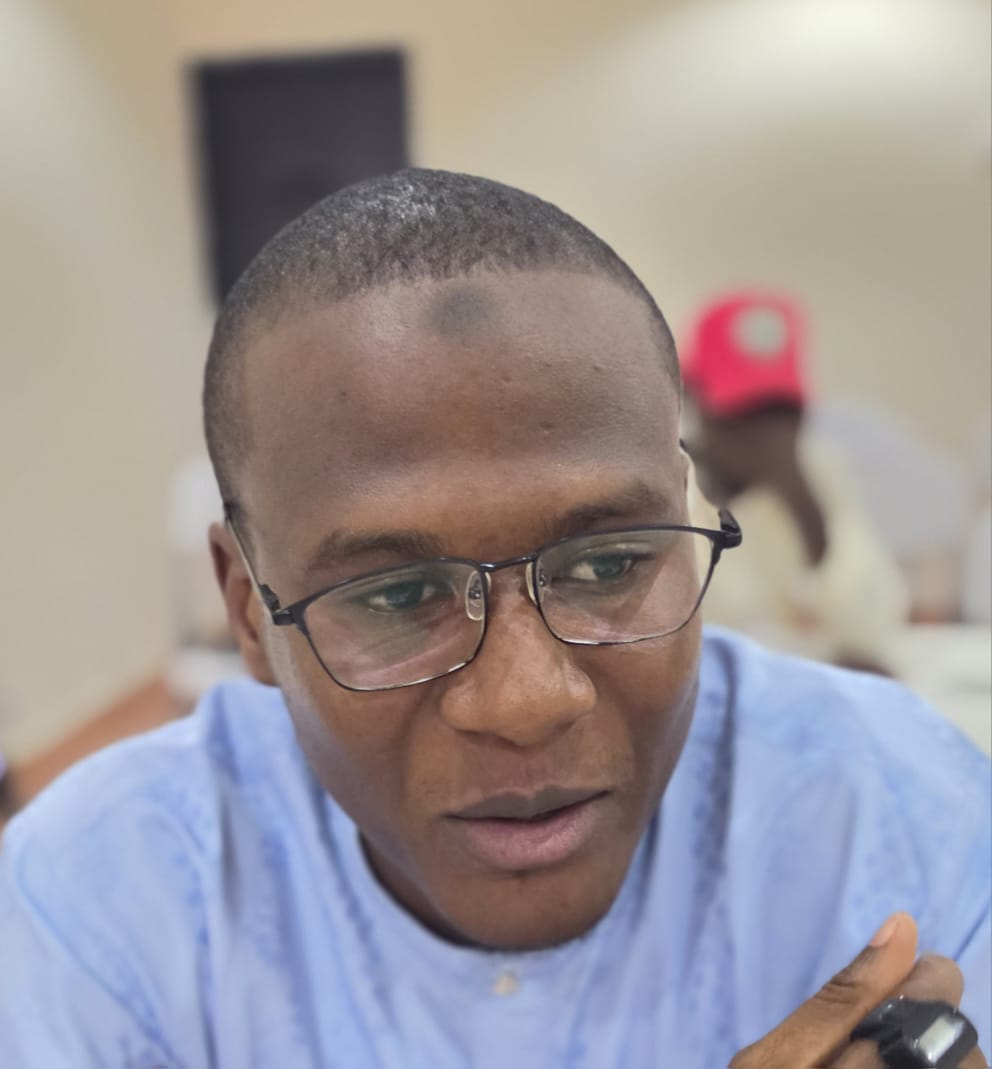
By Nasir Jibril Muaz
I have come to believe that communication is a university from which no one ever graduates.
Times change, audiences evolve, technologies advance and platforms emerge. With them, the ways we communicate must continually adapt. There is always something new to learn, something outdated to unlearn and something familiar to relearn from a different perspective.
This became even clearer to me on the first day of the PRNigeria Young Communication Fellowship.
From the moment I was selected for the programme, I knew the experience would be rigorous. What excited me most was not simply joining a cohort of promising young professionals, but the opportunity to learn directly from practitioners who have spent decades navigating journalism, media, public relations and strategic communication.
For me, the fellowship could not have come at a better time.
Over the past few months, I have found myself reflecting more deeply on my career in communication: the experiences I have gained, the skills I have developed and, perhaps most importantly, the direction I want to take in the years ahead.
I have asked myself whether communication is a profession I can continue to build on for the long term, what specialisation I should pursue, and whether there are opportunities within the industry that I have not sufficiently explored.
Day One of the fellowship began to provide some answers.
The opening session with the CEO of Image Merchants Promotion Limited (IMPR), Yushau Shuaib, was particularly thought-provoking. Beyond the depth of the modules, I was struck by the practical experiences and personal perspectives he shared with us.
Listening to someone who has spent decades in the profession discuss the different career possibilities available to communication practitioners was reassuring.
It reminded me that communication is far broader than the conventional roles with which we often associate it. Opportunities exist in strategic communication, journalism, public relations, corporate communication, advertising, public affairs, development communication, consultancy and several emerging areas shaped by technology.
That realisation alone made the first day worthwhile.
The subsequent sessions on the fundamentals of communication and foundations of strategic communication, facilitated by Mr. Zekeri and Mr. Muhammad respectively, deepened my reflection.
They helped me think not only about where I currently stand professionally, but where I could potentially go from here.
Sometimes, we become so occupied with doing the work that we rarely pause to ask ourselves why we are doing it, where it is taking us and what possibilities exist beyond our immediate responsibilities.
The fellowship created that pause for me.
Having worked in communication roles across the public and non-governmental sectors, including Communication for Development, I became particularly intrigued by the possibility of exploring strategic advertising consultancy as another career pathway.
It is an area I intend to examine more closely throughout the fellowship. I want to understand how strategic advertising intersects with public relations, audience insights, storytelling, behavioural change and broader communication strategies.
More importantly, I hope the practical learning and conversations during the fellowship will help me develop a clearer sense of professional direction.
Beyond the technical sessions, the personal stories shared by guest speakers reinforced something I have increasingly come to appreciate: careers do not always follow a straight line.
Listening to Dr. Jamila Muhammad Dahiru speak about her journey from academia, where she worked as a lecturer, into public service as Commissioner for Education in Bauchi State was particularly instructive.
Her experience demonstrated that skills acquired in one professional environment can become valuable in an entirely different setting. Knowledge is rarely wasted; sometimes, it simply waits for another opportunity to become useful.
Similarly, Mallam Abdulaziz’s career journey—from the media to the electricity sector and eventually to a senior public relations role at BUA Cement—illustrated the many directions a career in communication can take.
These stories challenged the assumption that we must have everything figured out from the beginning.
Perhaps we place too much pressure on ourselves to develop perfect career plans. Professional growth does not always happen according to a carefully designed map. Sometimes, an unexpected assignment introduces us to a new strength. A conversation exposes us to an opportunity we had never considered. A professional setback forces us to develop a skill that later becomes invaluable.
What matters is the willingness to remain open to possibilities.
Perhaps the most important lesson I took from the first day is that career growth is not necessarily about having a perfect plan. It is about remaining curious, exploring unfamiliar territories and allowing new experiences to expand our understanding of what is possible.
It also reminded me that learning does not end when we graduate from university, secure employment or accumulate years of professional experience.
In many ways, that is when the real learning begins.
Communication makes continuous learning particularly important because the profession itself is constantly changing. Artificial intelligence is transforming content creation and audience analysis. Social media has altered how institutions engage stakeholders. Audiences have become more fragmented and demanding, while misinformation and declining public trust have made credibility increasingly valuable.
A communicator who stops learning risks becoming disconnected from both the profession and the people he or she seeks to reach.
That is why one phrase captures my Day One experience better than any other: learn, unlearn and relearn.
Learn from people who have walked the path before you.
Unlearn assumptions that may be limiting your understanding of the profession.
Relearn familiar ideas through new perspectives as audiences, technologies and society continue to evolve.
As I reflect on my first day, I am reminded why I chose to participate in the fellowship.
It is not simply about adding another certificate to my portfolio. A certificate may document participation, but it cannot, on its own, transform a career.
The greater value lies in gaining new perspectives, questioning existing assumptions, discovering possibilities and becoming more intentional about the kind of communication professional I want to be.
And this is only Day One.
There are still conversations to have, practical experiences to encounter, assumptions to challenge and lessons to learn.
For now, I am grateful to be in the room—ready to listen, ready to learn and, perhaps most importantly, ready to discover what the next chapter of my communication journey could become.
After all, if communication is truly a university from which no one graduates, then every new experience is another classroom.
Nasir Jibril Muaz can be reached at [email protected]