







- A new study maps areas designated for potential carbon dioxide removal projects, such as planting forests or bioenergy crops, that might conflict with biodiversity hotspots.
- Such climate strategies could harm species if they change existing ecosystems or use too much land.
- The study points to the importance of more careful site selection for these projects.
- The authors of the study also note the importance of reducing humanity’s CO2 emissions, rather than relying solely on removing CO2 from the atmosphere later on.
Planting trees is a vital strategy to combat both climate change and the biodiversity crisis. As forests grow, they sponge carbon dioxide from the atmosphere and provide renewed habitat for threatened animals, plants, fungi and countless unseen lifeforms.
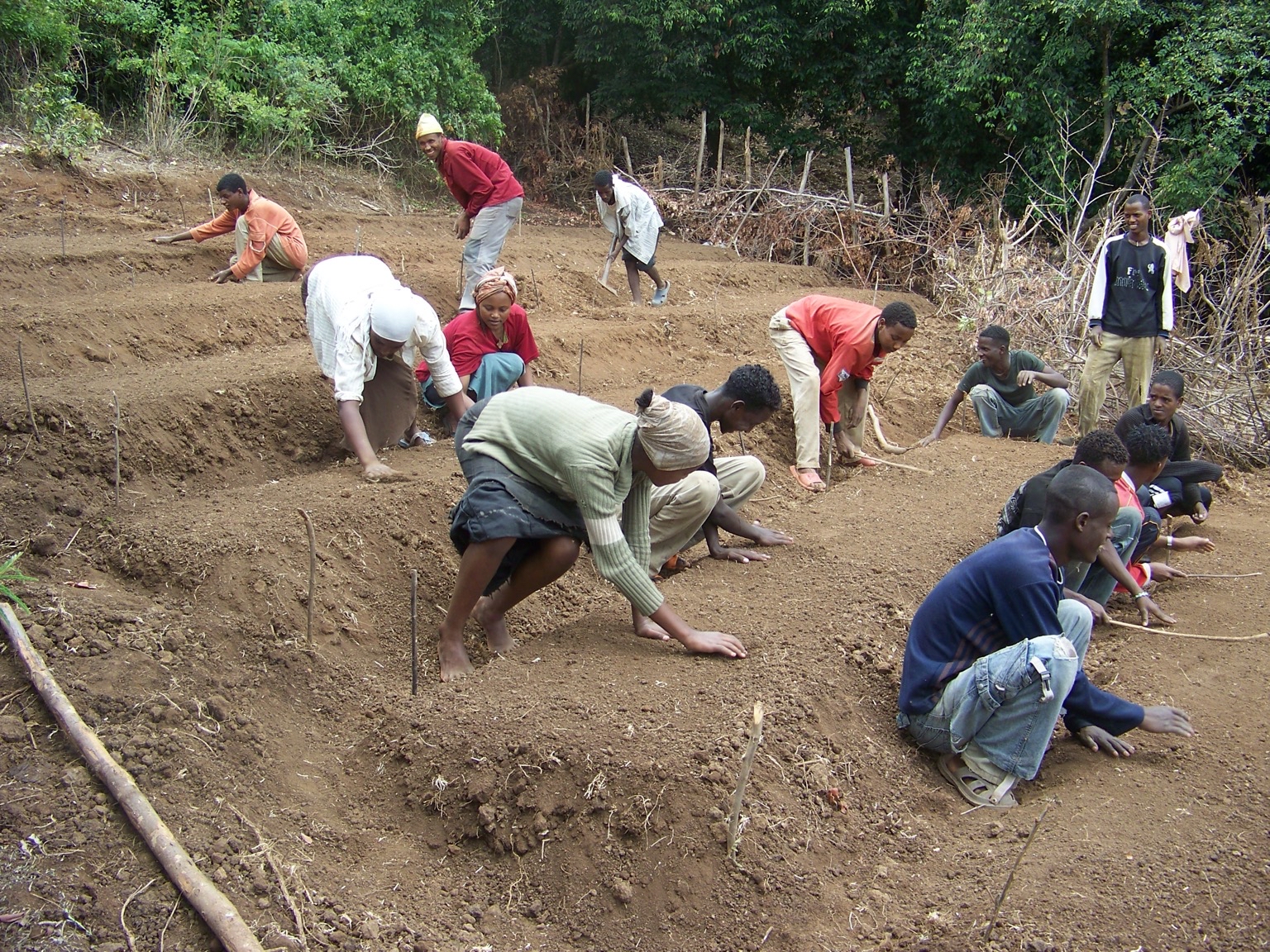
That ability of forests to help slow climate change has driven a push to reforest degraded lands or even plant new forests where none existed before. It’s also spurred other strategies, like the cultivation of bioenergy crops coupled with carbon capture. But these approaches require a lot of land, and they could potentially put pressure on the species that live in these spots — if a forestation project or hectares of bioenergy row crops subsume native grasslands, for example. A recent analysis shows that around 13% of globally important, biodiversity-rich land overlaps with areas earmarked for these types of carbon dioxide removal (CDR) projects.
“It’s unfortunate that we face multiple global problems all at once, including both climate change and biodiversity loss,” said Mark Urban, a professor of ecology and evolutionary biology at the University of Connecticut in the U.S., who wasn’t involved in the research. “When we try to fix one, we can make things worse for the other.”

The study, published in the journal Nature Climate Change, used five existing models that guide climate action in line with the Paris Agreement’s goal of limiting warming to 1.5° Celsius (2.7° Fahrenheit) above pre-industrial levels to map out locations tabbed for “land-intensive” CDR projects, such as forestation or bioenergy crops. Lead author Ruben Prütz and his colleagues then analyzed how those spots overlapped with critical areas for biodiversity.
Until now, similar studies have typically focused on one of these models at a time. They’ve also typically considered the effects on as many as 25,000 species, often vertebrates and plants. The current study expanded its scope to include some 135,000 species, including fungi, invertebrates, plants and vertebrates. By looking at five different models and including a broader swath of life on Earth, the team came up with “a more granular understanding of the biodiversity implications,” said Prütz, a postdoctoral researcher in climate economics and policy at the Potsdam Institute for Climate Impact in Germany.
The models they looked at incorporate biodiversity concerns to some degree, Prütz told Mongabay. “But it’s certainly not the main focus,” he added. “I think there’s still a lot of work to do.”
The study’s findings suggest that avoiding Earth’s biodiversity hotspots altogether to reduce potential conflicts with biodiversity conservation would cut the area allotted for CDR by more than 50% by 2050.
Urban said he was surprised by the finding that there isn’t more deforested land that could be planted with trees without harming biodiversity.
He praised the study as a “broad-brush understanding of these conflicts” to help identify where CDR projects should happen.
“We certainly need some level of carbon capture, and I think forests are great where they are well-suited and if they’re done right using local species,” Urban added.


The authors also sought to understand the potential benefits of carbon removal now and in the future. For example, they found that widespread CDR could diminish climate-related stress on biodiversity, Prütz said, as well as reduce the impacts of warmer temperatures for critical habitats. The team’s calculations reveal that CDR could help keep as much as 25% more habitat available for biodiversity compared to projections without CDR. But the team also cautioned that this benefit is far from certain and relies on whether ecosystems — and species — can bounce back after climate change reaches its peak and the removal of CO2 begins to bring global temperatures back down.
Christian Hof, a professor in global change ecology at Germany’s University of Würzburg, who didn’t take part in the research, called the analysis “elegant.” He also noted the importance of demonstrating that “this cocktail of climate change and land use change is really detrimental.”
The study also shows that the models tag considerably more land for carbon removal forest projects in the Global South compared to the Global North. That disparity potentially burdens less-industrialized countries with the task of removing CO2, even though they’ve contributed far less carbon to the atmosphere than wealthy nations.
“This is a very important consideration from an equity and fairness standpoint,” Prütz said, especially given the Global North’s outsized role in driving climate change. “We clearly know that high-income countries have more of a responsibility.”
The finding also reinforces the broader need to slash CO2 emissions as key to halting climate change, Hof said.
“I think setting too much emphasis on the carbon dioxide removal part is kind of the problem here, right?” he added. “We really need to decarbonize our industries and our way of life.”


Prütz noted that lower emissions would mean less reliance on carbon removal strategies in the future, providing more “wiggle room” to situate the CDR projects in places that aren’t as harmful for other species.
Conversely, “If we don’t cut emissions, then carbon dioxide removal won’t get us far,” Prütz added. “This is our best chance to limit warming as much as possible and also reduce climate-related biodiversity loss as much as possible.”
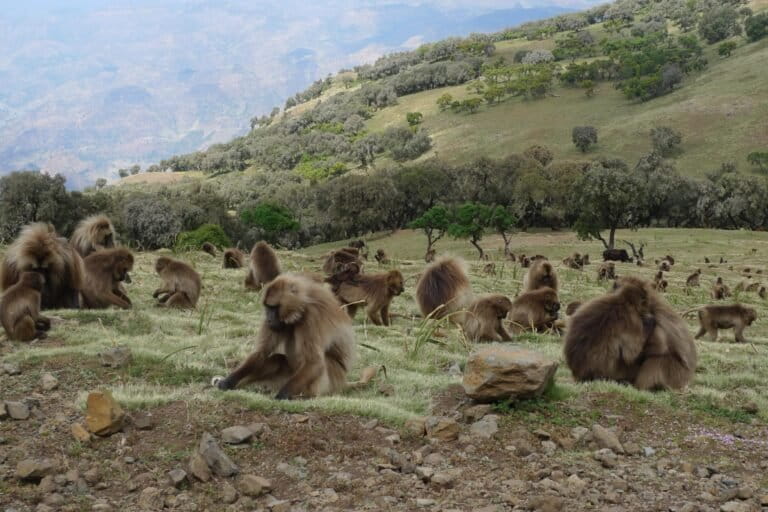
Banner image: Gelada (Theropithecus gelada), a species of monkey related to baboons, in Ethiopia’s Semien Mountains. Image by Alastair Rae via Flickr (CC BY-SA 2.0).
John Cannon is a staff features writer with Mongabay. Find him on Bluesky and LinkedIn.
Citation:
Prütz, R., Rogelj, J., Ganti, G., Price, J., Warren, R., Forstenhäusler, N., … Fuss, S. (2026). Biodiversity implications of land-intensive carbon dioxide removal. Nature Climate Change, 155-163. doi:10.1038/s41558-026-02557-5
FEEDBACK: Use this form to send a message to the author of this post. If you want to post a public comment, you can do that at the bottom of the page.


