






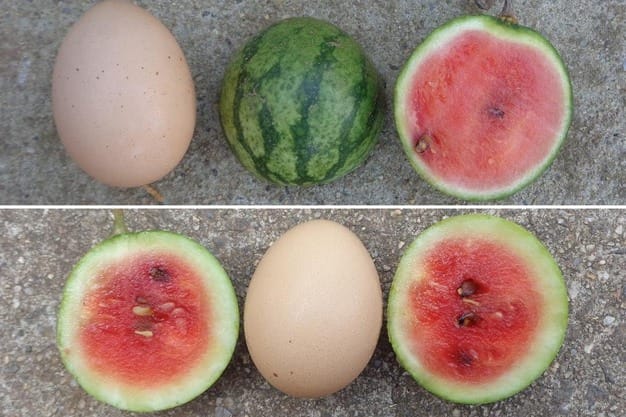
Watermelons have always been a tricky crop for greenhouse and vertical farming systems, primarily because of the extensive vine growth and the large size of the fruit, but one mother-daughter duo may have found a solution to this problem. Using a non-GMO chemical mutation approach, they managed to reduce the size of watermelons to that of chicken eggs, without altering their main characteristics.
“In preliminary observations, the fruits retain sweet flavor, red and orange flesh types, and sufficient firmness for handling,” breeder Delaney Raptis told HortiDaily Magazine. “The objective was to minimize fruit size while maintaining the characteristics expected by consumers and supply chains.”
High school researcher Delaney Raptis and her mother began their unique breeding program in 2021, with the goal of producing ultra-small fruit. After several generations, they have reduced the size of watermelons from several kilograms to approximately 80 to 200 grams, with some no larger than chicken eggs.

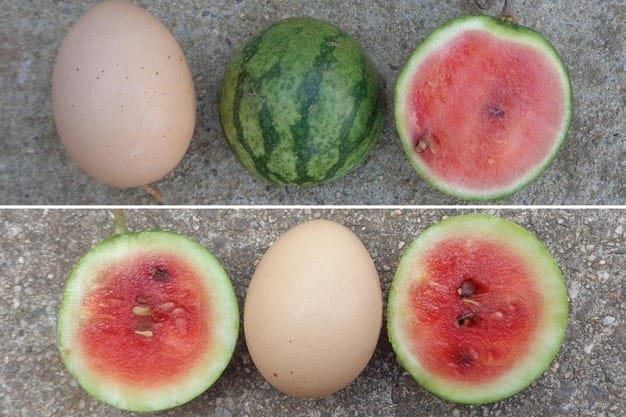
The main goal of the breeding program was to make watermelon crops viable in high-density greenhouse systems and vertical farms, where maximizing output per square meter is a priority. The reduced fruit size also reduces food waste and is sure to be a hit with the single-portion fruit market.
The two breeders noticed that the seeds of their miniature watermelons are considerably smaller than those of regular-sized fruits, but what we are most curious about is the rind. Is it edible, or does it need to be removed?
For more miniature fruit you probably didn’t know existed, check out the coquitos of the Chilean wine palm.


