








Haley Zaremba
Haley Zaremba is an energy journalist and researcher with more than a decade of professional experience covering global energy systems, land and natural resources, and…
Set us as your preferred Google source
Premium Content
By Haley Zaremba – Aug 21, 2026, 5:00 PM CDT
- China’s new five-year plan targets 200 million tonnes of LNG terminal capacity and 114 billion cubic metres of pipeline capacity by 2030.
- The plan calls for reaching peak oil consumption, possibly this year, even as it ramps up domestic oil production and gas storage.
- China’s stockpiling strategy already proved its worth when the Strait of Hormuz closed, insulating Beijing from the fallout of the Iran war.

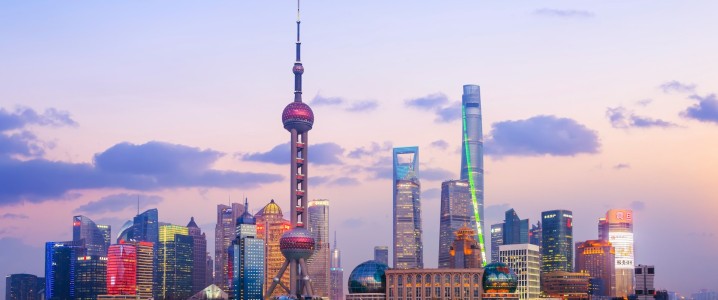
China’s energy strategy has largely shielded it from the fallout of the war in Iran and the resultant closure of the Strait of Hormuz, a vital artery for global oil and gas trade. However, the country’s newest five-year plan for its oil and gas sector reveals ongoing anxieties about geopolitical tensions, future conflicts, reliance on energy imports, and the country’s dwindling crude supplies.
Released to the public on Monday by the National Development and Reform Commission and the National Energy Administration, the newest five-year plan focuses on building up China’s strategic reserves of natural gas as well as its ability to import increasing volumes of the fossil fuel. The plan calls for an expansion of overland and coastal import capacities for liquefied natural gas (LNG) as well a renewed focus on LNG storage capacity. More specifically, the plan targets 200 million tonnes of terminal capacity, 114 billion cubic metres of pipeline capacity, and ensuring that natural gas storage capacity outpaces national consumption by 13 percent, all as of the year 2030. In addition, the plan outlines a strategy to ramp up domestic oil production.
This plan reveals a few things about the state of China’s energy security. First, it reflects the overwhelming success of the country’s previous approach to creating a strategic fossil fuel stockpile to buffer the nation from global oil and gas market volatility. Second, it reveals that Beijing is still unable to wean itself off of foreign fossil fuel imports in spite of its gargantuan efforts to build up indigenous energy supplies and establish itself as the world’s first electrostate. Finally, it shows China’s continued ambivalence when it comes to clean energy buildout and balancing decarbonization goals with industrial ambitions and energy security anxieties.
Set OilPrice.com as a preferred source in Google here.
At the same time that the newest five-year plan calls for a considerable increase of natural gas infrastructure, it also specifically calls for the country to reach peak oil consumption, which some experts contend could happen as soon as this year. While these twin aims may seem contradictory, both of these goals ultimately serve the same ultimate strategic priority – achieving energy independence and weaning China off of foreign fuel imports. For China, the energy transition doesn’t merely represent decarbonization – it represents energy autonomy and independence.
Furthermore, it is within China’s best interest to plan to reach peak oil demand before the world reaches peak oil production. Nations that fail to prepare for the eventual downturn of global oil production could be facing a whole new type of energy crisis. Indeed, a recent report from the National Interest warned that Europe’s next oil crisis could very well come from peak oil production rather than from conflict or climate change.
It therefore stands to reason that protecting itself from this looming threat would emerge as the next major platform of Beijing’s sophisticated and so far very successful energy security strategy. Until now, Beijing’s focus has been on increasing domestic output, electrification, diversification, and stockpiling – an approach which has been ‘vindicated’ by the war in Iran.
When the Strait of Hormuz closed back in February of this year, a fifth of the world’s oil and gas trade flowed through its waters on a given day. Most of those exports were destined for Asian markets, leaving many of China’s neighbors in the lurch. But China’s massive stockpiles and contingency plans left the country’s energy markets largely unchanged – and may even allow Beijing to come out the other side of the conflict stronger than ever before when it comes to energy sector dominance.
“People out there tweeting that this is destabilizing China may be wishing that were the case, but tweets are not reality,” Josh Freed, head of climate and energy at center-left think tank Third Way, was recently quoted by the Washington Post. “This is a shock China can absorb. It will end up in a stronger position on the other side.” Peak oil will likely be a similar scenario – while China will take a hit, it will be better prepared than many to absorb the damage thanks to its newest five-year plan.
By Haley Zaremba for Oilprice.com
More Top Reads From Oilprice.com
- Beijing Bets on Fossil Fuels Even as It Leads the World in Renewables
- How Solar Panel Prices Fell 90 Percent In 15 Years
- Low Rivers, High Stakes: Europe’s Nuclear Cooling Crisis
Download The Free Oilprice App Today



Haley Zaremba
Haley Zaremba is an energy journalist and researcher with more than a decade of professional experience covering global energy systems, land and natural resources, and…


