









Haley Zaremba
Haley Zaremba is an energy journalist and researcher with more than a decade of professional experience covering global energy systems, land and natural resources, and…
Set us as your preferred Google source
Premium Content
By Haley Zaremba – Jun 12, 2026, 5:00 PM CDT
- China’s EAST tokamak is reportedly on track to achieve plasma ignition in 2027 — potentially the first fusion reactor to sustain plasma without external heating.
- Beijing has designated fusion one of eight frontier technologies in its new five-year plan, backing it with deep government funding and minimal red tape.
- China’s second project, the BEST reactor, is expected to go further — generating actual electricity from fusion for the first time in history, giving Beijing a potential two-step lead over U.S. private competitors.

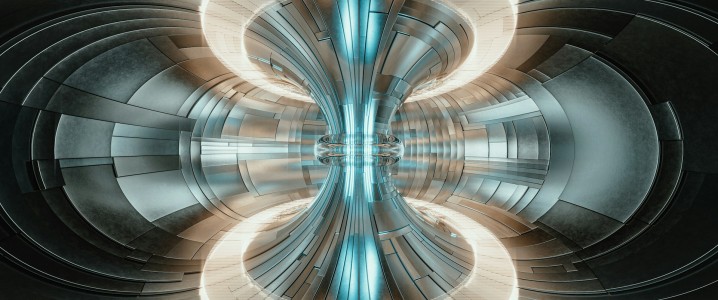
China is working toward a major nuclear fusion milestone that will put it leagues ahead in the global race to unlock the ‘holy grail’ of clean energy. The Experimental Advanced Superconducting Tokamak (EAST) is reportedly on track to achieve ignition in 2027, potentially making the tokamak the first nuclear fusion reactor in the world to sustain plasma without external heating sources. This would be a critical milestone toward enabling commercial nuclear fusion.
Nuclear fusion is the process that powers our own sun. It’s many times more potent than nuclear fission, the technology that currently powers nuclear energy. And, critically, it leaves behind no hazardous radioactive waste. As global energy demand is set to soar in coming years on the back of the artificial intelligence boom, nuclear fusion has gained a lot of attention for its potential to someday deliver near-infinite energy with zero greenhouse gas emissions. However, achieving stable and replicable fusion reactions is no easy feat.
Plasma is incredibly unstable and achieving nuclear fusion reactions here on Earth requires superheating the substance to temperatures many times hotter than the core of the sun – around 150 million degrees Celsius. Achieving these temperatures for a sustained amount of time and without additional energy inputs – known in the biz as ignition – is therefore a massive milestone for any fusion project.
Ignition has been achieved before, first and most notably by the National Ignition Facility in Livermore, California. But that facility is experimental only, and does not house a reactor that could one day be an energy producer – instead, it is a research facility designed to fish our knowledge forward to enable limitless clean energy production in the future. Achieving ignition is such a big deal because, at present, the vast majority of fusion experiments consume far more energy than they release and require constant heat inputs to achieve plasma.
If or when EAST achieves ignition next year, it will be a huge step forward for nuclear fusion on a global scale, as well as a huge step forward for China’s energy dominance. China and the United States have been trading off nuclear fusion breakthroughs for years now as the two largest global economies vie for the distinction of unlocking limitless clean energy. “Fusion could change the calculus for both nations and the globe,” the New York Times reported last year. “Whoever conquers it could build plants around the world and forge new alliances with energy-hungry countries.”
But the two superpowers are taking very different approaches to funding and regulating their nuclear fusion sectors. In keeping with the two countries’ general ethos, China is taking a top-down approach funded by the government, whereas the United States is letting private companies lead the way. Both approaches have significant advantages and disadvantages. China’s projects benefit from deep pockets and very little red tape, whereas in the United States startups are beginning to crowd into the field, bringing diversity, innovation, and agility to the sector.
So far, the competition is neck-and-neck, but experts say that the United States still has the edge on cutting-edge fusion research. The most moneyed fusion company in the United States, Commonwealth Fusion Systems, also claims that its fusion device will create net energy by 2027, the same year as EAST. But EAST isn’t even China’s most promising fusion experiment. China’s leading plasma-physics lab, the Burning Plasma Experimental Superconducting Tokamak (BEST) “is expected to be the first reactor to successfully generate electricity from fusion in human history” according to a recent report from BGR.
However, as China makes fusion a major national priority under its new five-year plan, Beijing may start to pull away very soon. Beijing has identified fusion as one of eight “frontier technologies” that the government will prioritize in the next five years. But there are still a lot of hurdles standing between current science and industry and commercial nuclear fusion. Reactors will have to advance considerably, and so will the highly specialized supply chains required to support them. The 15th Five-Year Plan “sets the stage for continued investment,” according to BGR. However, “Whether such investments will enable Beijing to meet its radically ambitious fusion goals remains to be seen.”
Set OilPrice.com as a preferred source in Google here.
More Top Reads From Oilprice.com
- Russian Governors Rush to Deny Fuel Crisis as Rationing Spreads
- Nigeria’s Crude Oil Production Hits 15-Month High
- The Hidden Supply Chain Behind Every SpaceX Launch
Download The Free Oilprice App Today



Haley Zaremba
Haley Zaremba is an energy journalist and researcher with more than a decade of professional experience covering global energy systems, land and natural resources, and…


