







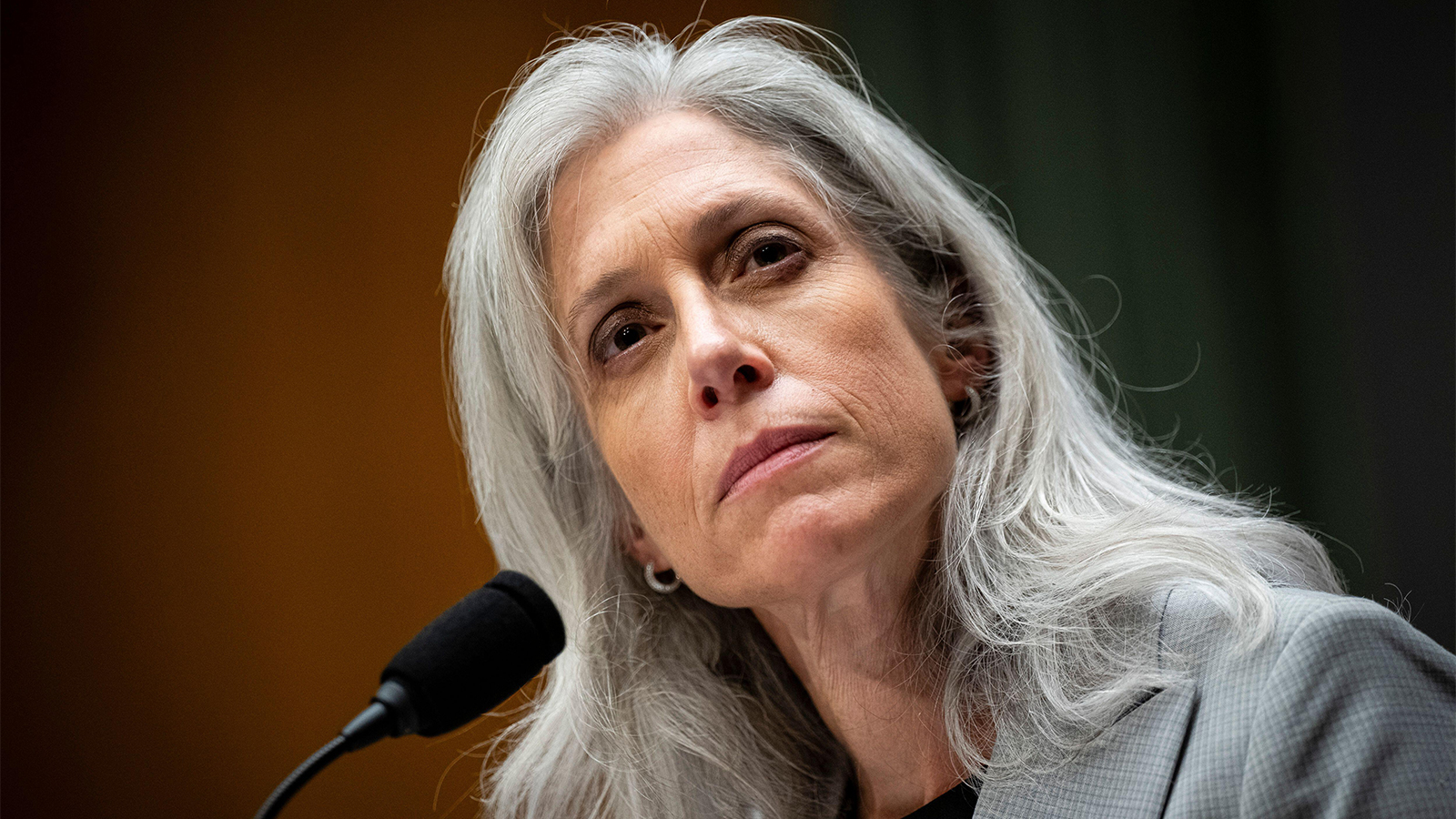
A group of public health leaders called on the CDC and its new director Susan Monarez, PhD, to protect critical overdose prevention programs across the U.S.
In a media briefing Monday afternoon, the group, convened by the nonprofit Safe States Alliance, spoke out against a reported proposition to cut or freeze $140 million, about half of the $279 million in grants to states, territories, and localities administered by the Overdose Data to Action (OD2A) program.
They also sounded the alarm on what they said were pocket rescissions from the Office of Management and Budget directed at the CDC that would affect spending on work related to adverse childhood experiences, youth violence prevention, firearm research, injury research centers, and injury prevention activities.
“Every delay in this apportionment process, every delay, every spending freeze, these translate to lost time and lives,” Sharon Gilmartin, MPH, executive director of the Safe States Alliance, said during the briefing. “So while Washington is tying itself into knots in a power struggle, there are very real people whose lives are affected, and we can’t afford to do that.”
Adding that “we’re very pleased to welcome Dr. Monarez,” Gilmartin noted that “this is a really important moment for her to advocate fiercely for her agency’s mission in the communities that we serve.”
“We really need public health leadership who’s willing to push for the timely release of funds and for the ability to use appropriated dollars as Congress intended,” she said.
During the briefing, Raynard Washington, PhD, MPH, director of public health for the Mecklenburg County Health and Human Services Agency in North Carolina, noted that “opioids have been ravaging our communities across this country for more than the last decade, and we are starting to make some appreciable progress in reversing the trends that have been escalating in our communities in terms of losing lives way too soon because of opioids.”
“We are in Mecklenburg County fighting that fight as well, and the support that we received from the CDC, both in terms of the financial resources, but also the technical assistance and other resources, connectivity with our fellow grantees across the country, is invaluable to the work that we’re doing here on the ground to protect lives,” he continued.
A few examples of this work include having more systemic approaches to distributing naloxone (Narcan), including through vending machines, law enforcement, and schools; working with the medical examiner’s office to identify where surges in overdoses are happening and responding to these surges; aggregating data from different partners involved in overdose response to better understand what is happening on the ground; and operating a social marketing campaign to help make the community aware of the risks associated with using illicit drugs or sharing pills, Washington explained.
Tom Simon, PhD, former senior director for scientific programs at the CDC’s Division of Violence Prevention, addressed federal investment in firearms research, among other areas, during the briefing, noting that it is “just so critical to the field.”
He noted that 2020 marked a turning point in terms of substantial federal investment in this area, with $12.5 million to the CDC and to the NIH, and that the funding at CDC has enabled support for more than 30 research projects that “would not have been possible otherwise.”
“We’ve seen a dramatic increase in publications,” he added. “We’ve seen an increase in interest of new researchers moving into that space. So it’s been critically important.”
Gilmartin confirmed plans to send a letter to Monarez’s office this week, outlining all of the funding preservation requests, including for the substantial OD2A program.
The CDC responded to the call to preserve funding in an emailed statement.
“CDC is poised to build on recent progress in reducing overdose deaths and remains committed to supporting the Overdose Data to Action program,” a CDC spokesperson said. “OD2A directly aligns with administration priorities by advancing data-driven strategies to prevent overdoses and save lives.”
“We are working closely with our funding partners to make within the next month, at a minimum, initial grant awards, which may contain less than the full-year of funding in the first incremental award,” the spokesperson added. “This incremental funding approach is not specific to OD2A.”


