







Spoilers below for Episodes 1 and 2 of Apple TV’s Cape Fear. New episodes stream every Friday.
Apple TV’s Cape Fear is executive-produced by Martin Scorsese and Steven Spielberg and it shows. The polished, colorful reworking of Scorsese’s 1991 blockbuster (which itself was a remake of J. Lee Thompson’s 1962 film; all based on John D. McDonald’s novel The Executioners) literally starts with a bang and quickly drags you into a pervasive sense of dread as thick as the Savannah night air.
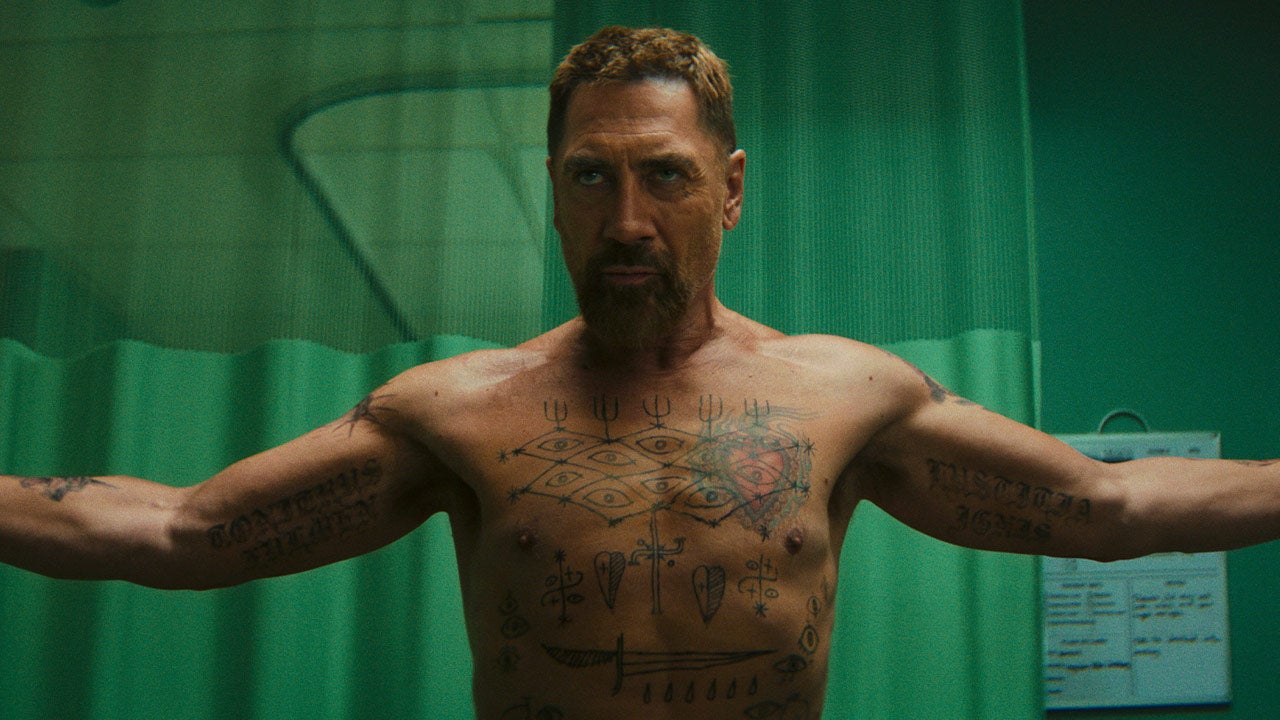
The first two episodes, out today on Apple TV, quickly put their own spin on a familiar premise: Convicted murderer Max Cady (this time portrayed in a scene-chewing turn by Javier Bardem) is released from prison, much to the surprise of his former lawyer (Amy Adams) and her family. In this version, Adams’s Anna Bowden is married to the former prosecutor of Cady’s case (Patrick Wilson), so the anxiety that comes with Cady’s release is a family affair.
Episode 1 opens with Cady’s mistress committing suicide at his direction, opening the door to her taking the fall for his 17-year-old crime (he was accused of murdering his wife and unborn son). What follows Cady’s release is a languid, tension-filled premiere brimming with paranoia and foreboding.
As soon as Cady re-enters society, the Bowdens’ seemingly idyllic life becomes flush with ominous incidents. Strange noises begin to fill their posh Southern home. Their security system begins to malfunction. Anna and Tom’s (Wilson) daughter Natalie (Lily Collias) is followed by a strange car. A family of dead skunks is found in their backyard pool. A panther, of all things, is seen on their suburban property. Some of these occurrences are quickly explained (turns out the guy following Natalie was a podcaster obsessed with Max Cady!) but many are left unresolved (for now) and feed into an unrelenting sense of tension.
Soon, Tom and Anna’s son Zack (Joe Anders) goes missing and the dread ratchets up to 11. Cady and Anna come face-to-face at a glitzy fundraiser for the latter’s Innocence Project-like foundation. He quickly ingratiates himself with both the audience and Anna’s colleagues, but Anna struggles to hide her absolute fear. She’s not telling us about her prior relationship with Max, and all signs point to it being a while until we find out why.
Bardem is brilliantly cast here, floating through scene after scene in a turn so menacing that he might as well be twirling his mustache. As Max, Bardem exudes an unhurried charisma that makes it easy to see why so many are smitten with him (including Anna’s boss Noa, played by CCH Pounder). In perhaps his best villainous performance since No Country for Old Men (or at least Skyfall), Bardem is having the time of his life. He and Adams go toe-to-toe early and often, saying more with glances and smirks than most actors do with pages of dialogue.
For her part, Adams’s Anna is steely but vulnerable. You at once know exactly what she’s thinking but have no idea what she’s about to do. It’s a performance that complements Bardem’s brilliantly and leaves you constantly guessing what exactly happened between these characters nearly two decades ago.
Wilson’s Tom is stoic and grounded, providing a welcome counterpoint to the high drama between Max and Anna. Anders and Collias round out a solid cast that elevates what can otherwise be overly-pulpy material. Anders, in particular, gives a performance that masks a metric ton of secrets, adding another dose of suspense to a show that’s already filled with plenty.
Anders’s Zack serves as the focal point of Episode 2 where, after disappearing before the fundraiser, he reappears at his family’s home with a bloody foot and missing toe. Max is there too, pointing to more terror that he may or may not be inflicting on the Bowden family.
And therein lies the central premise and overarching appeal of Cape Fear: At every turn, you’re pretty sure that Max Cady is responsible for the strange things happening to the Bowdens, but you can’t be 100% certain. Nor can you be absolutely positive that there’s not something in the family’s past that they did to deserve it.
Episode 2 begins with a gruesome flashback (beautifully shot in black and white) showing us some of Max’s time in prison, in which he brutally murders a pair of fellow inmates. Back in the present day, Zack reappears, Max is arrested, and they all end up in the hospital where Zack’s missing toe reappears. Turns out, after being drugged – by whom, we don’t know (we do) – whomever was responsible stuffed the toe into Zack’s throat, which he vomits up in the emergency room.
Unlike the premiere, the second episode drags in places, seemingly more concerned with mood than advancing the plot. Despite this, we do get some interesting character revelations. After his mother took her own life, Max was sent to live with his father in the States, leading to an abusive childhood and potential rationale for Max’s (alleged) future actions. We meet Anna’s father Ben, whom she has cut out of her life. Anna discovers Zack has a mysterious online girlfriend, which may or may not be the alias Max is using to further terrorize the family.
Cape Fear has a lot going for it. The cinematography is lush and sultry. The acting, despite some ill-fated attempts at South Georgia accents, is laudable. The tone of suspense and dread that infects every scene of the show is borderline addictive.
The allusions here to Scorsese’s 1991 film (starring Robert DeNiro as Max Cady) are plenty. Episode 1 features vibrant, disconcerting interstitial negative images of the lead characters, which directly tie into the ending of that movie. The film’s bombastic score returns here as well, providing a jolting sense of familiarity.
This is a show that knows what it wants to be yet is not attempting to reinvent the thriller genre or be better than the versions of the story that came before. The dialogue can be overly expository at times and the thrills can border on ham-handed. But if you’re a fan of jump scares, shadows slipping through doorways, and things that go bump in the night, the first two episodes of Cape Fear likely point to a season of delightful thrills.
Verdict
Apple TV’s adaptation is a colorful, foreboding thriller that serves as a serviceable update to the well-loved 1991 film. The cinematography and tone are lush and sultry, the performances adept, and the tension palpable. It doesn’t try to reinvent the movies (and novel) that came before, but there’s a lot to love here for both fans of the originals and newbies experiencing Cape Fear for the first time. The first two episodes set up numerous questions and mysteries that will leave you excited for what’s to come.


