







Growing up spending lots of time in Australia, rash guards (aka rashis) were part of the uniform. But once I was old enough to pick out a frilly bikini over a logo-ed water T-shirt, rashis — along with their in-built sun protection — became a thing of the past.
Sun-protective pieces — officially known as UPF (ultraviolet protection factor) clothing — have stayed much the same since, with most options landing somewhere between frumpy and ultra-sporty. But as more consumers wake up to the importance of sun protection, the UPF clothing space is beginning to evolve.
Halfdays’s new UPF collection might lean more athletic, but the pieces in its GwenUV fabric are far less gorpcore than is typical of sun-protective activewear. Rashi World and Hunza G have released swim-focused lines of UPF pieces, though both brands plan to push further into sun-protected ready-to-wear. Claudent, meanwhile, is leading the charge with chic, summery pieces that look as at home on the cobbled streets of Saint-Tropez (where Kendall Jenner wore the brand last summer) as they do on the sand.
“I looked around and I think there was one swimwear brand that did a nice version, and everything else I thought was either really frumpy or athletic looking,” says Georgina Huddart, founder of London-based swim brand Hunza G, which began developing UPF fabric in 2022, launching its protective line two years later. “There’s a whole load of women who want to wear something that protects their skin, but aren’t about to jump on a surfboard and hit a wave.”


Claudent is filling a while space in stylish, sun-protected clothing.
Photo: Claudent
At Claudent, UPF tech has always been central to the brand. Diagnosed with a sun allergy in 2019, CEO Mia Zee was met with a similar either-or to Huddart. “I started looking at what existed in the market and I was sort of shocked by the options. There really wasn’t anything that spoke to me on an aesthetic or quality level, and it felt like there was a gap,” she says. In 2023, Zee enlisted co-founder and creative director Emma Gerber to launch Claudent and fill the void for UPF clothing that fashion girls actually want to wear.
There’s potential for other brands to get involved, too. The UPF clothing market is projected to reach approximately $1.74 billion over the next several years, and is expected to grow at a compound annual growth rate (CAGR) of roughly 6.8% to 8%, per The Future Laboratory.
But the barrier to entry is high. Developing fabrics that look good and classify as UPF is time and cost-intensive. Getting the material composition is tough, and requires a super-tight weave to effectively block out the UV rays. Like SPF, efficacy also varies: UPF 15+ blocks roughly 93% of rays, whereas UPF 50+ blocks about 98%; 50+ is the gold standard, and what brands like Claudent work to achieve via specialist weaves. To date, many UPF brands have used chemical treatments to achieve a given rating, which wash out after 20 to 30 washes, Zee flags. To make the clothes — and the brands — last for the long term, founders need to try achieve UPF 50+ without this.


Rashi is starting off with swimwear and activewear, with plans to branch out.
Photo: Rashi World
Plus, there’s still a way to go before sun protection becomes a universal must-have. Despite the fact that the UPF clothing industry is ripe for growth, embedded sun protection isn’t a top priority for consumers at this stage. “I think we’re on the precipice of it shifting from a novelty to a pragmatic summer must-have,” says Katie Devlin, fashion trends editor at trends intelligence business Stylus. “However, brands need to spend as much time focusing on trends and aesthetics as they do on innovation to make the pieces feel covetable beyond their wellness benefits.”
Still, it’s smart for brands to get in early so that once consumer demand does tick up — as more people recognize the dangers of sun exposure — they’ll already have an offering in place. “In the future, sun protection is likely to become as standard as breathability or stretch,” says Rose Coffey, senior foresight analyst at The Future Laboratory. In a relatively nascent space, laying the groundwork will put brands ahead when this level of protection becomes an expectation. But for many, making UPF clothing that consumers actually want to buy and wear will be the starting point.
Fashion first
Because suncare isn’t a priority for most shoppers, brands newly investing in UPF are opting to lead with fashion. “We’re after a segment of the market that would never wear clothing that didn’t look or feel a certain way,” Zee says. Design is the entry point, Rashi founder Anna Feller agrees.
This is clear in the brands’ visual marketing. While Rashi’s first campaign used the ocean as a backdrop, Feller hopes to see her clothing show up well beyond the beach. This goal informed the brand’s forthcoming campaign visuals. “We shot our next campaign in Costa Rica, deep in the jungle, and very little of the collection was photographed in the water, which was intentional,” the founder says. “I’ve always been interested in creating pieces that move effortlessly through different parts of your lifestyle, pieces that can travel with you throughout the day and adapt to different environments.” Feller envisions customers wearing the pieces out to lunch, as they would to surf or swim.

The Claudent founders prioritize design as much as they do UPF.
Photo: Claudent
At this early stage, brands ought to bank on the design, not the innovation embedded therein. Zee recalls a recent buyer meeting, in which the buyer asked about the “sun-protection thing” Claudent does. She explained, and he said he didn’t care about the purpose — but would still buy the clothes because they look good.
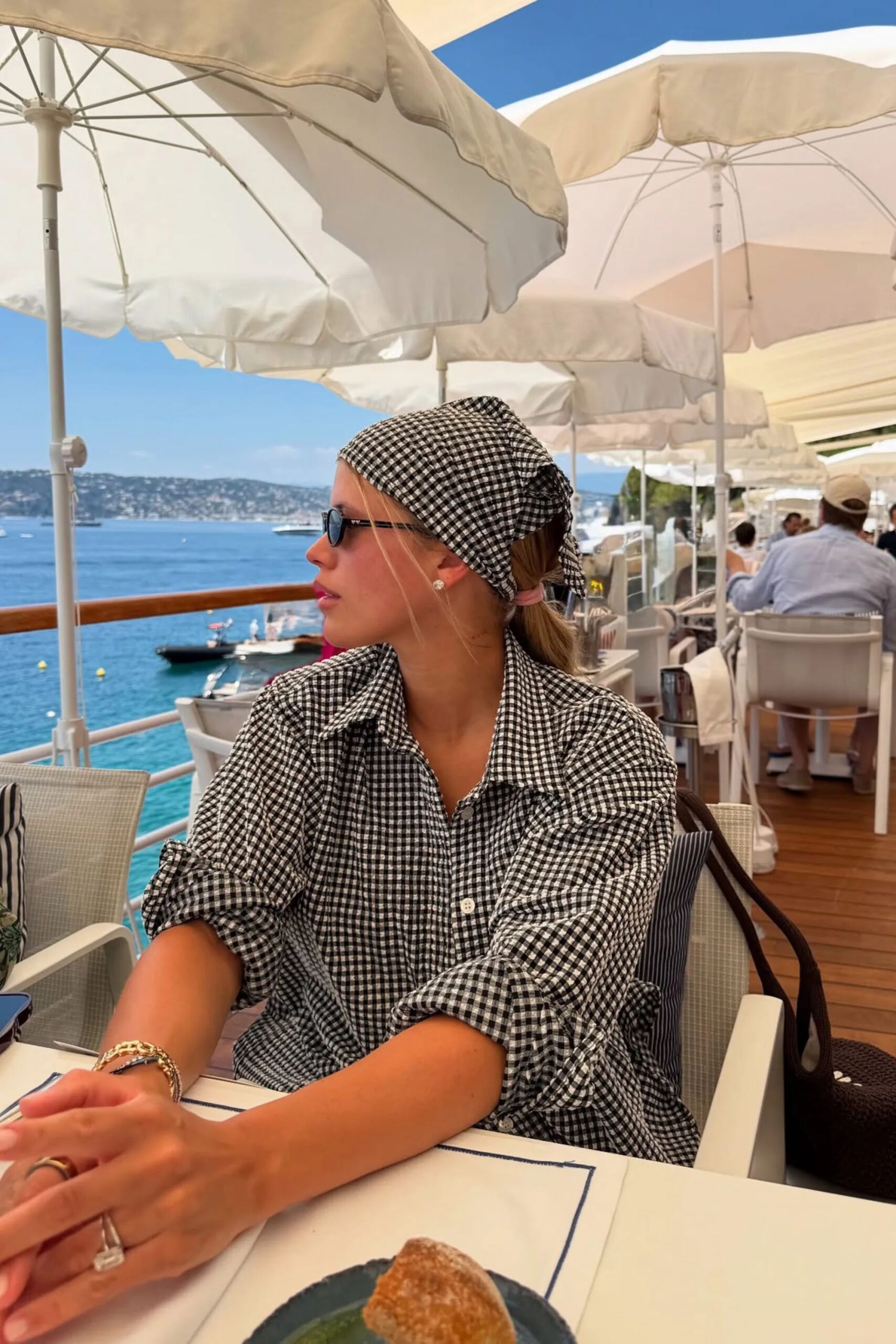
It’s the look — not the practicality — that gets these pieces on celebs, too. Zee recalls the onslaught of press the brand received this summer after Jenner wore a red Claudent dress (which swiftly sold out) in Saint-Tropez. “I don’t want to make assumptions, but my guess is she didn’t know it was UPF clothing; that probably wasn’t the driving force,” the CEO says. “I don’t think she or her stylist is going to put something on her that doesn’t look great first and foremost.” Hunza G’s Huddart also references Sofia Richie Grainge’s post of the model wearing the brand’s UPF gingham headscarf and matching top — the former piece sold out “ten times over” last summer. “It looks cute, but it also has an actual performance element to it,” Huddart says. “That’s a key strategy for us moving forward, to find or develop these new fabrics that feels like you could go to lunch in it, but there’s also a technical element.”
This is not to say brands should downplay the UPF elements of their clothing. Sun protection will always be part of Claudent’s DNA, Zee emphasizes; the brand calls itself “the most reliable sun protection you can wear, no reapplication necessary”. “As we grow the business and reach new people, I love [the idea of] being the first piece of sun-protective apparel someone buys because it never occurred to them that it could look or feel this way,” she says, adding that UPF provides an “added benefit” that helps shoppers justify their purchases.

Hunza G’s viral UPF headscarves at the brand’s new London pop-up.
Photo: Courtesy of Hunza G
Scaling sun protection
Because of its technicality, UPF clothing is a tough proposition to develop and therefore scale. It’s why it took Hunza G’s Huddart two years to release her first UPF pieces, eventually landing on a mix of polyamide and elastane, and also why Feller started Rashi with swimwear (water-proof UPF fabric was already established).
At launch, Claudent was more active-leaning, and its swimwear “was not the most comfortable stuff”, Zee admits. After the initial drop, the founders realized they weren’t reaching for their pieces on a daily basis, so worked for almost a year with their fabric mill to set it right. “We basically sent them some references of non-sun-protective fabrics and said, ‘Make this,’” Zee says. “It took so many back and forths, before we finally got it right.” The result was Claudent’s Riviera fabric, which Zee says has the feel of a UPF poplin made of nylon and polyester.
As Claudent grows its product range, the founders have adapted to working within the limits of the fabrics. “Fabric is the biggest hurdle,” Zee says. It doesn’t always behave as they hope, Gerber agrees, noting that textiles inform the design more than she’d anticipated. “We’ve found that really clean silhouettes in the Riviera [collection] work best,” Gerber says. “So when we were expanding our collection, we introduced a vegan silk alternative that’s UPF 50+, and that’s where we can play around with more feminine, drapey vacation essentials that we’d initially planned to do.” The pair’s main focus now is developing more fabrics that allow them to play with shapes and silhouettes.

Rashi founder Anna Feller hopes the clothes will carry from the beach to the city.
Photo: Rashi World
Rashi, too, is expanding its range, currently developing tracksuits, unisex T-shirts, and activewear sets — all of which require different fabric solutions, Feller says — with plans to venture further into ready-to-wear down the line.
Though fashion must be the hook, founders and experts alike are confident that the opportunity to tap into wellness is brewing. “Looking ahead, we can expect sun protection to become seamlessly integrated into everyday wardrobes, with consumers viewing it as an expected feature rather than a specialist add-on,” The Future Laboratory’s Coffey says. “The opportunity for brands is to position wellbeing as a core product benefit without compromising on aesthetics, creating clothing that protects, performs and remains desirable to wear.”
Claudent’s Zee is thinking about the ways in which to market the brand beyond fashion. “If we go into a boutique that’s maybe more spa, wellness, beauty-focused, there are so many opportunities to talk about how the next real breakthrough for beauty is in your closet, not in your medicine cabinet,” she says. “If you’re investing in lasers and retinols and all of that stuff, why wouldn’t you protect your skin? I think there’s a lot of opportunity there.”
More from this author:
How Swimwear Brand Hunza G Is Selling Summer in the City
From New Zealand to New York: Harris Tapper Hits the US
Forget Euro Summer. Brands Are Having a Wet, Hot American Summer


