





A grazed knee. A cut while gardening. A routine hip replacement. For most of the past century, these were minor worries. But in a world where antibiotics stop working, any of them could turn deadly.
Drug-resistant infections are on the rise, and developing new drugs is difficult, expensive and slow. This has researchers looking beyond conventional medicines for new ways to fight harmful microbes.
One place worth investigating is surprisingly close to home: the nests of Australia’s native stingless bees.
In our new study published in PLOS One, we tested honey and propolis (a sticky resin bees build their nests from) from the tiny native bee Tetragonula carbonaria against 16 types of bacteria and fungi that can cause disease in people.
The honey stopped every bacterium we tested. The propolis was more selective, but it hit certain fungi remarkably hard.
A different kind of bee
Australia is home to 11 of the world’s roughly 550 stingless bee species. Tetragonula carbonaria is a small black bee found along the east coast, from tropical Queensland to temperate New South Wales.
For thousands of years, Indigenous Australians have valued its honey, known as sugarbag, as food and medicine, including for itchy skin and sores.
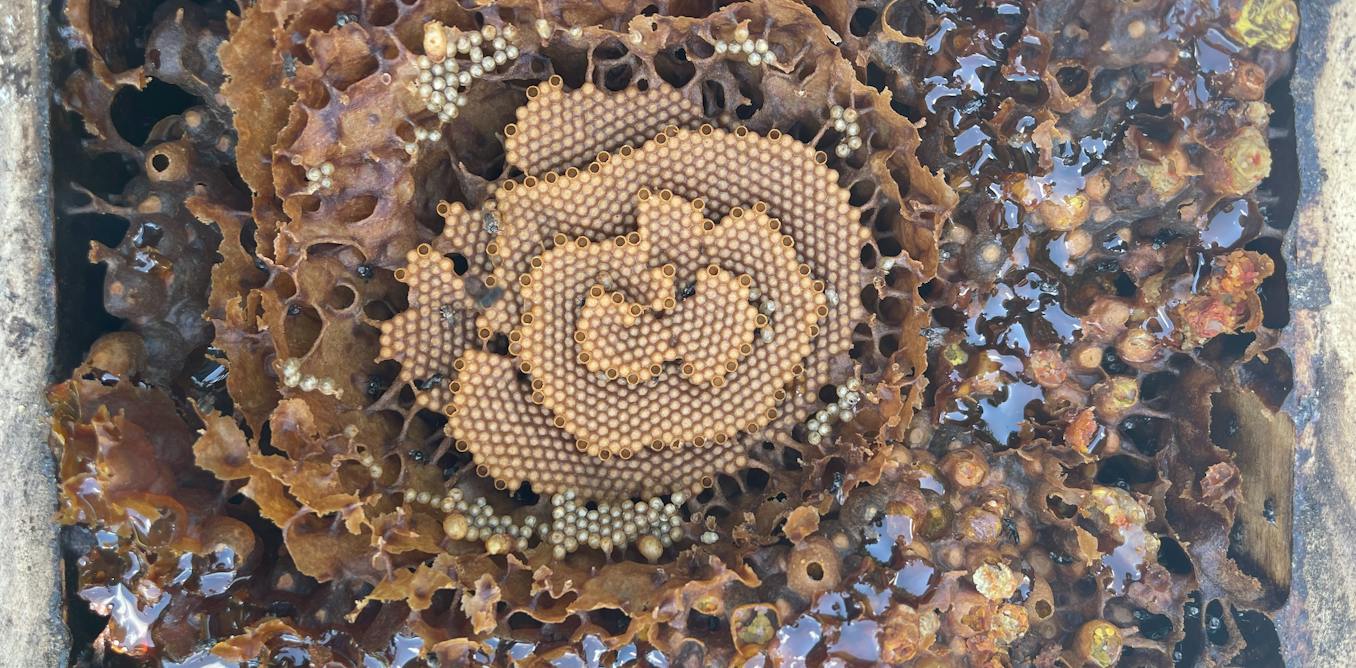
Inside the nest, you won’t find the tidy wax combs of a honeybee hive. Stingless bees build almost everything from propolis, a blend of plant resin and their own wax. The honey sits in small, sealed pots made from this propolis, so every drop is stored in a container that fights microbes itself.
That is important because the honey is runny: about a quarter of it is water, compared with at most a fifth in honeybee honey. Wet food usually spoils, yet much of stingless bee honey stays remarkably free from harmful microbes.
Not all honey works the same way
In our tests, native bee honey packed a punch. Even diluted more than tenfold, it stopped golden staph and E. coli. It also worked against bacteria called Pseudomonas, Klebsiella, and Acinetobacter, which cause hard-to-treat wound, lung, and bloodstream infections in hospitals. And it stopped the fungi behind ringworm and athlete’s foot.
Most honey relies on hydrogen peroxide, a natural antiseptic produced by enzymes the bees produce. In honeybee honey, this burst of peroxide lasts only hours. Native stingless bee honey does something unusual: it can keep producing peroxide for up to a week.

Ros Gloag/University of Sydney
But there is a second surprise. Very few honeys retain their antimicrobial activity when peroxide is removed. Manuka is the famous exception, thanks to a compound from manuka flowers. Native bee honey can do it too, but without the Manuka compound.
It stayed active after we heated it to destroy the peroxide. Samples kept in a fridge for 18 years had lost their peroxide entirely but still kept the rest of their punch.
So what’s doing the work? One possibility is what the bees forage on. Native bee honey is rich in plant compounds called phenolics, some of which fight microbes. Another is how the bees make their honey. Compared to honeybee honey, it contains a different mix of proteins, and some of these may attack microbes directly.
A precision weapon against fungi
If the honey is a shotgun, the propolis is a sniper.
Propolis extracts from eight nests stopped the ringworm and athlete’s foot fungi, plus a mould called Rhizopus behind rare but dangerous infections.
They worked at concentrations roughly equal to a pinch of salt in a ten-litre bucket.
Yet they did nothing at all against some other fungi. Every sample showed the same pattern.
Why would bees make something so choosy? Stingless bees live alongside complex microbial communities, and some species depend on beneficial fungi. One possibility is that their chemical defences help protect the nest from harmful microbes without disrupting useful ones.
The effect on human skin fungi may just be a lucky side effect.

Ros Gloag/University of Sydney
From bee nests to new medicines?
Medical-grade honey is already used in wound care, giving honey-based products a head start over entirely new drugs.
But native stingless bee honey still needs further testing before it can be used routinely in medical products.
The next steps are practical: develop suitable formulations, investigate storage, and test safety and effectiveness for specific uses. Our laboratory results are promising, but they do not yet show that these products can treat infections in people.
Supply is another challenge. Stingless bee colonies produce relatively small amounts of honey, although growing interest in keeping native bees could create opportunities to increase production sustainably.
And the potential goes beyond using the honey and propolis themselves. Identifying the compounds behind these effects could reveal new molecules to inspire future antimicrobial treatments.
So the next treatment for a grazed knee gone bad might not come from a pharmaceutical lab, but from the nest of a tiny native bee.


