







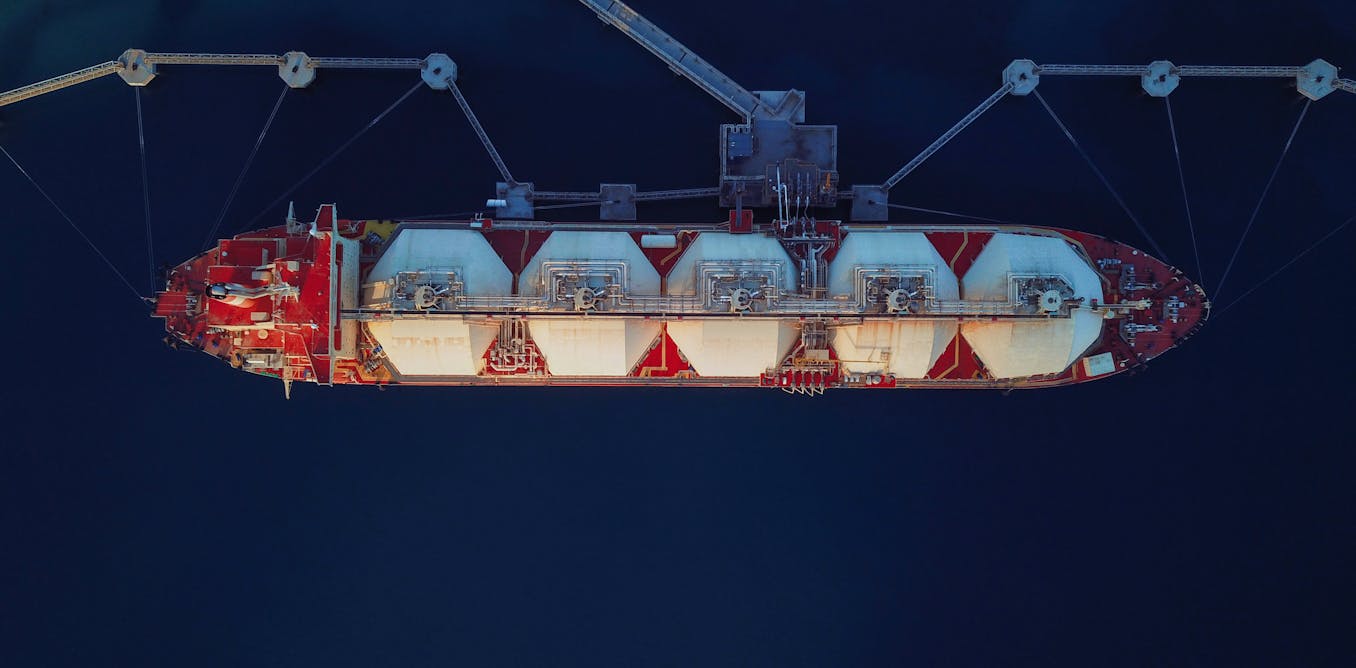
Producers of liquefied natural gas (LNG) on Australia’s east coast will have to set aside 20% of their gas exports to be sold to domestic users from July next year.
The long-awaited gas reservation plan, unveiled on Thursday, is well overdue. But it will not come into effect until July 2027, six months after it was originally supposed to start.
The policy is expected to lead to a “modest” oversupply in domestic gas in eastern Australia. Gas exporters in Western Australia have had to set aside 15% since 2006, though compliance is poor.
The change is intended to head off looming gas shortages in New South Wales and Victoria, as supplies from traditional sources such as the Gippsland basin off the coast of Victoria dry up from 2030.
The extra supply to the domestic market could lower prices and help industries such as manufacturing and chemical plants, which have been battered by high gas prices over the past decade.
Why do we need to reserve gas?
Gas user groups have called for reservation to be put in place ever since eastern Australia became a gas exporter in 2015. Since 2010, three liquefied natural gas (LNG) plants have been built at Queensland’s port of Gladstone to ship gas to customers in countries such as China, South Korea, Japan and Malaysia.
The LNG export surge triggered a steep rise in the price of domestic gas, forcing some gas-dependent businesses such as fertiliser plants to close.
Sustained higher gas prices also contributed to a fall in gas use in eastern Australia. After peaking in the 2012-13 fiscal year, gas demand fell 30% by 2023-24. Demand for gas has also fallen due to household electrification. Gas-fired generation recorded its lowest average in the January-March quarter this year, than for any quarter since 1999.

fhm/Getty
Supply is drying up
The Gippsland Basin Joint Venture in the Bass Strait was the biggest source of domestic gas for the east coast market until Queensland’s coal seam gas fields opened about 20 years ago.
While still a major supplier to Victoria, New South Wales and South Australia, Bass Strait wells are running out of gas. The venture is now being slowly decommissioned.
This is why the Australian Energy Market Operator has warned eastern Australia could run short of gas by 2029, with additional supply needed by 2030.
Queensland has sufficient reserves to supply southern markets. Australian gas pipeline operator APA Group is, however, expanding its network in anticipation of carrying more gas from north to south in the coming years.
Why does Australia export so much gas?
To make sense of the looming shortfall, you need to understand the gas industry in Queensland. Two of the three LNG consortiums based in Queensland – the Origin Energy-backed Australia Pacific LNG and the Shell-operated Queensland Curtis LNG – already supply gas to the domestic market.
But the Santos-operated Gladstone LNG venture does not. It has been reliant on buying gas from other producers to help meet its contractual obligations.
This is the core problem for the east coast gas market, as the Santos-owned consortium has bought gas which otherwise would have gone to the domestic market. It has contributed to higher gas prices, the closure of manufacturing plants and warnings of impending shortages.
The gas industry has long pushed back against efforts to impose a gas reservation policy, aided at times by sympathetic state governments in Queensland. The three east coast LNG consortiums have opposing positions. Australia Pacific LNG and Shell support a gas reservation policy, while Santos prefers the status quo.
The federal government is already spruiking its new policy. But it’s not guaranteed to become a reality, as it’s subject to further consultation. It could still be changed or even weakened.
Australia exports around 80% of its gas, largely through long-term LNG contracts. Talk of a gas reservation policy has worried key customers such as Japan.
The best time to introduce an east coast gas reservation policy was when exports from Queensland really began picking up 11 years ago. But it’s never too late to start.
If the policy bogs down in consultation, there’s a risk the scheme could be ineffective, or that loopholes could be added leading to no significant change for domestic supplies.
What’s next?
Assuming the domestic reservation policy comes into force as claimed, it will exclude export contracts entered into before the government’s previous announcement on 22 December 2025. Federal Resources Minister Madeleine King has said this will allow exporters to meet their full export commitments.
The government will legislate the new domestic supply obligation and commence further targeted consultation on the final policy. There were hopes this national reservation plan would include the Northern Territory, where the two LNG plants in Darwin have no obligations to supply the domestic market. But there is no mention of Darwin in today’s announcement.
In Western Australia, the gas reservation policy requires LNG exporters to broadly allocate 15% of their output. But compliance with this is poor and only 8% of gas was supplied domestically in 2023.
When announcing the new policy, Minister King said it would lower gas prices. She might be right. A study by consultancy Energy Edge found additional gas supplies from Queensland would lower gas prices in NSW and Victoria. It was also found to be a cheaper alternative than developing new supplies, such as Narrabri in NSW.


