





Bianca De Marchi/AAP
With the fuel crisis showing no sign of abating, the Albanese government has unveiled a package worth more than $10 billion to protect the country’s fuel and fertiliser security.
The measures include setting up a government-owned Australian Fuel Security Reserve of about a billion litres.
The government would also raise the Minimum Stockholding Obligation by about ten days for every type of fuel.
The measures would expand Australia’s onshore reserve to at least 50 days supply and storage of diesel and aviation fuel.
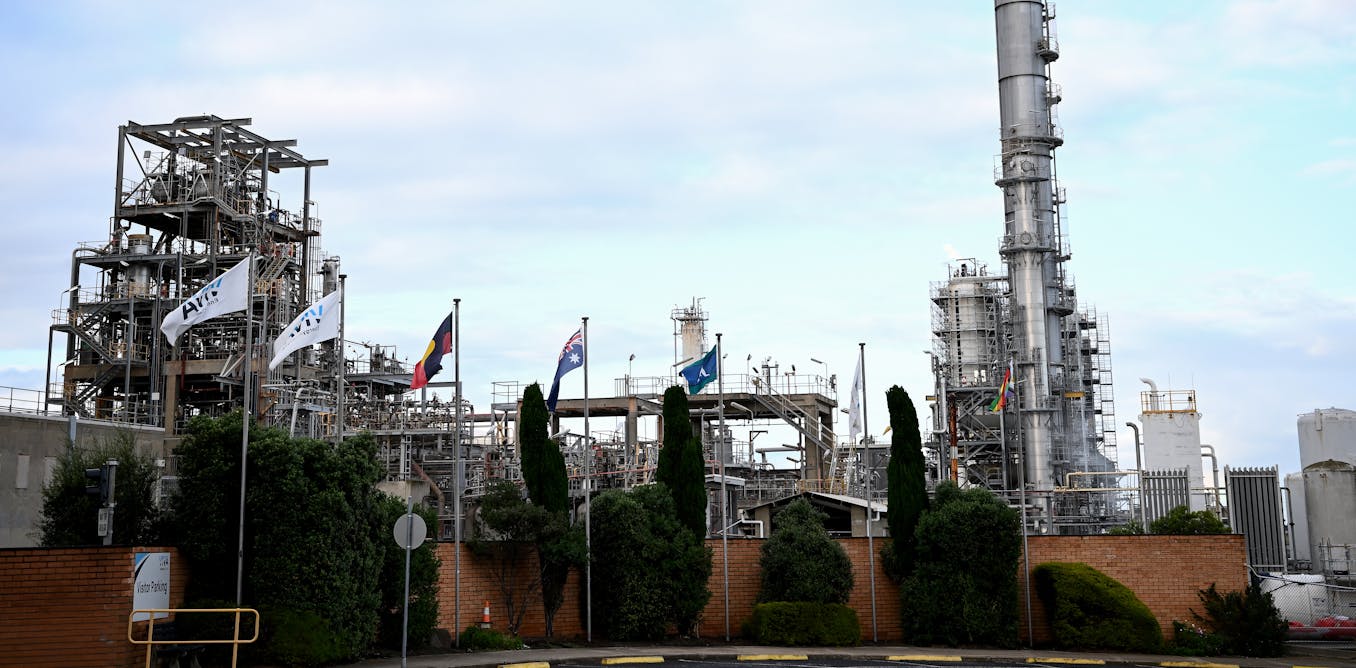
As well, there is money for examining the feasibility of new or expanded refining capacity. Australia’s previous multiple oil refineries have shrunk from eight to just two, one of which, near Geelong, recently had a serious fire.
The government would aim to have its plan fully in place by 2030. It would be financed off budget meaning it doesn’t hit the budget’s bottom line. Much of the detail remains to be worked out.
Prime Minister Anthony Albanese briefed national cabinet on the package on Wednesday before the announcement.
The components of the plan include:
-
$7.5 billion for the Fuel and Fertiliser Security Facility with financial support including loans, equity, guarantees, insurance and price support
-
$3.2 billion to establish the government-owned Australian Fuel Security Reserve to increase long-term diesel and aviation fuel supply and storage, combined with an increase to the Minimum Stockholding Obligation to extend Australia’s critical fuel reserves to 50 days. The reserve will concentrate on regional stocks and supply constraints for essential users in times of crisis.
-
$10 million for feasibility studies into new or expanded refining capabilities. These studies would be co-funded with state and territory governments.
Recently the opposition announced its own policy to boost fuel supplies. It said a Coalition government would boost Australia’s minimum fuel reserve to 60 days, and deliver at least one billion litres of new storage with a $800 million Fuel Security Facility.
Opposition leader Angus Taylor said the government plan was “too little and too late”.
Tony Wood, from the Grattan Institute’s climate change and energy program, told The Conversation the government’s planned modest increase in onshore storage was probably a good idea.
But he said there were a lot of questions about the proposed government-owned storage facility. These included how it would be managed, how the fuel would be used and who would pay for it.
Wood criticised the provision for feasibility studies for new refineries as a “dumb” idea given Australia was not producing oil to refine. There has been speculation about development of the Taroom Trough in Queensland, but the economic viability of this is unknown.
Wood said the emphasis should be on encouraging electric cars and trucks, and also looking at biofuels.
The Queensland government has just announced a plan to make available state-owned land for potential oil storage and refineries near ports.


