







Your analytics team is spending hours connecting the dots across your offline and online campaigns. Your attribution approach is predominantly last-touch or when it’s more sophisticated, it’s a black box you can’t quite explain to stakeholders.
You question whether your marketing mix model (MMM) is providing the right recommendations. You trust your incrementality tests, but structuring and analyzing them takes real effort. Meanwhile, you’re wondering: are we investing in the appropriate channels? Are we optimizing toward what’s truly driving outcomes or just what’s easy to measure?
If that sounds familiar, you’re not alone. According to the IAB’s State of Data 2026 report, 60%-75% of marketers say their measurement approaches fall short on coverage, consistency, timeliness and trust. Not a single respondent said their MMM covers all paid media channels. Your CTV investment? Probably underrepresented. Same with retail media, gaming, creator content and audio.
Here’s what happens: when you can’t easily measure a channel, you invest less in it or skip it entirely. You call it smart allocation. But really, measurement bias is dictating your strategy.
You’re optimizing for the wrong thing
Your models likely lean on platform-level or last-touch attribution. Your dollars keep flowing to lower-funnel channels that are easy to track, even when you suspect they’re not the most influential. That mid-funnel brand campaign? The podcast sponsorship? They’re undervalued because your measurement can’t see them clearly.
Here’s the more complicated truth: your models are confusing correlation with causation. A channel being present at conversion doesn’t mean it caused the outcome. Without incrementality testing or causal frameworks, you’re optimizing based on coincidence rather than contribution.
I’ve watched planning teams default to what worked last quarter, not because they believe it’s right, but because that’s what the outputs indicate. Strategy becomes a function of what you can measure, not what the right approach should be.
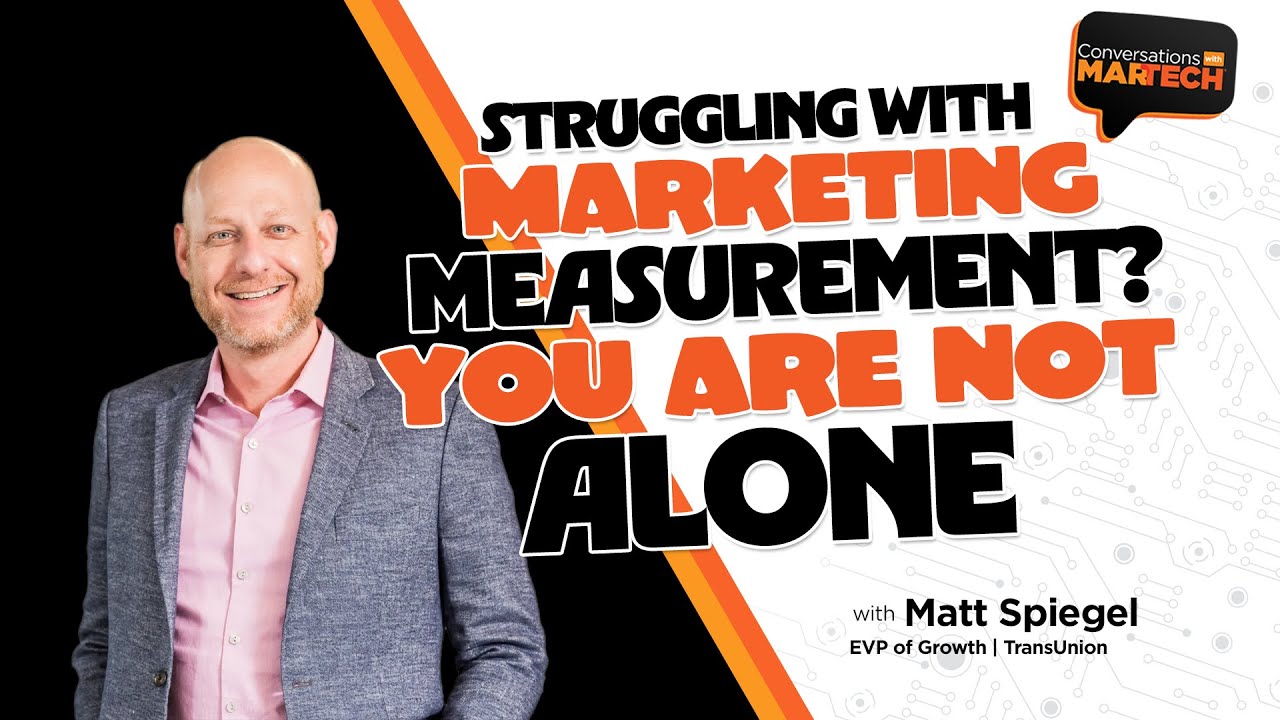
Dig deeper: Struggling with marketing measurement? You’re not alone.
The AI opportunity you’re not ready for
You’ve heard the saying: AI can fix measurement. There’s some truth to it. IAB’s report estimates AI-powered improvements could unlock $14.5 to $26.3 billion in media investment and $6.2 billion in productivity gains within two years—nearly $30 billion on the table.
But here’s the catch: AI only works if you feed it clean, standardized data. Most organizations don’t have that. Taxonomies are inconsistent and data definitions vary across platforms. Therefore, you can’t reliably connect exposure to outcomes.
AI is already handling some data prep work. Soon it’ll be tuning models, analyzing lift tests and reconciling results across measurement methods. However, without the proper foundation, you’re automating the same problems you have today.
That’s where IAB’s Project Eidos comes in. The name Eidos comes from the Greek verb “to see,” underscoring the initiative’s goal of creating visibility and coherence in a fragmented measurement landscape. Through Project Eidos, IAB is building the foundational elements AI requires: standardized taxonomies and classifications, a unified framework linking exposure and behavior to outcomes and modernized specifications for MMM.
If this works, the payoff is real. You’ll be able to allocate budget to channels you’ve underinvested in. Your team could shift nearly 10% of their time from data prep to strategy.
Dig deeper: The smarter approach to marketing measurement
Infrastructure is the bottleneck
The friction you’re feeling isn’t just about technology or methodology. It’s operational. Data quality is inconsistent. Workflows are manual. Teams operate in silos. You’re likely using processes built for rigid cycles, not the fluid, high-velocity pace your business demands today.
If your infrastructure is broken, AI will expose those problems faster and at a greater scale.
You’ve got legitimate concerns too: legal and security risk, model accuracy, data quality. When you don’t address these, measurement becomes harder to trust, less inclusive of all media and slower to update. That creates a feedback loop that kills AI’s value before you can scale it.
Of those IAB surveyed, 40% of brand-agency contracts already include AI-related clauses, including transparency requirements, accountability frameworks, performance expectations, and efficiency standards. Within two years, that jumps to 70 or 80 percent.
You’ll need to show not just that your models work, but that they meet new accountability standards.

What we actually need to do
Fixing measurement isn’t about buying another tool. It’s a structural shift requiring planning, analytics, data, legal and ops to work together. Here’s what we need:
- Build automated, repeatable workflows to measure more frequently and cut manual work.
- Fix data quality and standardize access across channels and platforms. Models need consistent inputs, not patchwork.
- Align teams around shared KPIs rather than disconnected dashboards that fragment decision-making.
- Make measurement a tool for optimization, not just validation. Use insights to inform planning, not just report on what happened.
None of this is new, but AI now makes it impossible to ignore these long‑standing issues, demanding immediate solutions. Without a solid foundation, the $30 billion industry opportunity stays out of reach.
The technology exists and initiatives like Project Eidos are starting to build the frameworks. To unlock smarter budgets and massive productivity gains, we need more than just tools. We need a collective commitment to push platform partners toward these standards.
Stop patching the past. Let’s rebuild the foundation and put that $30 billion to work in the right places.
Dig deeper: 5 ways to improve marketing measurement in 2026
Fuel up with free marketing insights.
Email:
Contributing authors are invited to create content for MarTech and are chosen for their expertise and contribution to the martech community. Our contributors work under the oversight of the editorial staff and contributions are checked for quality and relevance to our readers. MarTech is owned by Semrush. Contributor was not asked to make any direct or indirect mentions of Semrush. The opinions they express are their own.


