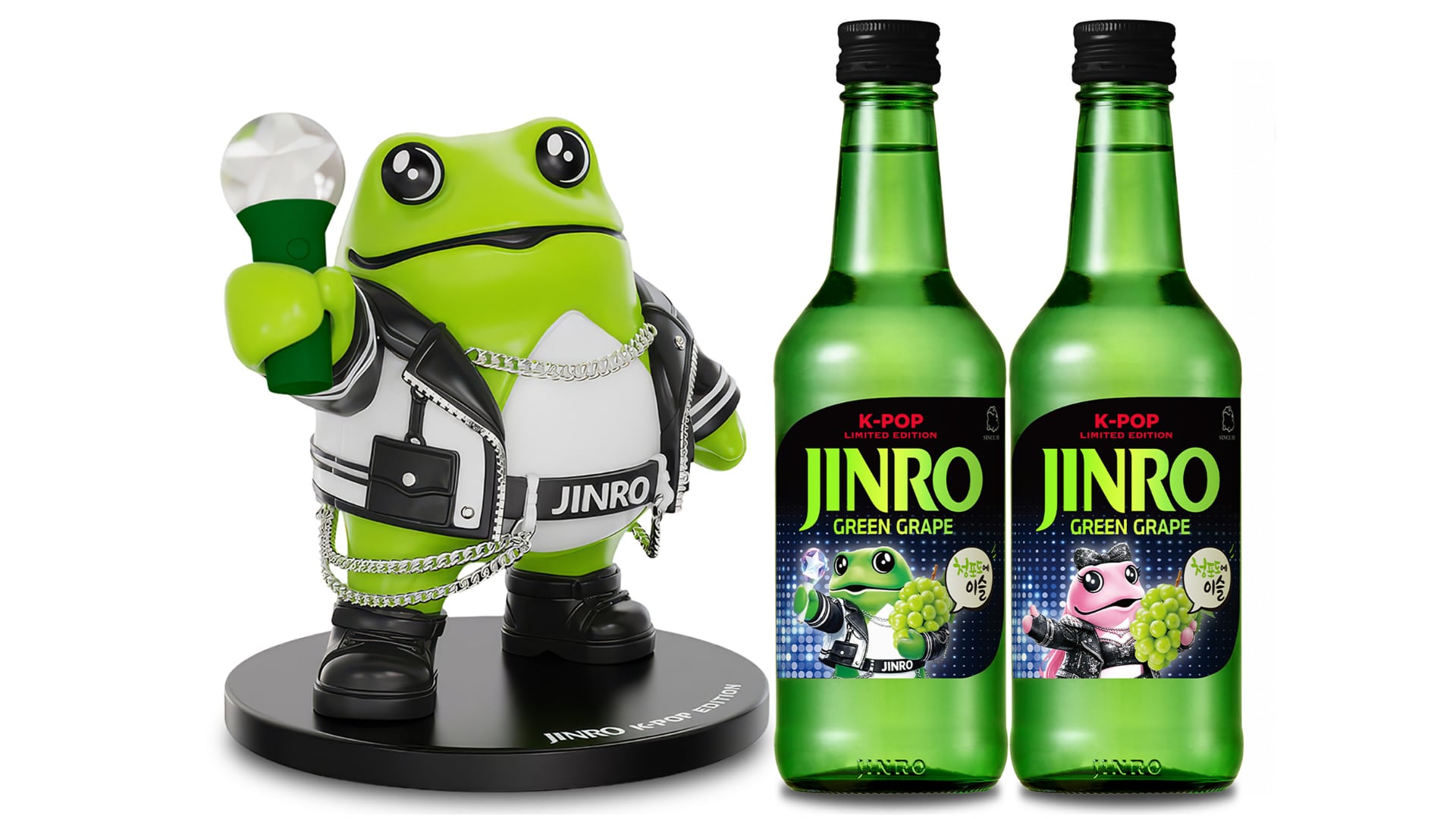
As K-pop culture continues to dominate global trends, HiteJinro is using packaging and consumer engagement to further extend Jinro’s appeal beyond its home market.
On August 10, HiteJinro announced the launch of its limited edition label for Jinro’s green grape soju, featuring its toad mascot available in pink or green, dressed as a K-pop idol.
“The K-POP Star Toad limited edition was developed to tap into the globally beloved K-POP phenomenon, aligning with our commitment to expanding the JINRO brand in the global mainstream. Through the synergy of K-culture and our signature Toad mascot, we aim to enhance JINRO’s brand competitiveness and elevate its presence worldwide,” said Jung-ho Hwang, head of overseas business at HiteJinro.
Like Coca-Cola China, Jinro taps on consumer engagement by rolling out an interactive campaign across global markets. The firm is running a “Message Challenge” with bottle caps from the limited edition K-pop Star Toad soju, which makes use of another aspect of the bottle packaging to engage consumers.
Each Jinro soju bottle cap carries a letter of the alphabet on its underside, encouraging consumers to collect multiple bottles and arrange the letters into personalised messages to share on social media.
This turns the limited-edition packaging into an interactive touchpoint, extending the K-pop theme from visual branding into consumer participation.
The move comes as the Korean cultural wave, or hallyu, increasingly shapes how consumers discover Korean food and drink, including soju.
Soju’s association with Korean entertainment, food and social occasions has helped embed the drink within the wider K-wave.
Jinro’s K-pop push extends beyond packaging. HiteJinro appointed BTS member V as Jinro’s global ambassador in July, tapping into his global appeal to build closer connections with consumers worldwide.


The cultural and social appeal of soju
In South East Asia, Korean drinking cues are increasingly being localised, with brands adapting soju, highballs and makgeolli into more accessible formats, according to Mintel Associate Principal Tan Heng Hong.
The London Spirits Competition has similarly highlighted soju’s appeal among modern drinkers, pointing to its versatility and relatively lower alcohol content compared with some spirits. Its clean flavour profile also creates room for flavour innovation, another factor supporting the category’s growth.
Jinro’s approach also comes as drinking occasions and formats continue to evolve across the region. Diageo’s cocktail focus is reflecting a shift towards moderation and wellness. Meanwhile, Brown Brothers is eyeing Asia Pacific growth with its zero-alcohol strategy.
The IWSR has noted that soju’s popularity is boosted by the accessibility of flavoured and ready-to-drink variants, which help to lower barriers to trial. Flavoured soju now accounts for more than half of US soju volumes, a significant rise since 2019. This makes soju is one of the fastest-growing spirits categories in the US market, where younger consumers lean towards ready-to-drink fruit-flavoured products.
“It’s seen as a fun, social alternative and is often discovered in group settings like house parties or nights out. We’re seeing soju closely tied to social occasions – including Korean barbecues, karaoke or pre-drinks – which helps to position it as an intrinsic part of the whole experience, and not just another drink choice,” according to IWSR’s April 30 report on Riding the K-wave: soju soars in the US.