

Advertisement

Tinubu, Sanwo-Olu Push Transport Reforms to Drive $1trn Economy
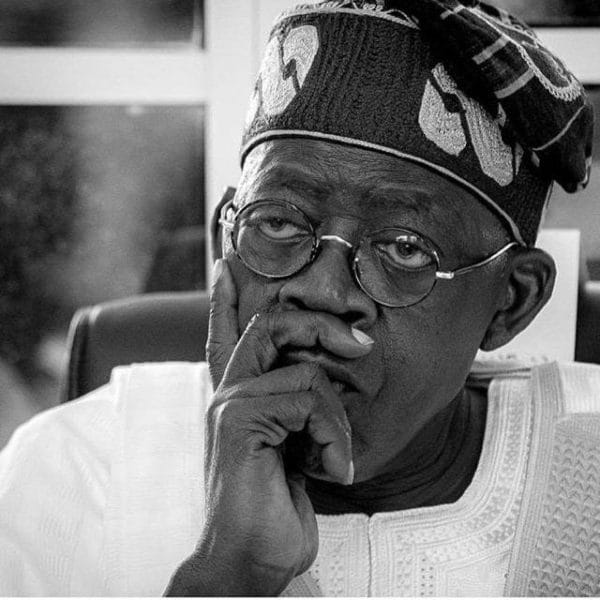
President Bola Tinubu, Lagos State Governor Babajide Sanwo-Olu and the Chartered Institute of Transport Administration of Nigeria have called for an integrated and efficient transportation system to drive Nigeria’s ambition of building a $1tn economy.
They said connecting roads, railways, seaports, airports and inland waterways would reduce logistics costs, ease congestion, improve safety and enhance the movement of people and goods across the country.
The stakeholders also stressed the need for increased private-sector investment, professional transport administration, technology adoption and the formalisation of road and inland waterway operations to unlock the sector’s economic potential.
Tinubu, who spoke through the Supervising Minister and Permanent Secretary of the Federal Ministry of Transportation, Olufunsho Adebiyi, made the call at the opening of the eighth National Transport Conference of CIOTA in Lagos on Tuesday.
He said transportation transcends moving people and goods, describing it as the physical infrastructure connecting farms to markets, factories to consumers, seaports to the hinterland and businesses to economic opportunities.
According to Tinubu, Nigeria must move beyond isolated road, rail and maritime projects towards an interconnected transport economy involving inland waterways, seaports, airports, logistics hubs, mass transit systems, intelligent transport systems and digital platforms.
He said the Federal Government had prioritised transportation infrastructure under its Renewed Hope Agenda, describing it as a major driver of economic growth, national integration, job creation and investment.
Sanwo-Olu, represented by his Special Adviser on Transportation, Sola Giwa, said Nigeria’s transportation challenge was not necessarily a shortage of infrastructure but the lack of effective connections between existing transport modes.
He said a container cleared at a seaport in a day could spend another week on the road before reaching its destination, while commuters using trains still faced difficulties connecting to their final destinations.
“Nigeria does not have a shortage of roads, rails, ports, airports or waterways. It has a shortage of connections between them,” the governor said.
He added that although the different transport modes were working hard, too few were working together, describing integration as the central challenge the conference needed to address.
Sanwo-Olu said Lagos, with a population of well over 20 million people and one of the smallest landmasses among Nigeria’s states, could not solve its congestion problems by continually expanding roads.
He argued that the state needed to move more people in fewer vehicles by connecting rail, road and water transport systems and making transfers between them easier.
”The only way to give each resident more mobility is to move more people in fewer vehicles, across more modes, with an easy passage from one to the next. That is not ideology. It is arithmetic,” he said.
