

Advertisement

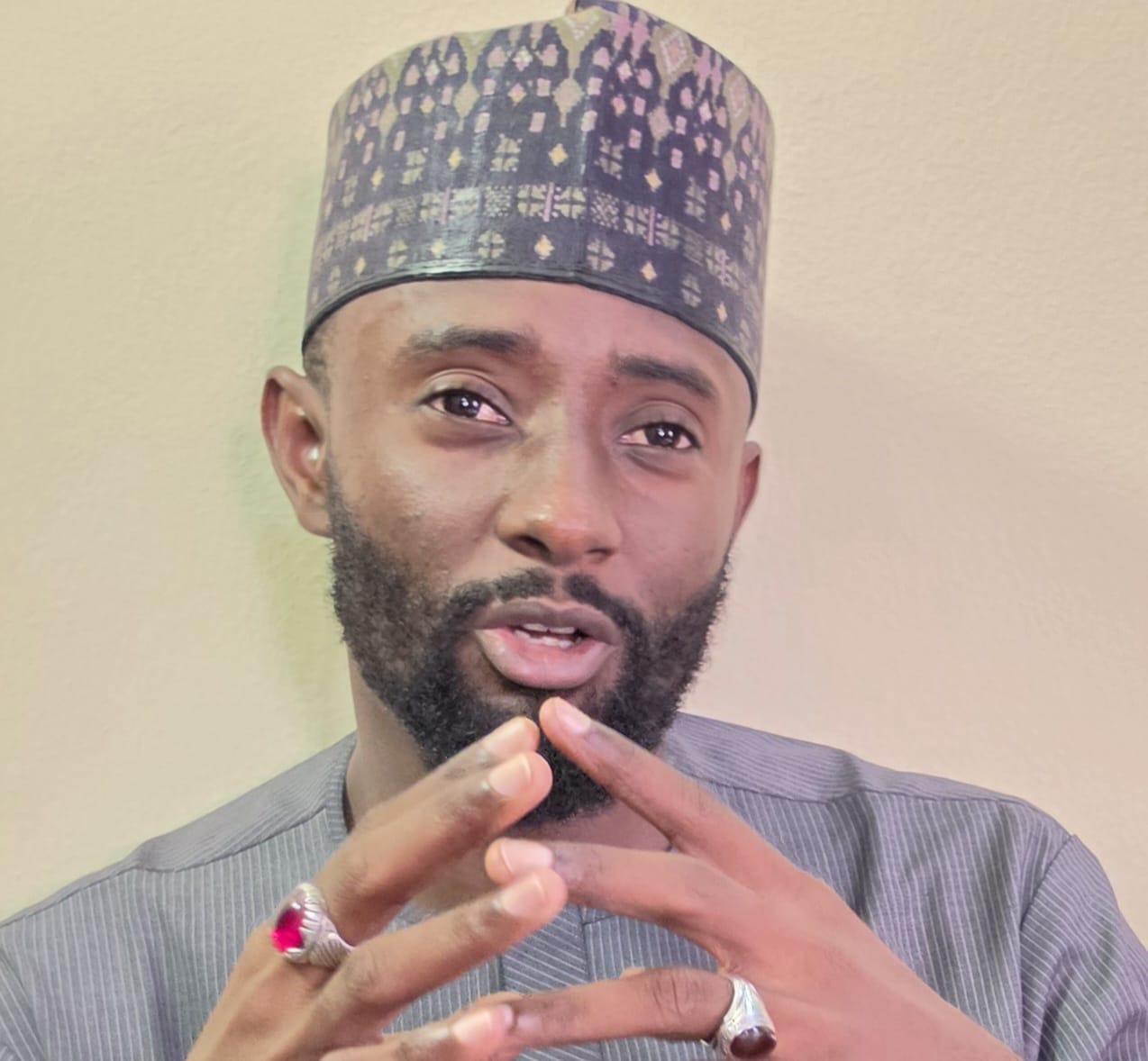
Ahmad Gana: From Entrepreneurship to Politics, A Young Nigerian’s Journey of Preparation and Ambition
By Tahir Ahmad and Fom Gyemsi
At a time when Nigeria’s political landscape is increasingly shaped by debates about generational change, technology and youth participation, Ahmad Muhammad Gana is emerging among a cohort of young Nigerians seeking to move beyond demanding change to participating directly in the political process.
Born on October 23, 1996, in Yobe State and raised in Kaduna, Gana’s path into public life did not begin in political circles. Instead, it evolved through education, entrepreneurship, community engagement and exposure to seasoned public servants. Today, the businessman and budding political actor from Nguru Local Government Area describes his motivation in simple terms: service and impact.
“I really want to make an impact in my communities and in people,” he told Politics Digest in an interview.
His story is not yet one of electoral victory or public office. Rather, it is the profile of a young Nigerian deliberately building the experience, networks and economic independence he believes are necessary for meaningful political participation.
Although born in Yobe, Gana spent most of his early years in Kaduna. He attended Mary Travis Primary School, Uncle Bado Memorial College, Table School in Zaria and later Grace College, where he completed his secondary education in 2014.
Three months after graduation, he travelled to Sudan to study Economics, completing his degree in 2018. He returned to Nigeria for the National Youth Service Corps (NYSC) programme between 2019 and 2020.
His pursuit of professional development continued. He enrolled for ICAN examinations, obtained a certificate in Conscious Capitalism from Babson University in the United States, and recently completed a programme at the School of Politics, Policy and Governance (SPPG), where he embraced evidence‑based decision‑making.
One phrase from the school stayed with him: “In God we trust, but come with data.”
Long before politics became part of his identity, entrepreneurship shaped Gana’s worldview. Today, he runs businesses in cement and grains, but his entrepreneurial journey began in Sudan.
In his second year at university, he identified a market gap: materials that were scarce locally but available in Kano. He began sourcing and transporting them to Sudan, where demand was high among South Sudanese customers.
Starting the business required sacrifice. At times, he diverted money meant for feeding and accommodation into the venture. The risk paid off, giving him financial independence as a student.
“I cannot just stay or wait for my parents to give me,” he said.
The experience reinforced a belief central to his political philosophy: economic independence matters, especially for young people seeking to participate in public affairs.
Gana has never held elective office, nor has he served as a commissioner or special adviser. Yet his exposure to public institutions has been significant.
He currently works as personal assistant to Alhaji Bukar Goni Aji, a former Head of the Civil Service of the Federation. He describes the experience as an important window into leadership and administration.
During his NYSC year, he served at the National Information Technology Development Agency (NITDA), first in procurement and later in audit. He recalls being entrusted with responsibilities typically reserved for permanent staff, eventually earning a recommendation letter.
For a young man interested in the intersection of technology and governance, the experience proved particularly relevant.
Ask Gana why he is drawn to politics and he repeatedly returns to one word: impact.
His argument for youth participation is partly generational. He notes that many older Nigerian leaders entered public life when they themselves were young. But his case is not simply about replacing older politicians with younger ones.
For him, the real question is whether political leadership is keeping pace with a rapidly changing world.
Artificial intelligence, robotics and automation, he argues, are reshaping economies. Leadership must therefore include people who understand these transformations.
“You need to bring fresh people with fresh minds that can align with the future,” he said.
“Politics Is a Necessity”
Gana’s message to young Nigerians is not limited to joining political parties.
“Politics is a necessity for every individual,” he said.
He believes political participation should combine civic engagement with education and economic independence. Young people, he argues, should acquire skills, build businesses and develop independence rather than wait indefinitely for government jobs.
But he also insists that those demanding change cannot remain outside the institutions where decisions are made.
“If you are not on the table that can make a change, then I don’t think what you are saying really makes an impact,” he said.
Gana traces his interest in philanthropy to his upbringing. He watched his parents support relatives and neighbours, and gradually adopted similar habits.
He prefers to describe his interventions as investments in human capital. When people approach him with small business needs—₦50,000 or ₦100,000—he assists when possible.
During Ramadan, he sends food items to families in Nguru. He also connects people to government programmes and empowerment opportunities.
His guiding question is simple: what can he do for his local government and the people around him?
As his political involvement expands, Gana is building networks beyond his immediate community. He identifies himself as a member of the City Boy movement and serves as its Director of Protocol and Logistics for the North‑East.
He is also a registered member of the All Progressives Congress (APC). Although he considered contesting in the last election cycle, he did not purchase a nomination form.
For now, his political activities centre on networking, organisation and community engagement.
“You have to network wide across the nation,” he said.
Where does Gana’s political journey lead? He does not yet say.
“I’m an ambitious person. But I am not that person that will make that call. It’s my people that will make that call,” he said.
For him, public office should not be a personal trophy.
“It’s not about personal achievement, it’s about community service.”
If he eventually enters full‑time public service, Gana says he would delegate business operations to others while retaining strategic oversight. He does not intend to abandon entrepreneurship, noting that political positions have fixed tenures while businesses can provide long‑term stability.
Ahmad Muhammad Gana is not yet a politician with an electoral record. His story is still one of preparation—entrepreneurship, education, community service, political networking and exposure to public institutions.
Whether these experiences lead to elective office will depend on party processes, political circumstances and voters. For now, his journey represents one pathway through which a new generation is attempting to enter Nigerian politics—not through immediate campaigns, but through building capacity, networks and independence.
At 29, Gana is still some distance from whatever destination he may ultimately seek. His story, for now, is less about arrival than about preparation—a young Nigerian testing whether entrepreneurship, technology, community service and political participation can form a credible path toward public leadership.
