

You are here: Home / Cryptocurrency News / Bitdeer AI Secures $400 Million Malaysia Data Center Deal
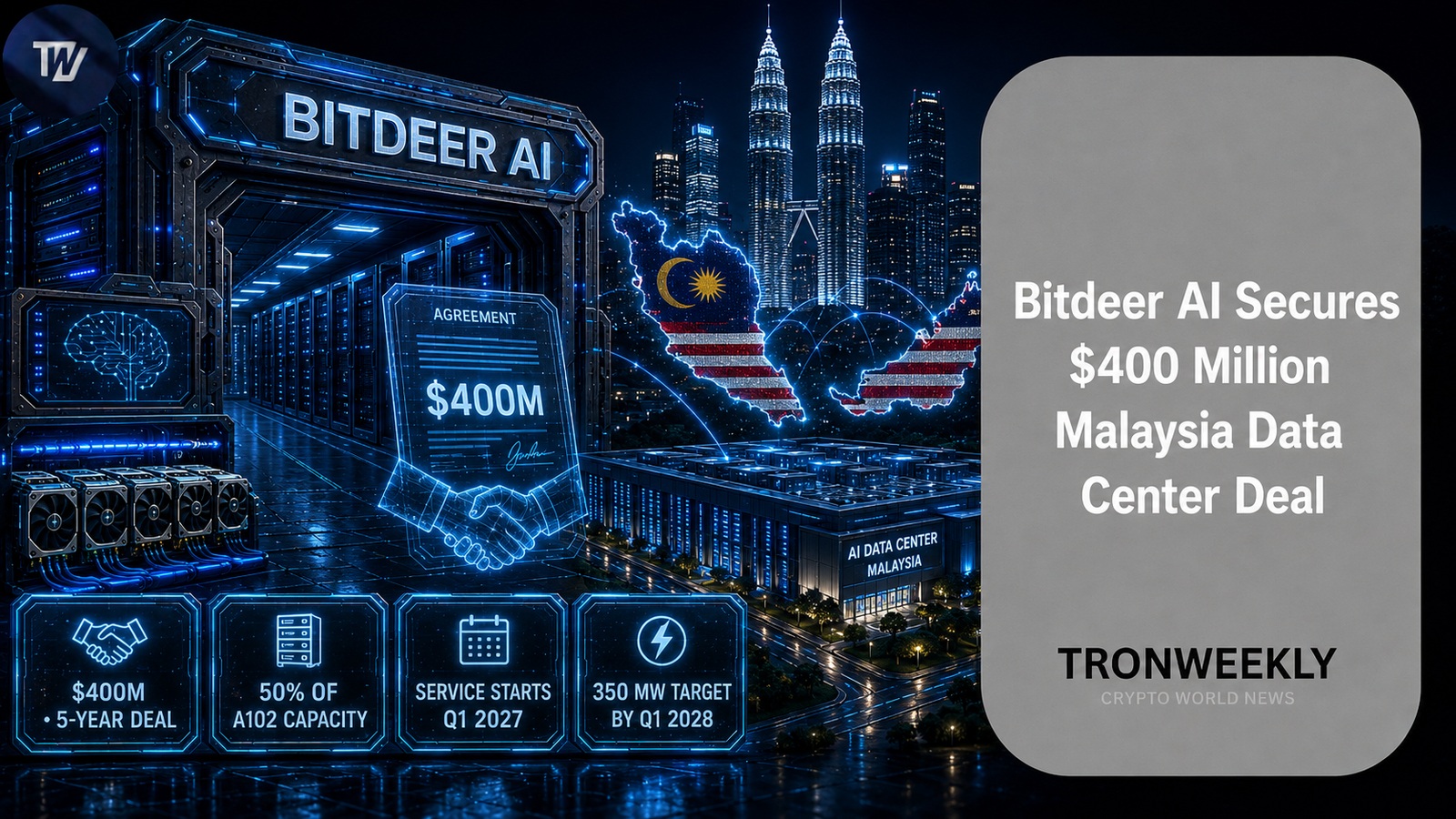
Bitdeer AI has signed a 5-year customer agreement worth about $400 million. The contract covers roughly half of the A102 data center’s available capacity in Malaysia. It was secured before the facility was energized or began commercial operations.
Bitdeer described the unnamed customer as having “high credit quality.” Service delivery is due to start in the first quarter of 2027. Revenue and related costs are also expected to begin during that period.
JUST IN: Bitdeer signs $400M five-year offtake deal for 4.75 MW AI cloud capacity in Malaysia.
— MSB Intel (@MSBIntel) August 20, 2026
How Bitdeer AI Is Expanding Globally
The customer details were unknown, while a clear pricing model was not disclosed by the firm. Moreover, there were no agreements made regarding the remaining A102 capacity.
Also Read: CFTC Ends Ellison, Wang Cases With Multi-Year Trading Bans
Malaysia has become a part of the firm’s AI activities. In particular, the Bitdeer AI generated about $69 million per year in recurring cloud revenue. Also, the firm reviewed infrastructures in various countries for AI and colocation services.
The firm plans to achieve 350 MW of AI cloud data center capacity until Q1 2028. First, Bitdeer operated as a Bitcoin mining company. In particular, it has been running mining facilities in the USA, Bhutan, Norway, and Ethiopia. Besides that, the firm produces its SEALMINER machines.
Now, the firm’s artificial intelligence division is involved in GPU cloud services, data center conversions, and infrastructure contracts.
In early August, the firm signed another 16-year lease agreement at its Tydal campus in Norway. The contract provides 121 MW of AI computing capacity with about $4.7 billion in revenue during the initial period of the contract.
All of the contracted capacity will be used to power Nvidia GPUs for the leading AI lab via Volta, which is a partner of the Nvidia Cloud Partner. The first phase is planned to be launched by the end of 2026, while the second phase will be started in early 2027.
In addition, an eight-year renewal option can increase the value of the agreement up to $8 billion over 24 years. According to the firm, electricity expenses will be compensated by the tenant under the agreement.
In July, the firm announced a $36 million manufacturing facility in Nevada that will produce equipment for Bitcoin mining.
Bitcoin Miners Expand Into AI Infrastructure
Many of those Bitcoin mining companies have taken advantage of the ability to provide services in power and data center operations. Hut 8 and IREN have struck deals worth several billion dollars in computing.
Meanwhile, MARA has made an agreement to buy a powered Texas facility spanning 1,200 acres.
TeraWulf’s computing division has beaten its mining division through quarterly revenues. It reported quarterly revenue of $21 million from HPC hosting services in Q1 2026. The mining operations brought in revenue below $13 million.
How Did Bitdeer Shares Respond?
Bitdeer shares gained 9.81% during Thursday trading, reaching about $10.57. Earlier, the stock had risen nearly 6% in pre-market trading and traded near $10.20.
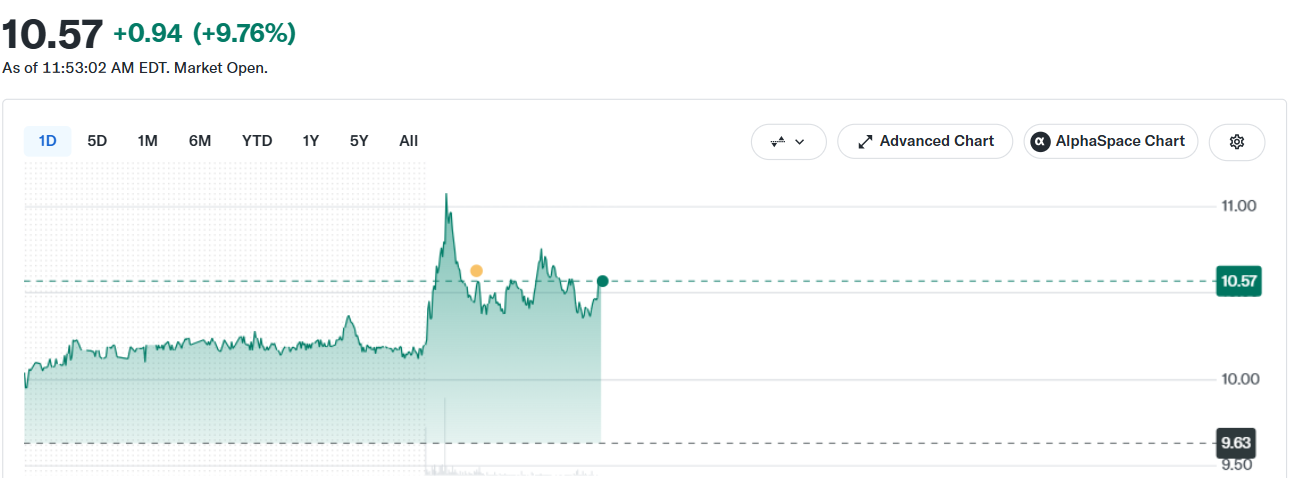
Source: Yahoo Finance
The deal was made after Bitdeer revealed second-quarter revenue of $228.8 million, which is an increase compared to last year’s revenue of $155.6 million. But still, Bitdeer recorded a net loss of $92.3 million.
Bitdeer had $496.3 million in cash, cash equivalents, and restricted cash on June 30. Bitdeer’s portfolio consists of Bitcoin mining and AI facilities.
Also Read: OKX Limits Claude Access for Hong Kong Staff Amid AI Rule

About Arslan Tabish
Arslan Tabish is a Technical Reporter and Market Analyst at Tron Weekly with over five years of experience covering cryptocurrency markets and blockchain developments. His reporting focuses on Bitcoin, Ethereum, altcoins, and decentralized finance, alongside NFTs, crypto regulation, policy, and Web3 innovations.
Arslan covers blockchain technology, Layer 2 scaling solutions, and emerging use cases, including AI-driven crypto applications, while delivering clear market analysis on how technical and regulatory developments impact digital asset markets. His work is designed for both beginners and experienced readers, offering accurate, easy-to-understand reporting without speculation or investment guidance.
