


Published:
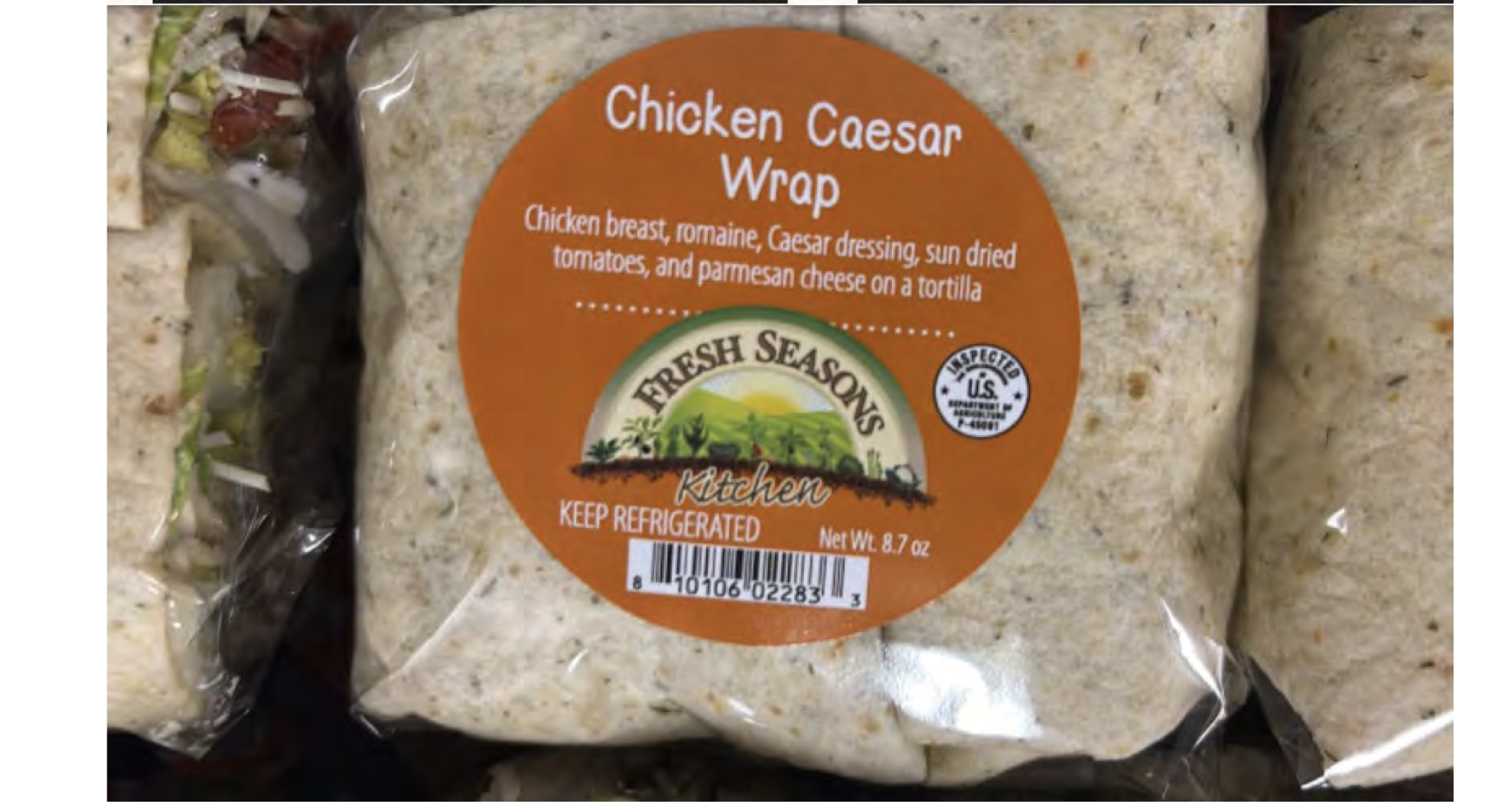
The USDA’s Food Safety and Inspection Service (FSIS) is issuing a public health alert for ready-to-eat chicken Caesar wraps because tests of the product showed contamination with Listeria monocytogenes.
A recall was not requested because the products are no longer available for purchase.
The ready-to-eat chicken Caesar wrap items were produced on June 16 and have a sell by date of June 24. Consumers can determine whether they have the wraps by looking for the following label information:
- 8.7-oz. clear plastic wrapped packages of “FRESH SEASONS Kitchen Chicken Caesar Wrap” with “Sell By:6/24/2026” printed on the back label above the ingredients.
The products have establishment number “P- 45091” printed inside the USDA mark of inspection. These products were shipped to Holiday convenience stores in Minnesota and Wisconsin.
The problem was discovered during routine FSIS product testing when a sample confirmed positive for the presence of Listeria monocytogenes.
There have been no confirmed reports of illness due to consumption of these products. Anyone concerned about an illness should contact a health care provider.
About Listeria infections
Food contaminated with Listeria monocytogenes may not look, smell or taste spoiled but can still cause serious and sometimes life-threatening infections. Anyone who has eaten any recalled product and developed symptoms of Listeria infection should seek medical treatment and tell their doctors about the possible Listeria exposure.
Also, anyone who has eaten any of the recalled product should monitor themselves for symptoms during the coming weeks because it can take up to 70 days after exposure to Listeria for symptoms of listeriosis to develop.
Symptoms of Listeria infection can include vomiting, nausea, persistent fever, muscle aches, severe headache, and neck stiffness. Specific laboratory tests are required to diagnose Listeria infections, which can mimic other illnesses.
Pregnant women, the elderly, young children, and people such as cancer patients who have weakened immune systems are particularly at risk of serious illnesses, life-threatening infections, other complications and death. Although infected pregnant women may experience only mild, flu-like symptoms, their infections can lead to premature delivery, infection of the newborn, or even stillbirth.

News Desk
The News Desk team at Food Safety News covers breaking developments, regulatory updates, recalls, and key topics shaping food safety today. These articles are produced collaboratively by our editorial staff.
Your Support Protects Public Health
Food Safety News is nonprofit and reader-funded. Your TAX-FREE gift ensures ongoing coverage of outbreaks, recalls, and regulations for everyone.
