

By Irina Slav – Jun 14, 2026, 4:00 PM CDT
- Nuclear power is making a global comeback as governments and tech companies seek reliable, low-carbon energy sources.
- Japan plans to rebuild up to 14 reactors by 2050, while China is expanding the world’s largest nuclear fleet with seven new reactors expected online this year and dozens more under construction.
- Rising concerns over energy security, fuel price volatility, and dependence on imports are driving renewed support for nuclear power.
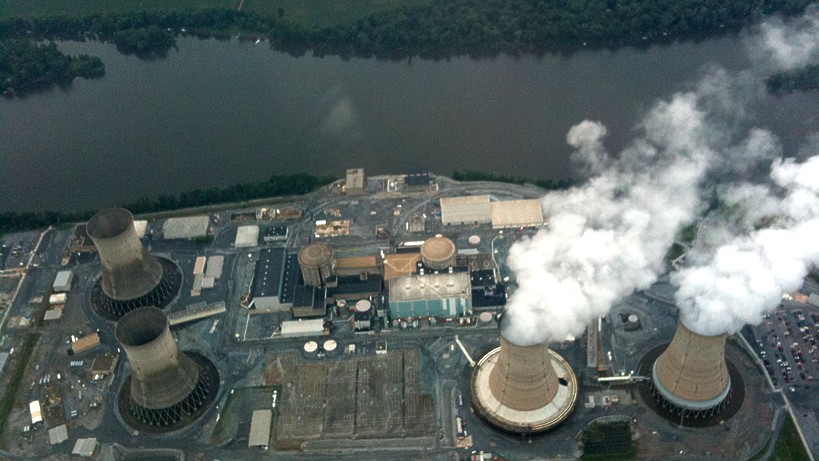
Japan plans to rebuild over a dozen nuclear reactors by 2050; China is building seven new ones this year alone; in the U.S., two companies are building a hybrid nuclear-and-gas power plant; Germany admitted killing nuclear was a big mistake. Nuclear is back—and it makes the backbone of a new approach to energy security.
“We clearly need more nuclear power and we’re bullish on it,” the president of Microsoft, Brad Smith said recently, as quoted by the Wall Street Journal, which reported that nuclear is back in favor with everyone, but especially Big Tech. Microsoft is among the tech majors investing in nuclear generation to power its AI data centers, effectively admitting that hopes and dreams of low-carbon wind and solar reliance would never become a reality. Nuclear remains the only reliable, (dispatchable), low-carbon form of energy—and it is also a lot less vulnerable to geopolitical price swings than oil and gas.
Japan is a good case in point. Following the 2011 Fukushima disaster, the Japanese government closed all of its nuclear reactors and tried to switch to other forms of electricity generation. The Strait of Hormuz crisis, as well as LNG price volatility, however, recently prompted a reconsideration of the nuclear-divorce policy, with growing pro-nuclear sentiment in Japanese political circles.
The idea to rebuild as many as 11 to 14 nuclear reactors was laid out in a proposal by the country’s trade ministry earlier this month. If all 14 are built, this would add 16 GW to Japan’s generation capacity. Currently, Japan generates between 60% and 70% of its electricity from hydrocarbons, including coal, oil, and natural gas, which it imports due to a lack of its own resources. The drawbacks of this dependence have become quite obvious amid the Middle Eastern crisis, highlighting the advantages of nuclear.
China, meanwhile, is fully living up to its reputation as an all-of-the-above energy planner. The country is building solar, wind, coal, and nuclear with equal enthusiasm. Beijing plans to put into operation seven new nuclear reactors this year, boosting its already substantial fleet, which is already the largest in the world. Ground has been broken on two of the seven planned for commissioning before the end of the year.
Another 16 reactors have been approved for construction, and a total of 36 are under construction, Chinese media reported in April, citing official data. There are 60 already operating nuclear reactors in the country with an installed capacity of 125 million kW, with China overtaking the United States as the biggest nuclear nation in the world, after it built 34 GW over ten years.
The United States, however, is starting to catch up. A nuclear renaissance is among the energy priorities of the Trump administration, and the Department of Energy is taking this priority seriously. There are plans in place to extend the lives of existing reactors and build new ones, including large conventional facilities and small modular reactors, which have made a lot of media noise but little in the way of actual capacity, for now. Last month, the DoE even said it was considering funding research into using Cold War-era nuclear weapon fuel for power generation to reduce dependence on imported uranium, which comes from Russia and Kazakhstan.
Speaking of small modular reactors, despite the absence of any demonstrable success there, hopes are high. “If we can figure out a design that people can be happy with and try and replicate that a series of times, I think that’s going to help on construction,” Constellation Energy executive VP Dan Eggers told the Wall Street Journal. “It’s going to help on operations costs, and that will all lead to hopefully a better cost profile.”
Nuclear does need a better cost profile because its big drawback is upfront costs, if we are talking conventional nuclear. It is the reason why there has been reluctance to build more reactors even in the face of soaring demand from the tech sector. It is also the reason Big Tech is teaming up with power utilities to supply the money for the reactors. SMRs are supposed to be cheaper, but the one attempt, by NuStar, ended up so expensive that it did not make commercial sense.
Even with these upfront costs, however, nuclear is back. It is back because the Middle East crisis has painted a point that China already knows well in stark relief for the rest of the world. All energy matters, and so does diversification. Europe is learning this lesson the hard way, by making all the mistakes that it could make, but even in Europe, the attitude towards nuclear is shifting, with none other than Germany admitting it was a grave mistake to shut down all of its reactors. It is a mistake that has cost the country—and the EU—dearly and one that everyone has learned from and will be able to avoid.
By Irina Slav for Oilprice.com
More Top Reads From Oilprice.com
- Norway Pitches Arctic Resources as Key to EU Energy Security
- Russian Governors Rush to Deny Fuel Crisis as Rationing Spreads
- Nigeria’s Crude Oil Production Hits 15-Month High
Download The Free Oilprice App Today



Irina Slav
What I Cover
Irina Slav has been writing about global energy markets since 2007, covering the oil and gas industry, energy security, commodities, and the…
