


Marriage, it turns out, may come with a side‑effect no one puts in the vows: people who have been married seem less likely to develop cancer than those who have never married at all.
That is the provocative finding from a large new study that has raised interesting questions about what really keeps us healthy over a lifetime. If marriage shows up in the data as “protective”, is it love that matters, the piece of paper, or something much bigger hiding in the background?
In this analysis, researchers looked at cancer diagnoses in more than 4 million adults across 12 US states, representing a population of over 100 million people. They focused on cancers diagnosed after the age of 30 between 2015 and 2022 – a modern snapshot taken in an era when same‑sex marriage is legal nationwide, so marriage includes more people than ever.
Everyone was divided into two camps: those who were or had ever been married, including divorced and widowed people, and those who had never married at all. Around one in five adults landed in this never‑married group, a sizeable minority whose health has often been overlooked in traditional family‑centred research.
When the researchers compared the numbers, the gap was impossible to ignore. Men who had never married were about 70% more likely to develop cancer than men who had married at some point, while women who had never married were about 85% more likely to develop cancer than women who were or had been married.
More advantage to women
That last figure is especially notable, because many earlier studies suggested that men gained more from marriage than women. Here, women appear to gain at least as much, if not more. And the differences grew wider with age, especially after 50, when the consequences of decades of habits – smoking, diet, exercise, medical check‑ups, or the lack of them – finally rise to the surface.
The gap was not the same for every cancer, which is where the story becomes more revealing.
For anal cancer in men and cervical cancer in women – two diseases closely linked to infection with the sexually transmitted human papillomavirus (HPV) – the differences were enormous. Never‑married men had around five times the rate of anal cancer compared with men who had married.
Never‑married women had nearly three times the rate of cervical cancer. These are precisely the cancers where preventive tools already exist: HPV vaccination and regular screening to catch pre‑cancerous changes early.
The study’s authors suggest that being married may increase the chances that someone is nudged into attending those appointments, or into having more stable healthcare and insurance.
Elsewhere, the pattern echoed long‑known biological themes. Cancers such as endometrial and ovarian cancer were more common in never‑married women, which may reflect lower rates of childbearing, since pregnancy and childbirth alter hormone exposure in ways that can reduce risk, as research my team has undertaken shows.
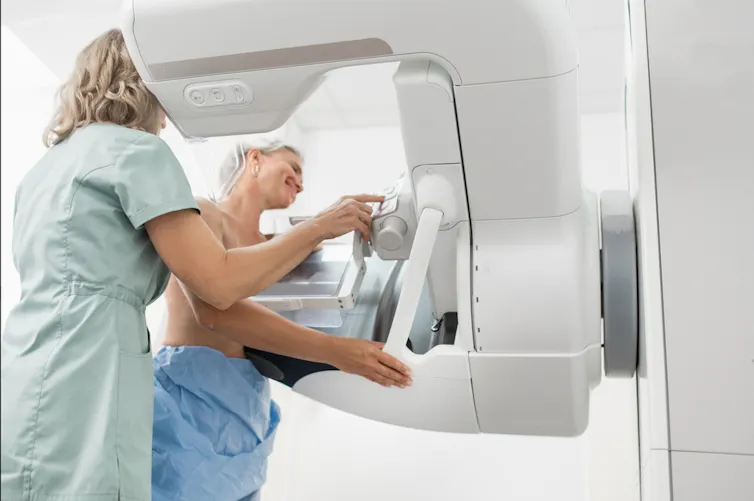
By contrast, for cancers strongly influenced by organised screening – breast, prostate, thyroid – the differences by marital status were smaller. Screening levels the playing field, regardless of whether someone has a spouse reminding them about their appointments.
Even race played an unexpected part. Black men who had never married had the highest overall cancer rates in the study, yet married black men actually had lower cancer rates than married white men, hinting that marriage might be especially protective in some groups.
illustrissima/Shutterstock.com
Nothing magical about marriage, per se
So does this mean marriage itself somehow protects people from cancer? The researchers are careful to say no. Their study shows a pattern, not proof that marriage is the cause.
The real question is whether marriage makes people healthier, or whether healthier, wealthier and better-supported people are simply more likely to get married in the first place. People facing serious mental illness, addiction, chronic illness or deep poverty may be less likely to marry, and those same struggles are also linked to a higher risk of cancer. In that sense, marriage may be less a cause than a sign of other advantages that begin long before anyone walks down the aisle.
There are other reasons to be cautious, too. The “ever married” group bundles together happily married people with those who are divorced or widowed, despite the fact that those experiences can look very different in practice. Meanwhile, the “never married” group includes people in long-term relationships who may receive much of the same support as married couples. The researchers also cannot fully account for differences in income, education or access to healthcare – all of which strongly shape cancer risk in their own right.
Even so, the study points to something important. People who are or have been married are more likely to have someone encouraging them to see a doctor, to share financial resources and health insurance, and to be less likely to smoke heavily or avoid medical care. Over many years, those small differences can add up, shaping the risks people carry and influencing which cancers eventually develop – and which never do.
If you have never married, none of this is a personal health verdict. What the study really underlines is the need to ensure that the quiet advantages so often bundled with marriage – social support, gentle “nagging” to seek help, easier access to healthcare – are not reserved only for those with wedding photos on the mantelpiece.
Single people, widowed people, those who live alone or outside traditional coupledom, may need more targeted support to get to screening, to be offered vaccinations like HPV, and to have their concerns taken seriously. As more people choose to stay single, or to build lives outside marriage, those questions will only become more urgent.
In the end, this study is less a love letter to marriage than a reminder that our bodies are shaped not just by genes and chance, but by the social structures we move through. The people who notice when we’re unwell, encourage us to book that test, and help determine whether we can afford to act on that advice may leave traces visible years later under a microscope. The deeper challenge for public health and policy is to deliver the benefits of connection, stability and access to care to everyone – including those who never say “I do.”
