

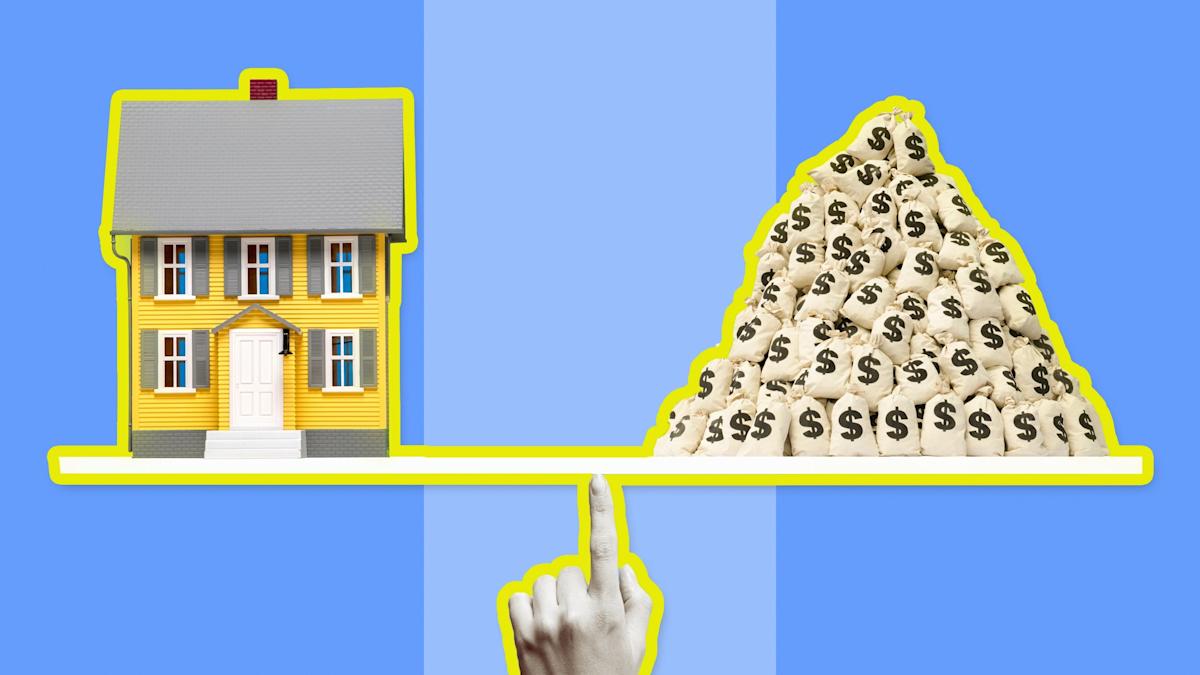
It’s not secret that housing is expensive, but what’s less apparent is the widening financial gap between existing homeowners and those looking to gain a foothold in the market.
Since the COVID-19 pandemic, the U.S. housing market has fractured into two, mirroring the broader K-shaped economy. On one side are the new buyers, paying a record premium to enter the market; on the other are existing homeowners, whose housing costs—as a share of income—are at near-record lows.
At first glance, it’s not surprising that new homeowners, who tend to be younger and earlier in their careers, are expected to set aside a greater portion of their earnings toward housing costs as they contend with present-day elevated home prices and mortgage rates, resulting in higher monthly payments.
But according to a new study by the Economic Innovation Group, a Washington, DC–based bipartisan public policy organization, what is surprising is that the “entry fee” for novice buyers has skyrocketed since 2020, creating a staggering cost disparity.
Jess Remington, research analyst at EIG and the author of the analysis, writes that the difference of nearly 7 percentage points between the two groups is the largest in nearly 40 years.
Remington points out that, while new owners were spending 28% of their income on housing at the peak of the housing bubble in 2007, the gap with existing homeowners was narrower then, at just 4 percentage points.
“Even at the height of this century’s other housing affordability crisis, the housing cost burden was less unequal,” writes the analyst.
This dynamic helps explain why homeownership among younger Americans has been on a downward trajectory for decades.
An Urban Institute analysis from March 2025 found that the homeownership rate for 35- to 44-year-olds has fallen by more than 10 percentage points since 1980.
Meanwhile, the National Association of Realtors® reported last year, based on survey data, that the median age of first-time buyers had jumped to 40, the highest on record.

Experts agree that the primary driver of the widening affordability chasm between new and existing homeowners is the stark difference in borrowing costs.
“Mortgage rates continue to be significantly higher than the pandemic-era lows, pushing monthly payments higher, while elevated rents make it harder to save for a down payment,” Nadia Evangelou, senior economist and director of real estate research at NAR, tells Realtor.com®. “This has widened the gap with existing homeowners, who are locked into much lower rates and home prices.”
