




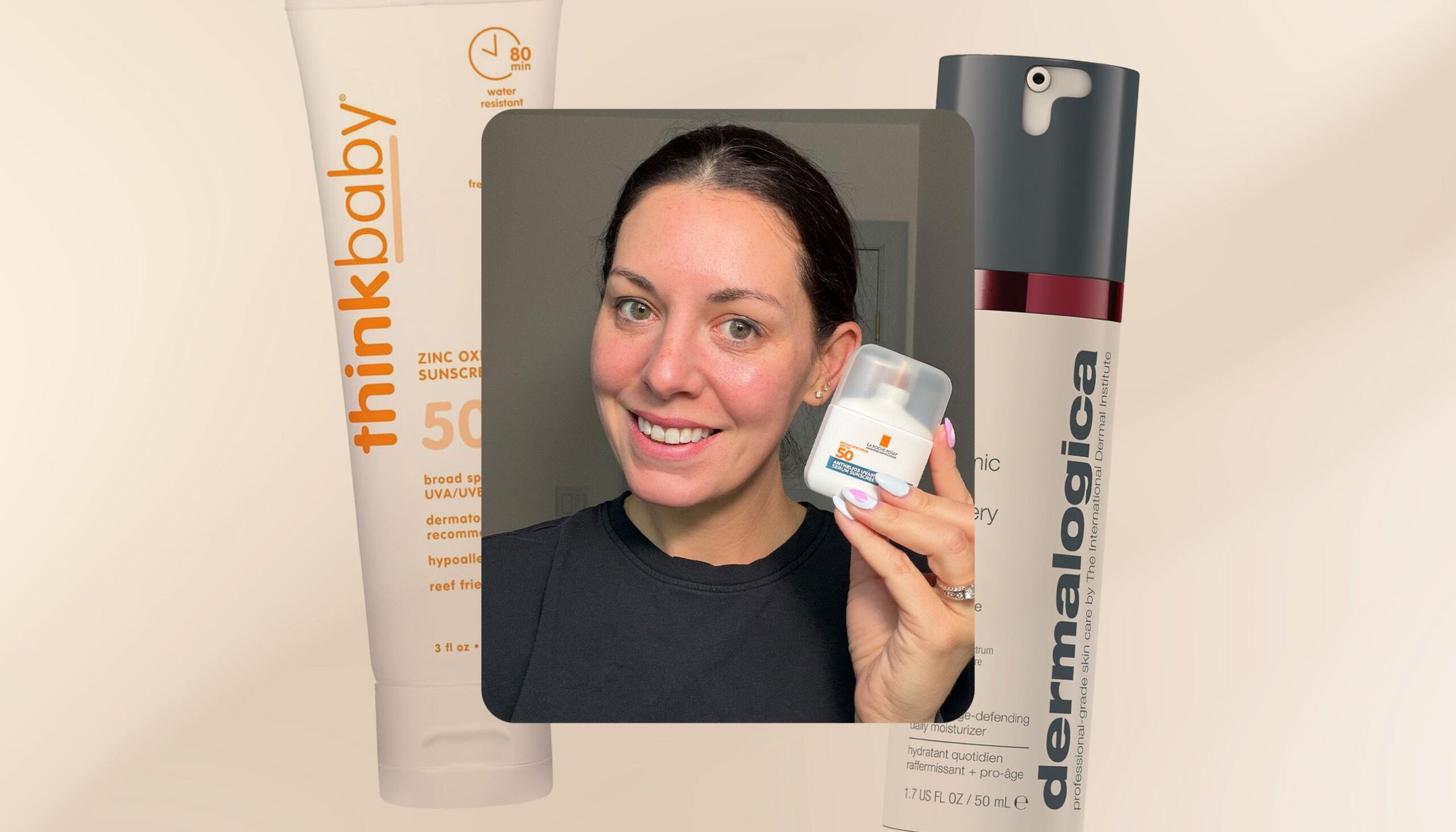
Though it offers high-level sun protection, this formula has a skin care-first ingredient list mature skin benefits from, says Beth N. McLellan, MD, dermatologist at the Montefiore Einstein and Melanoma Research Alliance Dermatology Advisor. Instead of a typical sunscreen feel, it acts more like a daily moisturizer, adding hydration while helping protect against further signs of aging. The texture is slightly richer than most SPFs but still absorbs well, leaving skin feeling smooth and conditioned rather than greasy. It also includes peptides and antioxidants to support firmness and overall skin health with consistent use. It layers easily under makeup without emphasizing fine lines, too.
Frequently asked questions
What sunscreen is best for sensitive skin?
If you have sensitive skin, opt for mineral sunscreens that contain zinc oxide or titanium dioxide, since they’re generally less irritating to the skin and don’t cause adverse reactions, says Dr. Engelman. “Unlike chemical sunscreens, which need to absorb into the skin to work effectively, mineral sunscreens provide a physical barrier that remains on the skin’s surface,” says Dr. Singh. “This difference minimizes the risk of allergic and irritant reactions by preventing the activation of immune responses in the epidermis.” Mineral formulas also tend to be fragrance-free, noncomedogenic, and noninflammatory, says Dr. Engelman. Read “no harsh ingredients like oxybenzone.”
When shopping for sunscreen for sensitive skin, you can also look for key features like hypoallergenic and fragrance-free formulas. If you have dry, sensitive skin, look for hydrating ingredients such as ceramides or hyaluronic acid (for skin-barrier moisturization) and niacinamide (for soothing, anti-inflammatory benefits). If your skin is acne-prone, you may want to target oil-free formulas, since they’re less likely to clog pores and lead to breakouts.
What’s the difference between a chemical and a mineral sunscreen, and which is better for sensitive skin?
Although chemical and mineral sunscreens both protect against UV rays, they work in fundamentally different ways. “Chemical sunscreen is absorbed into the first layer of your skin and absorbs UV rays to protect your skin from the sun,” explains Dr. McLellan. Common ingredients in chemical formulas include avobenzone, octinoxate, and oxybenzone, and they tend to offer more water resistance and a more seamless finish on the skin.
Mineral sunscreens, on the other hand, create a physical barrier that sits on top of the skin and reflects UV rays. “These formulas typically include zinc oxide or titanium dioxide, which may cause a white cast or purple tint on the skin,” Dr. McLellan says. While that cast may be a drawback for some, mineral sunscreens are generally considered better for sensitive skin.
How do I know if I should use a sunscreen for sensitive skin?
Not all sunscreens agree with every skin type. If you notice persistent irritation after applying SPF, it could be a sign that your skin is sensitive to certain ingredients. “Those who have sensitive skin may experience symptoms such as redness, itching, dryness, etc. from some traditional sunscreens,” says Dr. McLellan. In that case, she suggests switching to a mineral sunscreen, as it may help reduce the risk of irritation, thanks to gentler active ingredients like zinc oxide or titanium dioxide.
Regardless of your skin type, remember: SPF protection is nonnegotiable. “Your SPF should be at least SPF 30+, and the right sunscreen for you is the one that you’ll use and reapply,” Dr. McLellan emphasizes. If you’re not sure whether you have sensitive skin, pay attention to how your skin reacts post-application, and consider consulting a dermatologist to find the formula that works best for you.
Is SPF 50 too much for sensitive skin?
The level of SPF you need is not determined by skin type. The American Academy of Dermatology (ADA) recommends using broad-spectrum sunscreen (which protects against both UVA and UVB rays) with a minimum sun protection factor (SPF) of 30, regardless of skin type, says Dr. Singh. Many dermatologists, however, tell us this is just a baseline, noting that SPF 50 is preferable across the board.
How to apply sunscreen on sensitive skin
Start with a calm, well-moisturized base and give skincare a minute or two to fully absorb so you’re not rubbing products together. It’s best to avoid over-layering actives right before SPF (like strong acids or retinoids), since sensitized skin is more likely to react.
Instead of rubbing aggressively, gently press or smooth sunscreen onto the skin in thin, even layers, especially around areas that tend to flush or sting, like the cheeks and nose. If a formula feels irritating, applying in smaller amounts and building coverage gradually can also help minimize discomfort.
Should you apply sunscreen directly on eczema, psoriasis, or other skin conditions?
People with eczema, psoriasis, or other inflammatory skin conditions are often more sensitive to sun exposure, which can worsen irritation or trigger flares, so daily sun protection is still important, says Rosemary DeShazo, MD, a board-certified dermatologist for Honeydew. That said, not all sunscreens are created equal for compromised skin. Choose a fragrance-free titanium- or zinc-based formula, since they’re less likely to sting or irritate active patches, she says.
If the skin is currently flaring, inflamed, or cracked, sunscreen can sometimes feel uncomfortable when applied directly. In those cases, it may help to first apply a gentle barrier-supporting moisturizer and then gently layer sunscreen on top, rather than rubbing it directly into broken skin.
As always, checking in with a dermatologist for individualized guidance and patch testing a new formula on a small area first is especially important when managing chronic skin conditions.
How we tested
To find the best sunscreens for sensitive skin, we focused on three key factors: ingredients, texture, and efficacy. Over the past two years, our team has tested more than 100 sunscreens, which helped us refine what actually works (and what sounds good on paper but doesn’t hold up in real life). We also spoke with dermatologists to better understand what matters most for reactive, easily irritated skin.
We prioritized formulas with gentle, skin-supporting ingredients like niacinamide, ceramides, and hyaluronic acid, and avoided known irritants that can trigger redness or sensitivity. Texture and wearability were just as important. Even the best formula won’t get used if it feels heavy, greasy, or pills under makeup, so lightweight, fast-absorbing finishes scored highest.
Finally, we evaluated real-world efficacy—how well each sunscreen layered with skincare and makeup, how comfortable it felt throughout the day, and whether it caused any irritation over extended wear.
Meet the experts
- Dendy Engelman, MD, board-certified dermatologist at Shafer Clinic in New York City
- Marisa Garshick, MD, board-certified dermatologist at MDCS Dermatology in New York City
- Beth N. McLellan, MD, dermatologist at the Montefiore Einstein and Melanoma Research Alliance Dermatology Advisor
- Deeptej Singh, MD, board-certified dermatologist in Albuquerque
- Rosemary DeShazo, MD, a board-certified dermatologist for Honeydew