








Kindness doesn’t always look soft. Sometimes it looks like patience, sometimes like showing up, sometimes like simply noticing. In every one of these families, a father’s quiet kindness became the thing that built real resilience in his child, long before anyone had a name for it. These fathers weren’t experts in parenting theory.
They just paid attention, and in doing so, taught their kids that adversity doesn’t disappear, it gets carried, and coping is something you learn mostly by watching someone else do it well. These stories are about parenting shaped by instinct rather than lectures, about family built on attention, and about the kind of emotional intelligence and human behavior most parenting books never quite capture.
- I was 8 and told my dad school was “fine,” the same as I did every day that week. He didn’t buy it, not that time. He sat down next to me on the porch steps, still in his work boots, and said nothing for a full 5 minutes, just waited, elbows on his knees.
Eventually I told him a kid named Mike had been taking my lunch money out of my backpack every few days for weeks. He didn’t storm into the school the next day like I expected. He asked me what I wanted to do about it first, and actually waited for my answer before saying a word of his own.
That question, more than the fight he eventually had with the principal two days later, is the thing I remember 20 years on. That’s the kind of quiet kindness that built something in me that never left. I didn’t need a perfect parent. I needed one who waited.



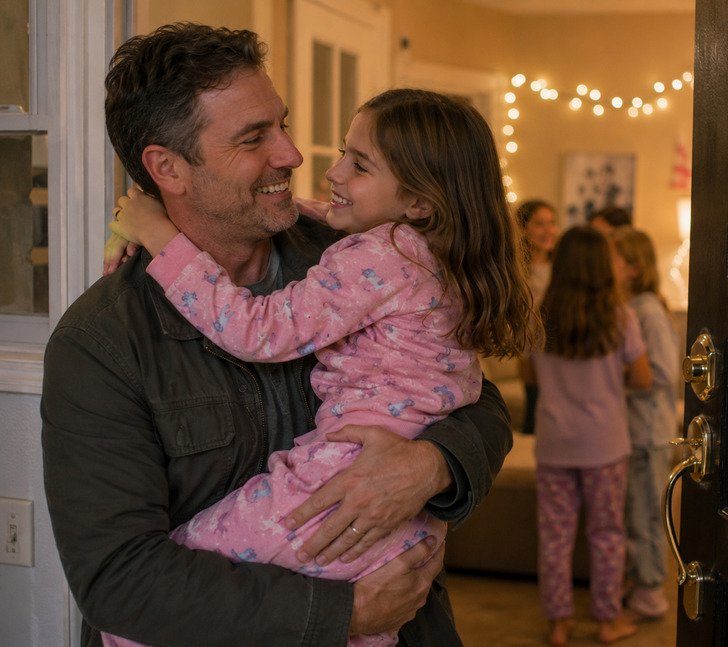
- My dad picked me up from a sleepover at 11pm on a Friday because I texted him “can you get me” with no explanation, no punctuation, nothing else.
He showed up in his pajama pants and a coat thrown over them, didn’t ask why in the car, just put on the classic rock station low and let me stare out the window. 15 minutes into the drive I told him about a fight with my friends, how I’d been left out of a group chat on purpose.
He told me once, years later, that a father’s job isn’t to fix the silence, it’s to make the car safe enough that the silence ends on its own. I didn’t know it then, but that was coping, modeled quietly, before I ever needed the word for it myself.
- I came home from my first breakup acting completely normal, laughing at dinner over nothing, doing my algebra homework at the counter like it was any other Tuesday. My dad didn’t say a word about it at the table, didn’t even look at me twice.
Later that night, around 10, he knocked on my door with two mugs of hot chocolate, the kind with the little marshmallows, and said, “You don’t have to talk. I just didn’t want you doing this part alone.”
I cried into my pillow for almost an hour. He sat on the edge of the bed the entire time and didn’t say another word. Kindness, in our family, was never loud. It usually just sat there with you, quietly building the kind of resilience you can’t fake later in life.

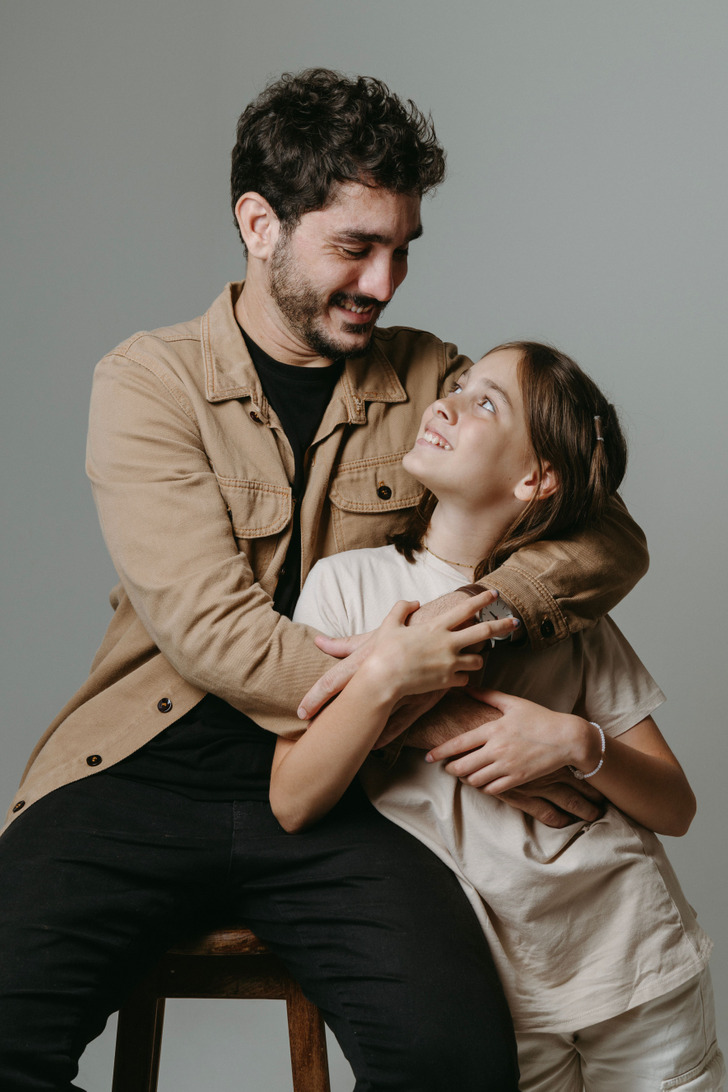
- My dad noticed I’d stopped raising my hand in 7th grade English months before my teacher ever flagged it in a progress report. He asked me one evening, casually, hands in the dish water, not even looking at me, “When did you decide your ideas weren’t worth saying out loud?”
I didn’t have an answer for him. But I raised my hand the very next week in class, mostly because someone, finally, had noticed I’d stopped.
My dad never studied parenting or read a single book on it. He just watched closely, which turned out to be most of the job, and most of what he showed me was compassion, plain and unannounced.

How did he know you weren’t putting your hand up?
- When my parents separated the summer I turned 11, everyone in the family assumed I’d want to talk about my mom moving out. My dad was the only one who guessed I was actually more worried about losing our golden retriever, Scooby, in the split.
He never made me say it out loud or ask directly. He just told me one morning over cereal, completely unprompted, “The dog stays with whoever has the bigger yard, and that’s me, so you’re fine.”
I hadn’t said a single word about the dog to anyone. He’d just noticed I kept checking where Scooby was sleeping that week. That’s a kind of human behavior most adults never bother to read in a kid, let alone act on.
- I failed my driving test twice in one summer and refused to even schedule a third attempt. My dad didn’t push, didn’t mention the test at all. He just started taking the exact same practice route with me every Sunday morning at 9, no test talk, just driving and the radio low.
Six Sundays in, I asked him if I could try again. He smiled and said, “I was wondering when you’d be ready,” like he’d been counting the weeks the whole time without ever once bringing it up. That patience is its own quiet form of resilience, passed down without a single lecture attached to it.

- My dad noticed before anyone else, even before my mom, that I flinched every single time my stepmom raised her voice at anything, even when she was just laughing loudly at something on TV.
He pulled me aside one day and asked, gently, if her tone reminded me of something specific. It did. It reminded me of my parents’ worst fights, the ones from right before the split that I’d never told anyone I still heard in my head. He talked to my stepmom that same week, and she changed how she spoke around the house without me ever having to bring it up myself.
That’s emotional intelligence most grown men never learn, let alone use on behalf of a kid who isn’t even theirs biologically, an act of empathy that had nothing to do with blood.
- When my son turned 6, he started refusing to go to birthday parties, screaming at the car door if we tried to make him.
Everyone around us said he was just shy and would grow out of it. I sat with him one night on his bedroom floor and asked what specifically scared him about parties, not parties in general, but the actual moment. He said the noise made his chest hurt, like something was squeezing it.
So we started showing up 15 minutes late on purpose, just enough to skip the loudest part, the cake and the singing. He goes to every party now, right on time. Being a good parent, most days, is just adjusting the plan around the kid you actually have.
- My dad noticed I’d started apologizing for things that clearly weren’t my fault, constantly, almost like a nervous tic, sorry for the weather, sorry for someone else bumping into me.
He never once told me to stop outright. He just started responding to every unnecessary “sorry” with a flat, calm “for what?” until I genuinely ran out of things to apologize for.
It took close to 2 years of this, quietly, at dinner, in the car, everywhere, but I stopped doing it entirely by the time I left for college.
My father never once raised his voice through any of it, which taught me more about human behavior than any lecture could have. He helped me realize my self-worth.

- My dad lost his job at the plant the same year my mom got sick, both in the same six-month stretch, real adversity from two directions at once.
He never once let his own stress show at the dinner table, not once, but he still noticed I’d started chewing my nails down to nothing during that time, down past the skin. He didn’t tell me to stop.
He sat me down on the back steps one evening and said, “You’re carrying something too, even if nobody’s asking you about it. What is it?” I told him I was scared they’d both disappear on me at once, my mom to the illness and him to the stress of it all.
He didn’t promise me they wouldn’t. He just said, “I’m scared too. But we’re going to get through this part together, the two of us, one week at a time.”
That was his coping, out loud, for once, so I’d know it was allowed. He found work again three months later. My nails had already grown back by then.
- My father was never what anyone would call an emotional man. But the year I was bullied badly in 9th grade, he started driving me to school himself every morning instead of letting me take the bus, no explanation given, no conversation about it.
Only years later did I find out he’d noticed the bruises on my forearm that I’d been hiding under long sleeves even in June heat. He never once confronted me about it directly. He just removed the situation from my life without ever making me explain a single thing out loud.
My father dealt with adversity the same way he dealt with everything, without making a big deal about it.

Oh, I wish! Mine always asked what did I do to them? Finally just quit telling and just lived with it.
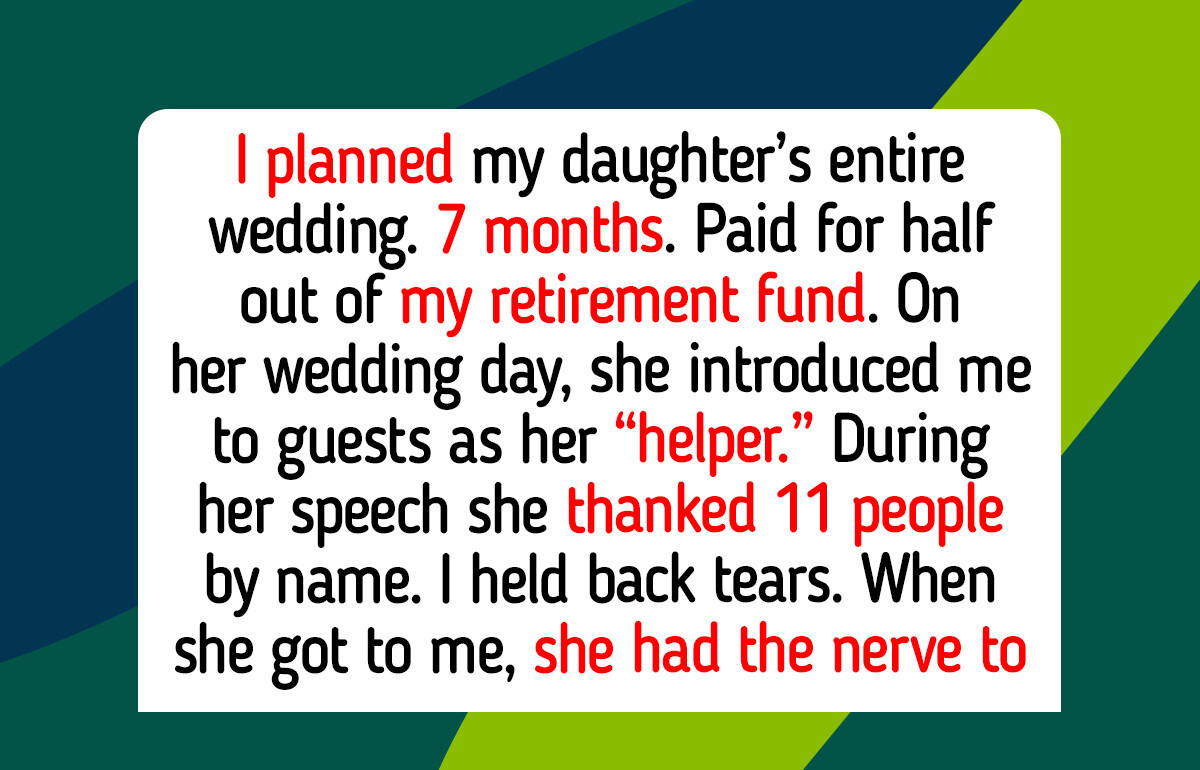
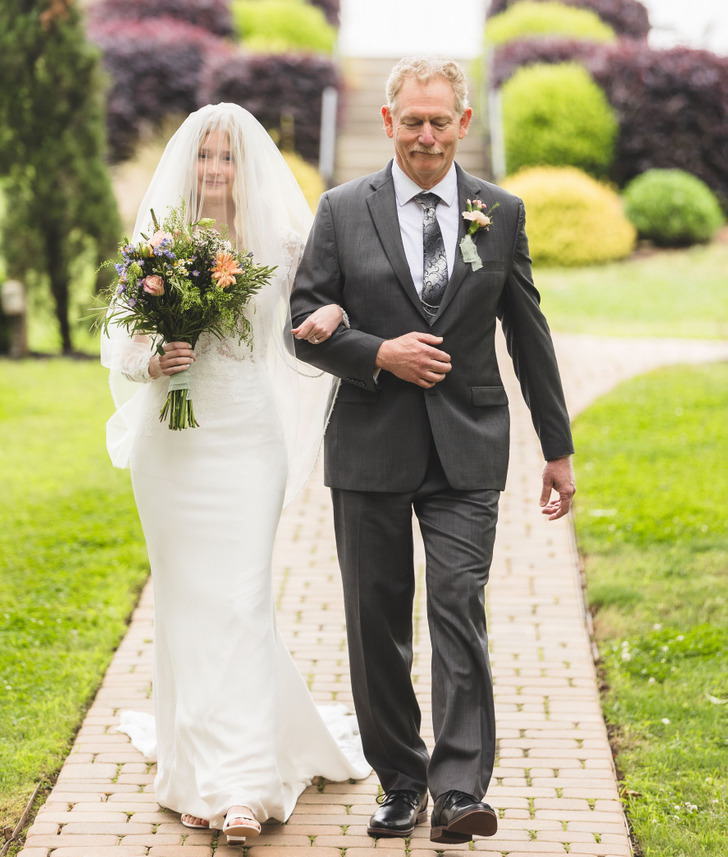
- I planned my daughter’s entire wedding. 7 months of vendor calls, seating charts, and dress fittings squeezed in after work. Paid for half of it out of my retirement fund without telling my wife how much.
On her wedding day she introduced me to guests, more than once, as her “helper.” During her speech she thanked 11 people by name, one by one, working through a list she’d clearly rehearsed. I held back tears through most of it, clapping in the right places.
When she finally got to me she had the nerve to pause, look right at me across the room, and say, “And last, my dad. Not because he’s the least important, but because everything else I said tonight, every person I thanked, only mattered because of him first. He’s the one who noticed when I was 12 and pretending I wasn’t scared of starting a new school. He’s the one who asked what I was really upset about at 16 when I said I was ’fine.’
He’s the reason I know what it looks like when someone actually sees you, because he’s been doing it my whole life, without ever once making it about him. Dad, you weren’t my helper today. You’ve been the entire reason I know how to let anyone help me at all.”
The whole room turned to look at me at once. I hadn’t cried a single time all day until that exact second. Kindness like his doesn’t ask for a toast. It just keeps showing up until somebody finally says it out loud.

NOW THAT WAS AN INSPIRATIONAL, AND MOVING STORY!
None of these fathers preached emotional intelligence. They just noticed things first, asked the right question at the right time, and waited without pushing. Their kids grew up resilient not because life was easy, but because someone was paying close enough attention to help them carry it.
That kind of family isn’t built through perfect parenting or a single perfect parent, it’s built through kindness and compassion applied consistently, one ordinary day at a time, until it becomes part of who a kid is for the rest of their life.
Comments

I would’ve asked for a refund m definitely insulting.


