









- My aunt passed and left me $80,000 and I didn’t deserve it. That’s not false modesty — I genuinely didn’t deserve it.
I’d been a negligent niece, present at the obligatory occasions and absent from the actual texture of her life, and she’d left me money anyway with a note that said only: For something that matters to you. I always thought you knew what mattered, even when you were pretending you didn’t.
I sat with it for six months. I almost did practical things with it. I almost did nothing with it. Eventually I did what she’d done for me — I looked around at the people in my life who were one bad month away from a decision they couldn’t reverse, and I found two of them, and I helped quietly, without conditions, without expectation of return.
One was a friend finishing a degree she’d nearly abandoned. One was my neighbor trying to escape a situation she didn’t have the language to name yet. I didn’t tell either of them about my aunt. The money wasn’t mine to explain — it was hers, in motion, doing what she’d intended it to do, which was matter.
My aunt had seen something in me I hadn’t earned yet. I’ve spent the years since trying to grow into her version of me. I think she knew I would. That might have been the real inheritance.
- My eight-year-old came home from school with a card he’d made for the new kid in class who’d cried at lunch because nobody sat with him, just walked over and sat down and made him a card at art time without being asked by the teacher, just decided that was what the situation needed.
I found out from another parent, not from my son, because he hadn’t mentioned it. When I asked him about it he shrugged and said the kid looked sad and he had extra crayons. That was his entire explanation.
I have thought about those extra crayons so many times since. His empathy was so uncomplicated it made me want to cry. His act of kindness came from a completely unfiltered read of another person’s pain and an immediate decision to do something about it with available materials.
That’s wisdom before it gets complicated by self-consciousness. Compassion at eight years old, executed with crayons and zero hesitation. Kindness that doesn’t ask whether it’s appropriate or whether it will be well received, it just goes. Mercy for the new kid’s terrible lunch.
My son taught me more about forgiveness for human awkwardness in that story than I’ve learned in forty years. I told him I was proud and he went back to his video game. Good.


- The last thing my mother said to me before she went into surgery was: “I want you to know that you have been enough. Not almost enough, not enough considering — just enough, exactly as you are.”
I’d spent forty-one years being slightly uncertain of this, the way some of us carry a quiet background frequency of not-quite, a low hum of still-working-on-it that we’ve stopped noticing because it’s always there. She’d known. Mothers know. She’d waited for the exact right moment to say the one thing that would stay.
The surgery went well. She came home after four days and we didn’t talk about what she’d said in the corridor, not directly. But something had changed in how I moved through my days — a loosening, barely perceptible, like a knot that’s been worked at slowly over a long time finally giving way.
I stopped apologizing for things that didn’t require apology. I stopped shrinking in rooms where I’d always made myself smaller. I started saying what I meant with slightly less preamble.
My wife noticed first. She said, “You seem different.” I told her what my mother had said. She got very quiet and then she said, “She’s right, you know. She’s always been right.”
I called my mother that evening just to hear her voice. She answered on the second ring, the way she always does, like she’d been expecting me. I suppose she always has been.
- In my second year of teaching I had a student named Ryan who made everything harder. Not violently, not dramatically — just the constant low friction of a kid who questioned everything, argued the point after the point was over, and had a talent for finding the one loose thread in any lesson and pulling it.
Other teachers warned me about him. I prepared for him. I was patient in a clenched, deliberate way that I’m not sure fooled anyone. In March, he submitted an essay that stopped me.
Not perfect — Ryan’s essays were never perfect — but alive in a way that the others weren’t, full of an anger that had been alchemized into something almost beautiful, an argument about fairness so precisely felt that I read it twice and then wrote more on it than I’d written on anything all year.
I handed it back and said, “This is the best thing you’ve written. I mean it.” He looked at the paper for a long time. Then he said, very quietly, “No one’s said that to me before.” Not no teacher — no one. I thought about the clenched patience and felt something shift in me.
After that I argued back when he pulled the threads, properly argued, and treated it as the intellectual exercise he needed it to be. He came alive in lessons in a way that was genuinely disruptive and genuinely wonderful.
He studied philosophy at university. He sent me an email when he got in. It said, “You’re the only teacher who argued with me like I was worth arguing with. Thank you.” I keep it in my desk. It reminds me what the job is actually for.


- I was made redundant on a Tuesday in February, which is the worst possible month for bad news, and I drove home feeling like the pavement had dropped several inches below where it usually was. I was fifty-four. I’ve been in the same industry for twenty-six years.
The landscape had changed and I hadn’t changed fast enough and I knew it and the knowing didn’t help. I told my wife and she held my face in her hands and said, “Okay. We’ll figure it out.” Not it’ll be fine — we’ll figure it out. The we was the whole thing.
The months that followed were difficult in the specific, quiet way of things that don’t announce themselves — the reorganizing, the uncertainty, the recalibration of what I thought I was worth. My wife worked more hours and didn’t make it a subject.
My son, who was twenty-two and just starting out himself, called every Sunday with questions he already knew the answers to, just to give me somewhere to be useful. My daughter sent articles — not about job searching, but about things she thought I’d find interesting, keeping me tethered to my own curiosity.
Nobody performed optimism at me. They just stayed close and let me take up the space I needed. I found work seven months later, something different and smaller and better.
What I found out first, though, was that I was known. Not for my job or my usefulness or my industry — just known, the way people know you when they’ve decided to keep you regardless. I hadn’t been sure of it until I needed to be sure of it. Now I am.
- I was in the hospital waiting room at eleven at night — my own tests, not serious, but the not-serious kind that still requires the waiting room at eleven at night, still requires sitting alone with a magazine you’re not reading while the fluorescent light does what fluorescent light does.
A woman sat across from me with a child asleep across her lap, head in her elbow, small shoes dangling. She looked like someone who’d been awake for a very long time. We didn’t speak for an hour.
Then she shifted, trying to adjust the sleeping child without waking him, and I held out my arms without thinking — the automatic gesture of someone who has held children. She hesitated for just a second and then passed him to me, gently, and the child barely stirred.
She sat back and closed her eyes and I held this stranger’s sleeping son in a hospital waiting room and felt, unexpectedly, entirely calm. We passed him back when her name was called. She looked at me before she went through the door and said, “Thank you. I just needed five minutes where someone else was holding it.”
I’ve thought about that sentence many times since. How much of what we need is just someone else to hold it for five minutes. How rarely we ask. How easy it sometimes is to offer.
- I was 16, at a public library using a computer terminal, when I noticed a man at the terminal beside mine had angled his screen away but was photographing mine with his phone — and me along with it.
When I reached to gather my things, he put his hand over mine on the keyboard. I went rigid. A librarian doing her rounds stopped her cart directly behind him and said, in a voice like a closed door, “Sir, I need you to come with me to the front desk — there’s a policy question about device use.”
She didn’t touch him, didn’t raise her voice. She simply made it impossible for him to stay without making a scene. He went. A second librarian materialized beside me and stayed until I was packed up and out the front door.

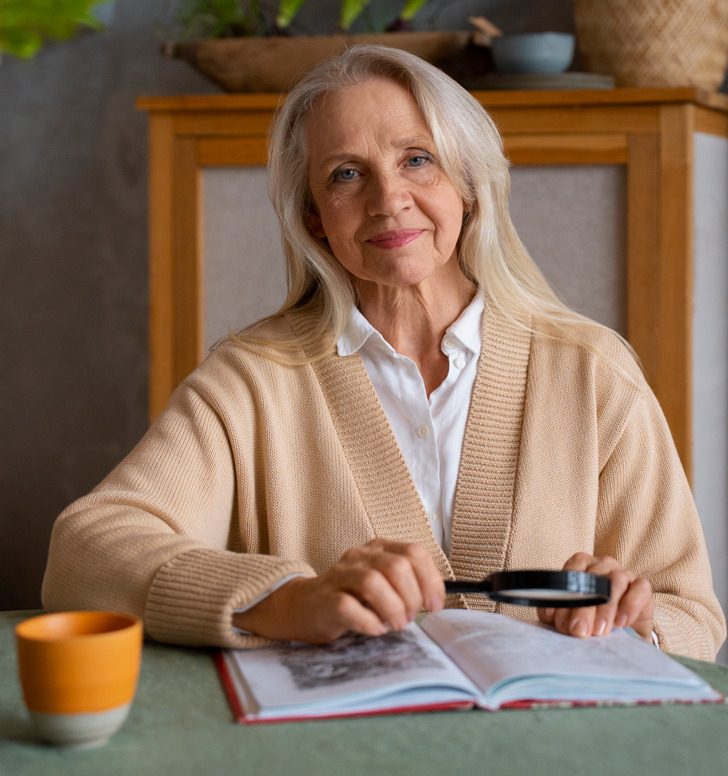
- I ran into my primary school teacher at a garden center when I was thirty-eight years old and she was very old and I recognized her immediately and she recognized me, which seemed impossible, thirty-two years and probably a thousand students later.
Her name was Mrs. Adeyemi and she’d been my teacher when I was six, the year my parents were separating and I was small and confused and almost entirely silent. She’d never pushed me to speak. She’d just put me near the window, where I liked it, and given me things to draw.
We stopped in the middle of the plant section and she said, “I’ve wondered about you. You were a child who was very busy on the inside.” I didn’t know what to say to that.
I told her I was a designer now. She looked unsurprised. She said, “I knew you’d make things. You were always making sense of something.”
I drove home and sat in my car and thought about being six years old and near the window and how much it matters, how profoundly and permanently it matters, when someone sees the right thing in you at the right moment and decides to let it be enough.
I never got to thank her properly — we parted at the car park with pleasantries, the way you do — but I’ve tried since to teach myself her particular skill: finding the thing in people that’s busy on the inside, and letting them know it’s safe there.
- An elderly woman was trying to video call her grandchildren and couldn’t make it work, sitting in a library with a tablet and an expression of determined frustration that had clearly been going on for some time.
A teenage boy doing homework nearby watched her for a few minutes, then packed up his own things, moved to her table, and said, “Can I help? I’m good at this.”
He spent forty minutes getting her set up — not just the call itself but the contacts saved, the brightness adjusted, the volume figured out, everything done with the patience of someone who understood that the goal was her independence, not just one successful call.
She reached her grandchildren that afternoon and he stayed while she talked, in case anything went wrong technically, pretending to do his own work at the other end of the table.
When she was done, she shook his hand formally and said, “You’re a very good young man.” He went back to his homework.
She came back the following week with cookies she’d made specifically for him, which he hadn’t expected and which clearly meant a great deal more than he knew how to say.


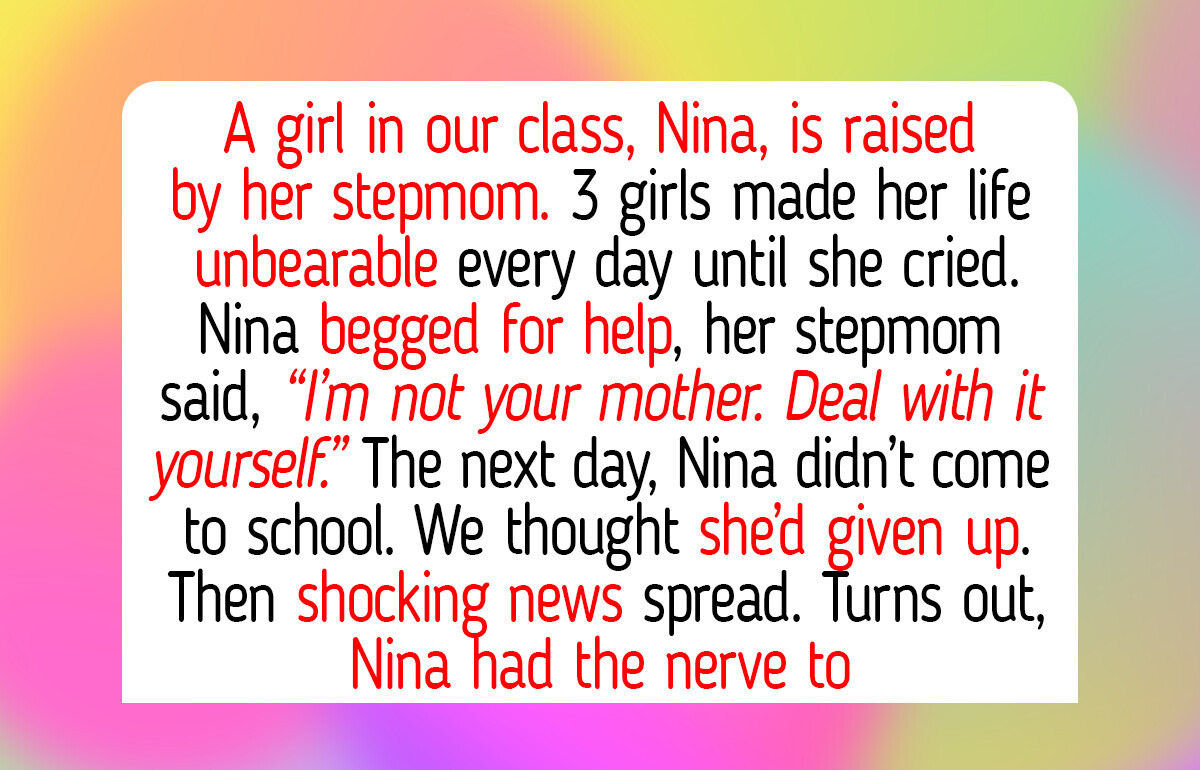
- A girl in our class, Nina, is raised by her stepmom. Three girls made her life unbearable every day until she cried. When Nina begged for help, her stepmom said, “I’m not your mother. Deal with it yourself.”
The next day, Nina didn’t come to school. We thought she’d given up. Then shocking news spread. Turns out, Nina had the nerve to show up at the house of Tasha — the ringleader of the three girls — and knock on her door.
Tasha’s mom answered, confused, and called her daughter down expecting some kind of confrontation. Instead, Nina held out a plate of cookies she’d baked that morning and said, “I heard your dad’s in the hospital. I wanted to bring you something.”
Tasha just stood there, stunned into silence, the same girl who’d spent months making Nina’s life miserable now staring at a plate held out by the person she’d hurt most. “I don’t get it,” Tasha finally said. “Why would you do that? After everything?”
“Because I know what it’s like to feel like nobody’s in your corner,” Nina said. “And I figured you must feel that way right now too. Doesn’t mean what you did was okay. It’s not. But you don’t have to be cruel and scared at the same time. You can put one of those down.”
Tasha didn’t apologize that day. But two weeks later, she was the one who stopped the other two girls mid-joke in the hallway when they started in on Nina again. “Leave her alone,” she said, flat and final, and walked off without explaining herself to anyone.
Word got back to Nina’s stepmom eventually, through another parent, marveling at “that sweet girl who brought cookies to the daughter of her own tormentor.”
“Waste of a Saturday,” her stepmom muttered, barely looking up from her phone. “You could’ve spent that time on your chores instead of playing therapist for the girl who made you cry for months.” Nina didn’t argue. She’d stopped expecting anything else a long time ago.
Tasha never became Nina’s friend, not really. But she never bothered her again, and once, in the cafeteria, she quietly moved her tray to sit one seat closer when she saw Nina eating alone. Nobody made a big deal of it. Nina didn’t either.
What she’d learned, she kept mostly to herself, because there was no one at home to tell it to: mercy doesn’t ask to be earned first. It just needs somewhere to land. She’d found somewhere to plant that lesson, even in a house where nothing kind ever grew back toward her.
Comments
Lucky you! This thread is empty,
which means you’ve got dibs on the first comment.
Go for it!


