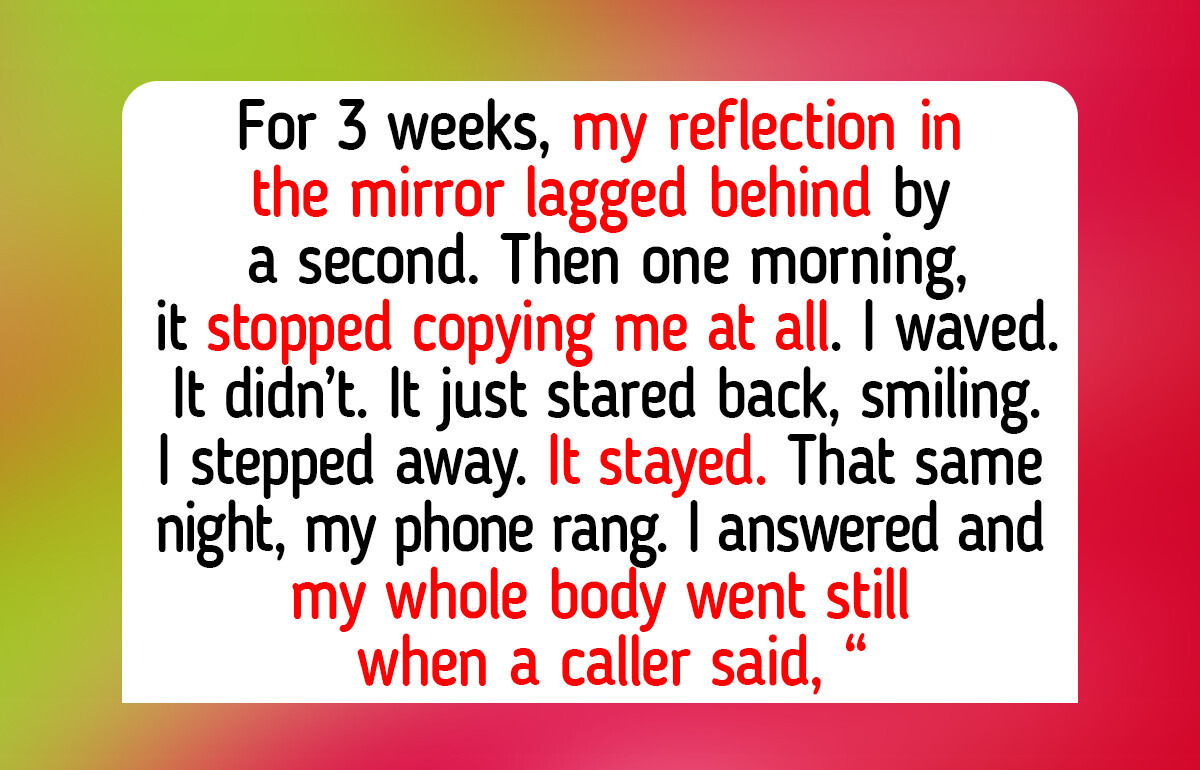
- For three weeks, my reflection lagged behind me by exactly one second—a blink, a raised hand, a turned head, all arriving a beat late, like a video call with bad connection. I told myself it was exhaustion, light playing tricks, the kind of thing you explain away at 6 a.m. before coffee. Then one morning it stopped copying me entirely. I waved. It didn’t wave back. It just stood there, smiling at me with my own face, completely still while I was moving. I stopped mentioning it to anyone after my sister suggested I needed less screen time. I’d been dropping things without noticing, losing words mid-sentence, getting headaches that arrived without warning and left the same way—changes so gradual I’d absorbed them into my idea of normal without realizing. My colleague Diane, who I ate lunch with every single day, had been noticing things I couldn’t see in myself, watching the small accumulations with the particular attention of someone who’d seen this exact pattern before.
That same night my phone rang, an unfamiliar number, and when I answered a calm voice said, “Your medical checkup has been fully covered. We’re waiting for you Thursday at 11 a.m.” I stood completely still in my kitchen for a long moment, certain it was a mistake. It wasn’t. Diane had paid for a full neurological screening herself, quietly, without asking my permission, knowing with absolute certainty that I’d refuse if she’d offered it directly. Her mother had gone through the same thing years earlier—the same strange behavioral shifts, the same small wrongnesses that didn’t look like symptoms until someone who loved you held them all together at once and understood the shape they made.
She’d recognized it in me over lunch, over ordinary conversation, over weeks of watching me be slightly not myself in ways I couldn’t detect from the inside. The scan found a small, slow-growing mass—early enough, the doctors said, that early was exactly the right word, the best word, the word that changes everything about the sentence that follows it. I sat in Diane’s car afterward unable to speak for several minutes. “You should have asked me first,” I finally said, which was the most inadequate thing I’ve ever said to another human being. “You would have said no,” she said simply. “And I wasn’t willing to let you.”
The mirror has been fine since the surgery. My reflection moves when I move, blinks when I blink, does everything a reflection is supposed to do. I stood in front of it for a long time the first morning home from the hospital, just confirming the ordinary miracle of it. Diane still brings lunch. We still eat together every day. Some things you don’t change when they’re the reason you’re still here.
10 Moments That Show How Kindness, Compassion, and Love Bring Happiness and Hope on the Coldest Days
 By Europe News