

Ready to get into the best shape of your life? Get free weekly workouts and no-nonsense training insights delivered straight to your inbox. Sign up here and let the gains begin.
YOU MIGHT THINK of the weight rack and platform as the throne of the gym, given the reverence many guys have for the classic, compound moves performed there like bench presses and deadlifts. The key here is the barbell, the piece of training equipment most capable of being loaded for maximal efforts that will result in packing on muscle and building strength.
But regardless of whether you consider the barbell bench press or deadlift your number one priority in the weight room, the key to squeezing the most out of your workout will be the same as with any move: Execute each element of its movement pattern with perfect form.
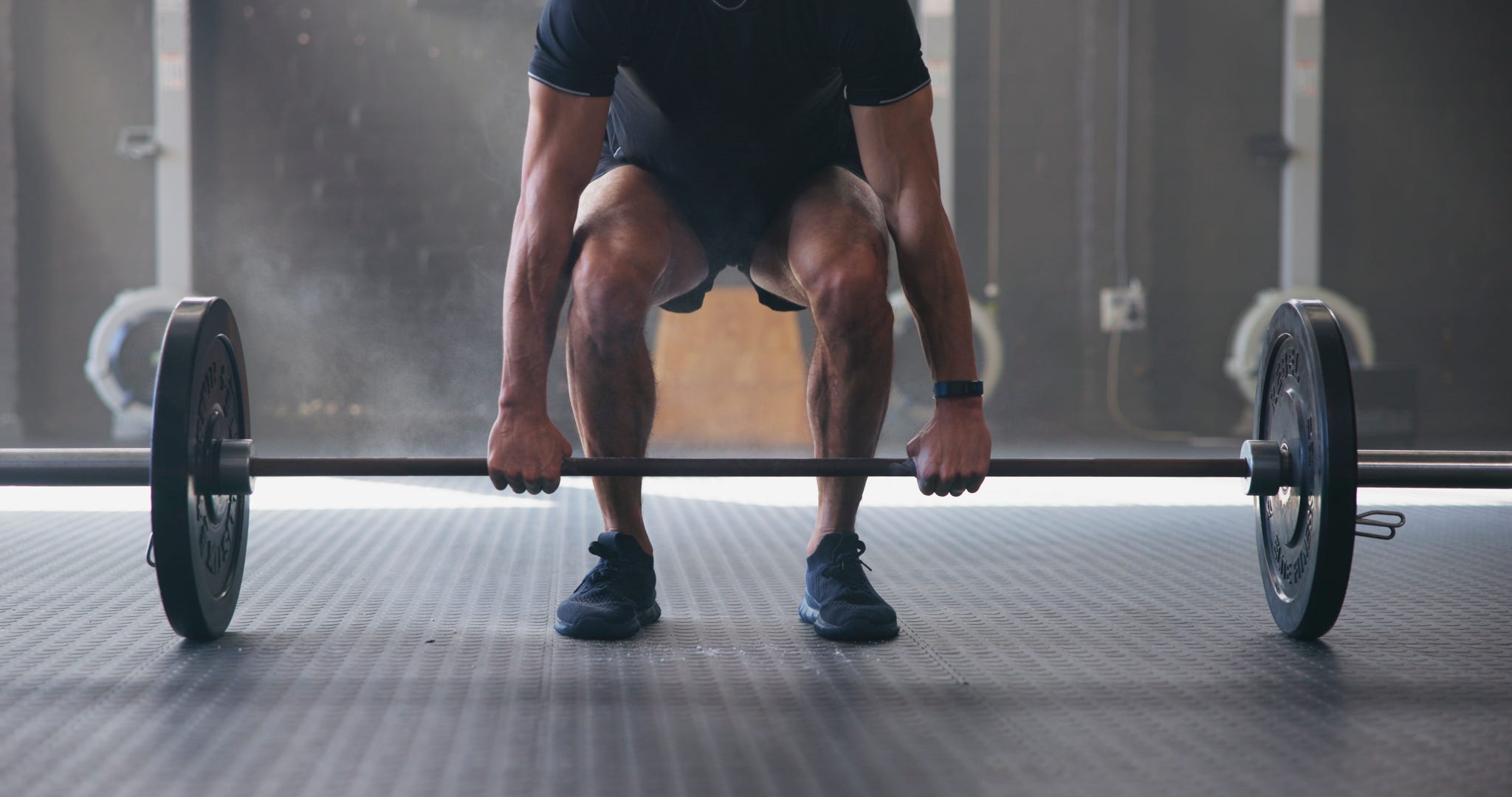
Before you move the weight on these big barbell movements, there’s a very specific cue you should follow, even if it does sound preposterous the first time you hear it: Break the bar. But if you take the time to do it right, you can take your performance (and gains) to a whole new level.
We’re not talking about “breaking the bar” in a literal sense, of course. That would require a level of strength only found in comic books. But by trying to perform the physical action required to do so, you’ll engage a larger array of muscles and optimize your joint positioning in a way that maximizes stability and power (more on those benefits in a bit). Here’s how to do it:
Step 1: Grip the Bar Hard
Not casually, like you’re holding a handrail or a suitcase handle. Hard, like you’re trying to keep your hands on a writhing boa constrictor or hang on to jittery scaffolding at the top of a skyscraper. Think: white knuckle hard.
Step 2: Rotate Your Arms Externally
Or rather, try to, because you won’t actually be able to do so. If you were standing up and holding onto a slender tree branch, the physical action would be similar to bending the branch enough to snap it by twisting your thumbs and inner elbows upward while keeping your arms parallel to the ground. Another way to think about it: Try to bend the bar into an upside-down U, so its sleeves point toward your knees. (As you do this, the bottoms of your elbows should start to point toward your hips.)
Your hands won’t rotate as you “break the bar,” but your elbows and shoulders will. As they do, you’ll feel your chest engage more fully, your shoulder blades squeeze together more tightly, and your lats activate.
Step 3: Keep Breaking the Bar
Maintain the tension, muscle activation, and joint positioning you created in step two throughout the entire set—from the moment you grip the bar to the second you finish up after your last rep. Not that you’ll need much encouragement after you see how doing so affects your results.
The Benefits of Breaking the Bar
This simple form cue is proof that small tweaks in lifting technique can have a big impact on not only how much weight you can put up, but also how much strength and mass you can pack on.
You’ll Stabilize Your Shoulders
When you apply outward torque to the bar, you externally rotate your shoulders. This movement brings your shoulder blades into a fully retracted position—exactly where they need to be for a safe, powerful bench press.
External rotation also engages your rotator cuff muscles, which stabilize the shoulder joint throughout the movement (when you’re bench pressing). This added stability allows you to press more weight while reducing the risk of shoulder impingement and injury.
You’ll Prevent Elbow Flare
This one is bench-specific. By keeping your shoulders externally rotated, you’ll avoid the common mistake of allowing your elbows to flare out excessively. Flared elbows increase the stress on your shoulder joints and can lead to pain, inflammation, and chronic injuries like rotator cuff tears and shoulder impingement.
You’ll Engage Your Lats
The “break the bar” cue activates your latissimus dorsi muscles, the large back muscles that run along each side of your torso. These are key for the deadlift—but also more important than you might expect for the bench. While the lats might seem irrelevant to a chest exercise (they are, after all, primarily pulling muscles), they play a critical role in stabilizing your trunk and creating a solid foundation for pressing.
You’ll Increase Your Capacity
The combined effect of increased shoulder stability, lat engagement, and proper arm positioning creates a rigid, powerful system for moving weight. Many lifters report an immediate strength boost when implementing this cue, assuming the rest of their form is also on point.
Use the Cue in Other Compound Lifts, Too
Although “break the bar” is a cue most often associated with the bench press or deadlift, it can also increase your stability and strength in other barbell exercises to a lesser extent, including the back squat.
Don’t stop there—incorporate it into your pullup technique as well. The action is the same (i.e., gripping the bar tightly and externally rotating your arms and shoulders), and so is the result: greater strength and faster gains.

Trevor Thieme is a Los Angeles-based writer and strength coach, and a former fitness editor at Men’s Health. When not helping others get in shape, he splits his time between surfing, skiing, hiking, mountain biking, and trying to keep up with his 10-year-old daughter.
