

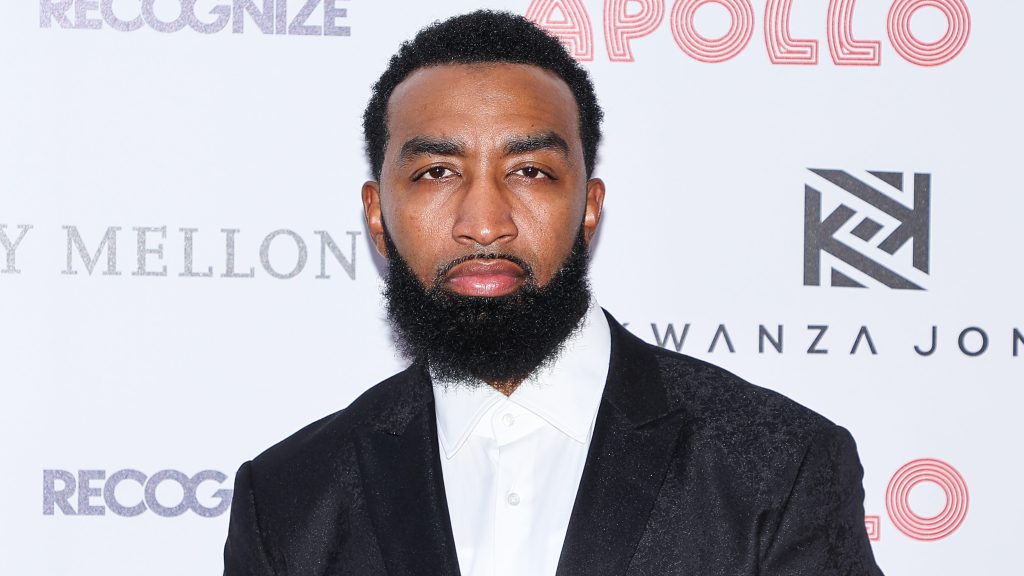
Mysonne has navigated one of the most dramatic arcs in Hip-hop and social justice. Bursting onto the New York scene in the late 1990s with standout mixtape performances and early appearances alongside heavyweights like Ma$e and The LOX, his talent drew cosigns and a recording contract with Violator, positioning him as a rising star.
But just as his Def Jam debut loomed, a 1999 conviction for two armed robberies of cab drivers derailed his career; he served seven years in state prison before his 2006 release on parole after a conviction he still disputes with claims of innocence.
After returning to Hip-hop with battles and new releases, Mysonne channeled much of his energy into advocacy, co-founded the social justice organization Until Freedom, and worked on legal reform and prisoner support.

Mysonne attends Giants: Art From The Dean Collection Of Swizz Beatz And Alicia Keys at Brooklyn Museum on February 06, 2024 in New York City.
Johnny Nunez/WireImage
Now, his appointment to the Criminal Legal System Committee of New York City mayor-elect Zohran Mamdani has stirred controversy and backlash from critics focused on his past. Mysonne has shrugged off reservations, emphasizing his commitment to uplifting the New Yorkers and reducing recidivism in the communities he cares about most.
VIBE spoke with Mysonne about teaming up with Mamdani, the controversy surrounding his appointment, Hip-hop’s growing influence in politics, and his vow to continue to serve his community.
VIBE: How did you first find out that you were being appointed to Mayor-elect Mamdani’s Criminal Legal System Committee?
Mysonne: I got a call from one of the transition leads. I saw the call, and they were like, “This is Mayor Mamdani’s team, give us a call back.” I called back, and they said, “We want to know if you want to be a part of the transition team.” At first, I was surprised, but I was happy to be able to sit at the table and advise on criminal justice matters.
Take us back to the beginning. Where did you and Mamdani meet?
When Mayor Mamdani was running for the Democratic nominee, I was listening to his speeches and listening to his plan for New York City. A lot of it resonated with me. But after he won, I realized that a lot of Black men in our community didn’t know much about him.
So, I took it upon myself to utilize my community ties and organization skills and just reach out to his team and say, “Hey, we want to figure out how we can have some meetings with Black men so they can hear what your vision is for New York City, and you can hear what their issues are.” And that was the first time that I actually met the mayor.

New York Mayor-Elect Zohran Mamdani gives brief remarks during a Veteran’s Day event at Volunteers of America – Commonwealth Veterans’ Residence on November 11, 2025 in the Soundview neighborhood of the Bronx borough in New York City.
Michael M. Santiago/Getty Images
Why do you think you were chosen, and what qualities or experiences do you think made you the right person for the task?
When you talk about the transition advisory team, it’s composed of over 400 people. He wanted to reach out to people who represented New York City across different denominations, races, and backgrounds in criminal justice. People who have been incarcerated, have actually been outside of incarceration, and have worked with people who are transitioning back into society.
And also dealing with at-risk youth who are actually transitioning into prison. If you talk about every level of the criminal justice system, with the exception of being an officer, I pretty much have the experience.
My voice is definitely one that should be at the table because it will. We talk about advising on policies and people who would be good to run certain positions inside his cabinet. I think people with voices like mine should definitely be at those tables.
As you mentioned, your past is no secret. What would you say to critics who say, “Why choose him?” What would you say to the people speaking against your appointment?
I would say to them that, if we look at most of the criminal justice reform that’s being done, it’s definitely being spearheaded and advocated for by people who are justice-impacted and formerly incarcerated. If you look at Meek Mill’s REFORM organization, which is doing amazing work across the country and which I actually work with, they’ve been able to implement policy and achieve policy changes nationwide. And most of the staff there are people who are formerly incarcerated.
I think for somebody who thinks it’s a negative thing, especially when we’re taught that prison is supposed to be about rehabilitation. It’s called the correctional facility. It’s supposed to correct whatever you think is wrong with the individual who committed a crime.
So, if the main goal and objective is to produce people who can re-enter society and be productive, and then you say that when they get back into society and are being productive, you don’t want them to do that, then what are we actually talking about?

Mysonne addresses the panel during a “Vote or Else” town hall and concert at Huntington Place on September 17, 2024 in Detroit, Michigan.
Mike Mulholland/Getty Images
The Irving Plaza incident still gets brought up when people mention Hip-hop and its connection to crime. How do you plan to navigate that stigma?
My own position here is mainly just to advise. I think the mayor has a clear plan on what he wants and how he wants to impact violence and crime in our communities. He wants to utilize a more community-based approach, with community-based organizers and credible messengers, as we say, who know what’s going on in their communities, coupled with police officers. The reality is that most of the time, police don’t prevent crime.
They come and arrest people when a crime is happening or has already happened. We want to create preventative measures. We want to have credible messengers inside communities, those who are able to see and foresee activities, crimes, and violent acts, interject, and mediate certain situations. I think that’s the approach this mayor wants, so we’re not putting all of this stress on police officers.
Also, he wants to have mental health experts inside communities that know mental health is an issue. When we give the community resources it needs, we realize that crime and violence rates decrease.
What does your appointment signal about the growth, maturation, and political legitimacy of Hip-hop culture in 2025?
I think what it symbolizes, not only just for Hip-hop culture, but for the culture period, is that we have a politician and a mayor-elect who’s actually doing something for the people. He’s for the people, by the people.
You can’t govern the people when you don’t have a multitude of people with different lived experiences at the table speaking about what this city needs and what this state needs. We have a mayor right now who is really intentional about that. When you have over 400 people on a transition team that come from all different walks of life, it signals to me that it’s actually someone who is really intent on changing something.
A lot of us coming from the Hip-Hop era don’t even believe in the political spirit anymore. We don’t believe in government, and I just want to play my part and speak on behalf of my community, and let this government know what’s going on in our community and what we want. A lot of times, people want to do stuff for us, but without us. You can’t do anything about us without us. That’s the motto that we say.

Mysonne speaks during the memorial service for DJ Kay Slay at The Apollo Theater on April 24, 2022 in New York City.
Johnny Nunez/Getty Images
You’re working with Mayor Mamdani, and there are other people in Hip-hop or adjacent fields, working with politicians or taking on those roles. Do you see that growing into a trend where rappers and people in the culture are being a part of the process and running for office?
Hip-hop is over 50 years old at this point. The people who are engaged in Hip-hop and who come from Hip-hop are aging. We don’t want to rap forever. As you grow and evolve, the next phase of your life is to ensure you’re concerned about your community. That you’re concerned with making a better life for the people around you. So it’s a natural maturation into politics.
If you look at our president, [he was] on a TV show, you know? Ronald Reagan [was an actor who] became the president. Hip-hop is no different. It’s evolution, and I think you’re going to see a lot of Hip-hop artists grow and do different things in politics and in other fields.
What are the day-to-day responsibilities of your role?
It’s not really day-to-day. We have meetings, we schedule meetings, and we talk about certain policies. “What policy do you think needs to be implemented inside the criminal justice system? How do you think it’s going, and what perspective do you come from?” It’s pretty much like a brain trust. We put all our ideas together and present them to the mayor’s direct team. And [we] also [advise] about who’s going to be a part of his administration.
Who is he going to actually have hired to be a part of his administration? We have input on that as well. And we are able to nominate and say, “Well, I think this person would be a good fit for that. I think this person would be a good fit for that.” So it’s pretty much just having our expertise in the field we know and giving our opinions about who we think would best suit those positions.

Mysonne attends his birthday dinner at Panda Harlem on May 16, 2022 in New York City.
Johnny Nunez/WireImage
Do you have aspirations to go into politics yourself, in an official role?
I really hate politics, but I know that if you don’t do politics, politics does you. I’m excellent in this role as an advisor and having the ear of the mayor-elect and certain politicians. I’ve been doing this work for over a decade now. I stand by certain politicians, and they listen to me. They come to me and say, “What’s going on in the community? What’s going on in the hood? What are they saying in the hood?” That position for me is good. That I’m able to impact them and influence them to bring change in our communities.
If you could communicate one message directly to the people of New York City, what would you want them to understand about your intent and your mission in this role?
I think I have a 20-plus-year track record of doing many things in my community and on behalf of my community. I’ve had a stellar community record and have interrupted violence. I’ve negotiated peace treaties. I’ve stopped gang wars and block wars. I’ve prevented so much mayhem from happening in our communities.
If you just look into my track record and don’t read the headlines and the front-page rags that they put out to try to disparage and defame me, and if you don’t look at that but actually look at what I’ve done, I think it speaks for itself.
You’re a part of Until Freedom, which has been central to your activism journey. How involved will the organization be in shaping your approach in this role?
Until Freedom is very important in every role that I do. You have Tamika Mallory and Angelo Pinto, who are both part of the transition team. Angelo is also a part of the criminal justice part with me, and he’s an esteemed lawyer.
He’s worked on the Raise the Age campaign. He’s done the major activities around this country. And Tamika’s been an organizer and advocate for 30-plus years. All of us have our own expertise. So, we’re all going to bring that expertise to the table, and we have the pulse of the streets. We’re outside every day, and we understand what the people in our community want.
We are representative, and we are all respected in our community. We’ve been doing the work for numerous amounts of years. I think the man got it right by putting people that the people respect on his team.

Angelo Pinto, Tamika Mallory, and Mysonne Linen attend “BET Awards Host Dinner In Partnership With Taraji P. Henson And The Boris L. Henson Foundation” on June 25, 2022 in Los Angeles, California.
Bennett Raglin/Getty Images for BET
Eric Adams‘ administration had a lot of Hip-hop involved. He was meeting with Maino and Fivio Foreign, and this person and that person. What is it like to see Mamdani also embrace the Hip-hop community and bring people on?
You’ve got to think; Mamdani is 34 years old. He’s a product of Hip-hop. He was growing just like Mayor Adams. Mayor Adams was a product of Hip-hop. You’re a young Black boy in your 50s or almost 60, then you grew up on Hip-hop. It’s embedded in the culture right now.
It’s good to see that our politicians don’t shy away from the stigma attached to Hip-hop, but they embrace the real culture of Hip-hop. It’s always been unifying, and it’s been a way for people in our community to escape poverty and experience joy.
Do you think that Hip-hop’s political power has been swaying elections in favor of these candidates? And what does that say about the voting power of Hip-hop?
Hip-hop is our culture, and it’s the biggest culture. If you look at every aspect of our society, you’ll find Hip-hop embedded somehow. Even people who aren’t engaged in Hip-hop they’ve been impacted by Hip-hop. It’s only right that the people who are impacted by the music embrace it and want to get cosigned by the culture because they know it’s the biggest thing in the world.
Yes, every political campaign that I’ve seen has always [incorporated] Hip-hop. From the Vote or Die campaign to when Jay-Z was with Barack Obama, it’s always been Hip-hop. It’s always been vocal about politics. And I don’t think that’s going to change anytime soon.
What’s next for Mysonne?
We’re going to continue doing the work we do at Until Freedom: civil rights, police accountability, violence interruption, and voter engagement work. We’re going to continue doing that work every day, whether we were on the mayor’s team or not. Even though we’re on the transition team and want to have a positive impact on the mayor-elect’s policies and appointments, we will also hold him accountable, and that’s what we’re always going to do. We don’t hold favoritism, and we work for the people. So we’re going to continue working for the people.

Mysonne attends The Prelude: an evening with Hip Hop Royalty hosted by MC Lyte with a Spotlyte on Busta Rhymes at Andaz West Hollywood on June 23, 2023 in West Hollywood, California.
Jerritt Clark/Getty Images for Busta Rhymes
