







Foreign Affairs
Are their crooks so different from our crooks?


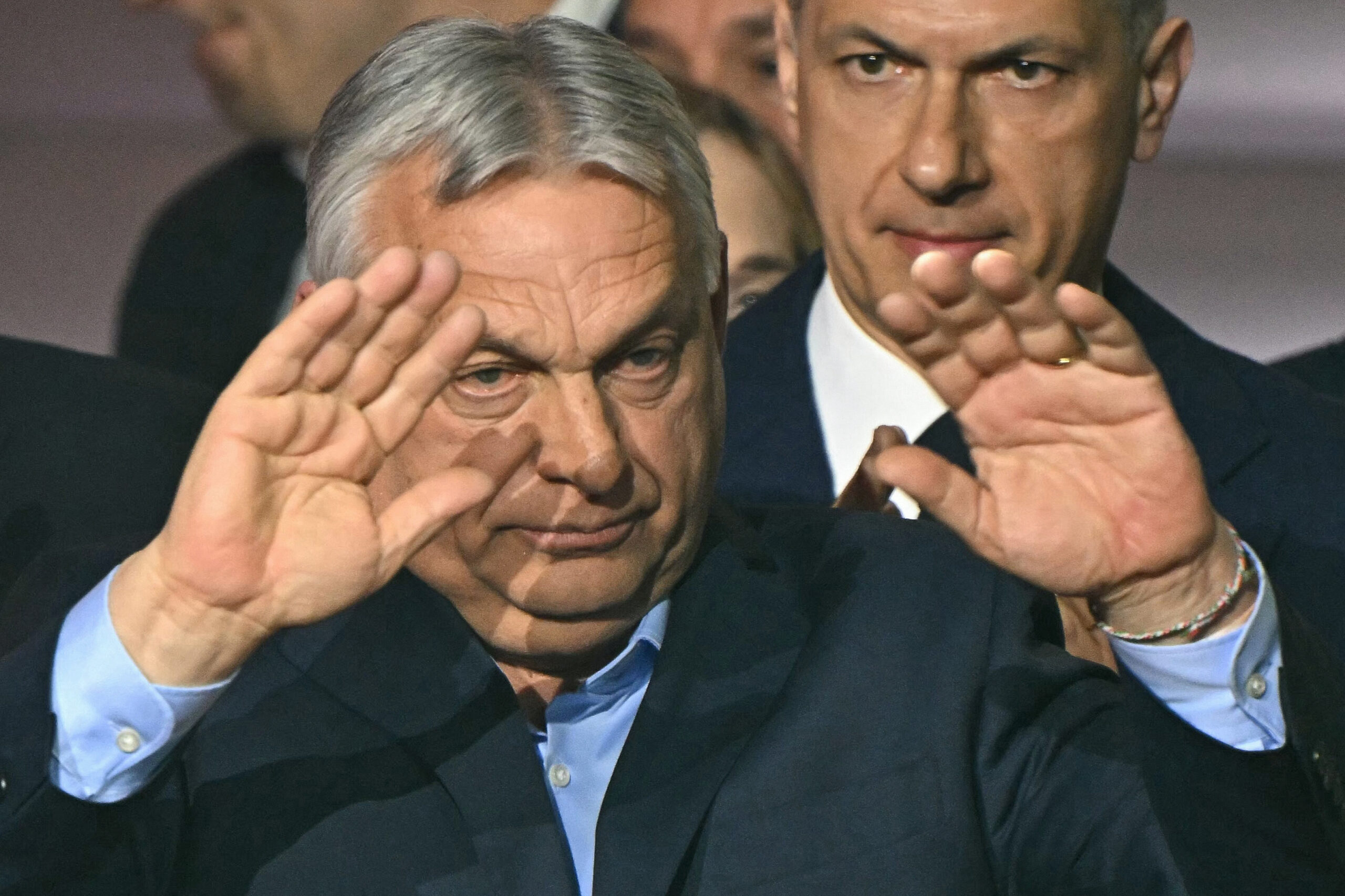
(Photo by Attila KISBENEDEK / AFP via Getty Images)
The end of Viktor Orbán’s premiership in Hungary has been greeted with whoops and cheers throughout Europe’s halls of power. “Hungarians have struck a blow for democracy,” the Economist claims. “Citizens … mobilised to take their country back,” the Guardian informs us.
Well, I’m not going to pretend that Orbán’s rule did not contain blatant gerrymandering and corruption. I made critical points about his Fidesz government before as well as after the election.
But the hypocrisy is difficult to stomach. We can talk about “democratic backsliding” in Hungary. But I don’t think that it can be compared to some sort of principled and righteous Western European alternative.
In Western Europe, after all—such as in Britain, where I was born—successive governments have completely ignored the popular will on matters as existential as mass migration. Of course, Britain is a representative democracy, so politicians are not obliged to bow to the popular will in every case. It was Edmund Burke who said that your representative betrays you if he sacrifices his judgement to your opinion. Yet successive governments have promised change while delivering its opposite. Boris Johnson, most egregiously, came to power in the aftermath of Brexit—perhaps the most inarguable rebuke to the post-Blair status quo—and launched an unprecedented spike in immigration that has come to be known as the “Boriswave”.
The same phenomenon has been seen throughout Europe. (Look at how Angela Merkel claimed that multiculturalism had failed before turning it up to 11.) Just how long can governments ignore their voters, and mislead their voters, without being accused of “democratic backsliding”?
Orbán has been criticized and mocked for funding institutions like the Mathias Corvinus Collegium, which critics argue are right-wing ideological projects. It would be mischievous to outright dismiss such claims. Equally, though, state funding for ideological projects is hardly an alien concept in Western Europe. British commentators, for example, will be all too familiar with the analytic-activistic ecosystem known as “the Blob.”
“It is a mixture of state institutions, state-funded institutions, and private trusts and charities,” one influential essay puts it, “It is a groupthink bubble. It is a network, an ecosystem, in which everyone operates with a set of similar superficial assumptions about the legitimate domain of state action derived from similar assumptions about human nature.” The Blob is not hegemonic in a party political sense. (One report, the journalist Poppy Coburn has written, “identified nearly £880m in public spending that backed charities involved in campaigns against government policies on migration, trans rights and the climate crisis.”) But it maintains and promotes ideological orthodoxies while feeding on public funds. How different is that?
Of course, most people have no such leg-up when it comes to promoting their opinions. Indeed, they often have to be wary of expressing them. Even under a Conservative government, Britain had led the way when it came to curbing speech. It would be wrong to argue that one cannot criticize government policies or fashionable opinions. But be a little too crass, a little too irreverent, or a little too provocative in front of the easily provoked, and you might end up with the police at your door. Again, I’m not denying that there is a substantive argument that Orbán’s government created a “hostile environment” for commentators who were not on Team Fidesz. But Western European leaders should look in a mirror. What kind of example are they setting when it comes to speech? In Germany, a couple of years ago, a rape victim was prosecuted for insulting her attacker.
Subscribe Today
Get daily emails in your inbox
No response to criticism is more childish than “you started it”. But I am not objecting to Orbán being criticized here—I am objecting to his alleged flaws being presented as exceptional. The critique of “populism,” of which Orbán is being held up as a representative, has always had value in its argument that the idea of standing up for the “common people” can obscure and excuse thuggery and opportunism. What is left unasked is how governments can align unqualified indifference, if not hostility, towards majoritarianism with wide-eyed attachment to “democracy.” (What does the “demos” even mean?)
It is difficult to escape the suspicion that for Western European elites, a government that is “democratic” is a government that reflects the opinions of Western European elites rather than a government that reflects the opinions of its voters. Orbán’s cardinal sin was not gerrymandering or corruption but disagreeing with them over asylum seekers and Ukraine.
I wish the Hungarian people all the best with their new government. Indeed, I wish their government the best as well. It looks as if Péter Magyar, the incoming prime minister, ran an effective campaign, and he certainly has a powerful mandate. But he should be very wary when it comes to his new allies in Western Europe. The enemy of your enemy is not always your friend.


