

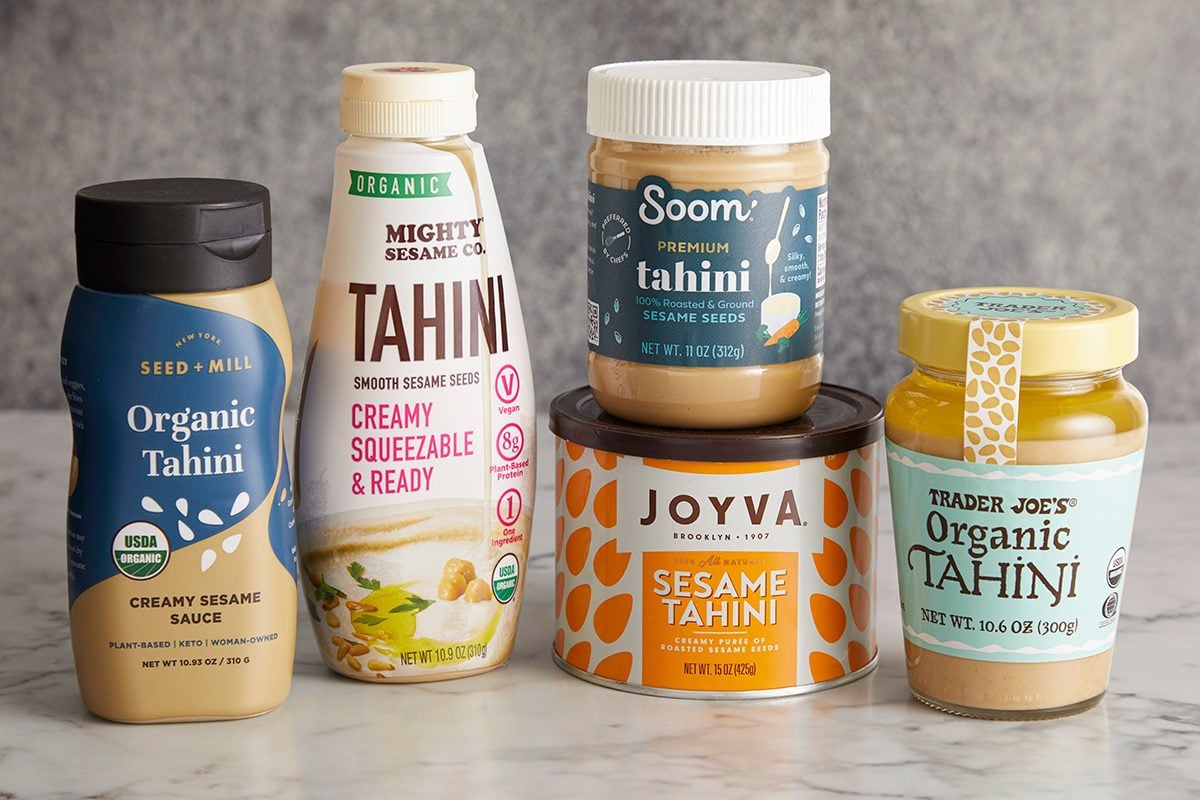


One spoonful at a time, we tasted our way through a lineup of tahinis to find the ones we’ll rely on for sweet and savory recipes.
Our editors and experts handpick every product we feature. We may earn a commission from your purchases.
Learn more.
Tahini is one of those ingredients that becomes indispensable once you know what to do with it. There are countless sweet and savory ways to use tahini, from blending it into a garlicky sauce to drizzling it over roasted veggies or folding it into chocolate chip cookie dough. Of course, the brand you choose can make a big difference. Tahini should taste nutty and earthy, with a slight hint of bitterness, and have a smooth, creamy texture that adds body to sauces and dips.
To find out which of the (many) store-bought tahini brands are worthy of our kitchen space, our Test Kitchen sampled five popular brands. One stood out as the clear favorite, with a close runner-up offering the convenience of a squeeze bottle.
What We Look for in a Great Tahini

We included five brands of tahini in our Test Kitchen taste test: Soom, Mighty Sesame, Joyva, Trader Joe’s and Seed + Mill. We were looking for an all-purpose tahini that would taste great in sweet and savory tahini recipes, so we sampled each one straight out of the jar or squeeze bottle. Although you would rarely eat tahini by the spoonful, tasting it alone allowed us to evaluate mouthfeel and hone in on any potential aftertastes.
The brands that rose to the top had silky-smooth texture, balanced sesame flavor and a clean finish without lingering bitterness. They mixed easily and didn’t feel oily or sticky on our palates. Our least favorite brands had grainy, uneven textures or separated quickly, even after thorough stirring. Some had sour or burnt notes that overpowered the sesame flavor, and others were not memorable at all, with a muted taste.
Finally, we looked at the packaging. Was the jar too narrow at the top, making it hard to stir? Was a squeeze bottle as convenient as we anticipated? Could you easily measure out a single spoonful but also pour larger amounts as needed? These usability factors reflect how we use tahini in everyday cooking.
Our testing panel

- Allison Cebulla, Culinary Producer
- Catherine Ward, Prep Kitchen Manager
- Danielle Kasprzak, Culinary Assistant
- Josh Rink, Culinary Producer
- Monica Ganos, Culinary Assistant
Best Store-Bought Tahini
Best Overall: Soom Tahini

Soom tahini was the clear favorite across the tasting panel. The tasters described it as “velvety” and “absolutely silky smooth,” with a pleasant mouthfeel that wasn’t sticky or cloying. The texture was thin enough to drizzle right out of the jar but thick enough to add body to dips or dressings. We also loved that the straight-sided jar made it easy to stir without spilling oil down the sides, and the paste didn’t have any stubborn clumps at the bottom that wouldn’t combine.
This tahini had the most well-balanced flavor and was so good that it made us want to come back for more after every spoonful. Tahini should have a slight bitterness, but it didn’t linger or feel overpowering. It was “balanced with an appealing sweet undertone throughout” and had “a rich, nutty flavor that builds as it sits on your tongue.”
Overall, we thought Soom tahini was a good choice as an everyday option and could be used in multiple ways. Josh commented that it would be ideal for recipes that are tahini-forward, like tahini butter. Catherine noted it would be good in sweet applications, like halva. Monica even thought it could “actually stand on its own (like on toast) or would be great for making a sauce,” like the one we use for arayes.
Most Convenient: Mighty Sesame Tahini

If you’re looking for tahini with the convenience of a squeeze bottle, our testers also loved Mighty Sesame tahini. It was described as “rich but not overpowering” and “light and bright with a balanced sesame essence.” The consistency was on the thinner side, likely to ensure it would easily come out with a squeeze, but we were impressed that it still coated the palate nicely and didn’t feel watered down.
While this tahini didn’t display any oil separation when poured from the bottle, we did think it was difficult to know when the oil and solids were totally combined. When you stir tahini in a jar, you can see when it’s properly blended. We had to shake the squeeze bottle quite a bit to feel as confident that it was fully mixed.
Mighty Sesame tastes balanced enough to work in sweet and savory applications. A few of the tasters noted they would likely use it when the recipe doesn’t call for a lot, like tahini chocolate chip cookies, because it might take a while to squeeze out a whole cupful. Josh noted that the thin consistency would be right for tahini dressing or in sauces that get drizzled. Catherine thought it would work well in everything, including “eating this on a spoon or squeezing it right into my mouth (kidding, not kidding).”
Tips for Using Tahini

- Stir, stir, stir: Much like natural peanut butter, tahini needs to be stirred before use. Expect to need a little elbow grease when first opening a jar to coax the thick paste to rejoin the oil. As a shortcut, turn unopened jars of tahini upside down when you bring them home from the store, allowing gravity to give the paste a head start. Or, scrape the entire contents into a food processor with a rubber spatula and pulse it until it looks smooth and creamy.
- Temperature affects tahini’s texture: I like to store tahini in the pantry because it maintains a thinner, more pourable texture. The fridge’s cold temperatures will solidify the tahini, making it thicker and more of a paste. Of course, the package directions determine how to store tahini, so stash it in the fridge if it explicitly states to do so. You can always remove it to the counter for about 15 minutes before use to bring it to room temperature and soften it.
- Use it sooner than later: Soom says its tahini lasts for up to a year after it’s opened, but I find that tahini generally has the best taste and texture if it’s used within three months when stored in the pantry or six months in the fridge. After that, it starts to harden and feel dry (especially if you haven’t stirred it in a while) and the oil can begin to taste stale.
- Packaging matters: Jars with wide lids allow for easier stirring, creating even consistency. They also make it easier to scoop or pour out larger amounts for recipes that call for more tahini. On the other hand, squeeze bottles are convenient and mess-free when you need just a little bit, and shaking is a little easier than stirring. But their consistency is often thinner, so it’s more ideal if you want to drizzle plain tahini over something like falafel or a grain bowl.
